Key Takeaways
- A staggering 83% of massage therapists experience work-related pain in their wrists or thumbs, with more than half reporting pain within a 30-day period.
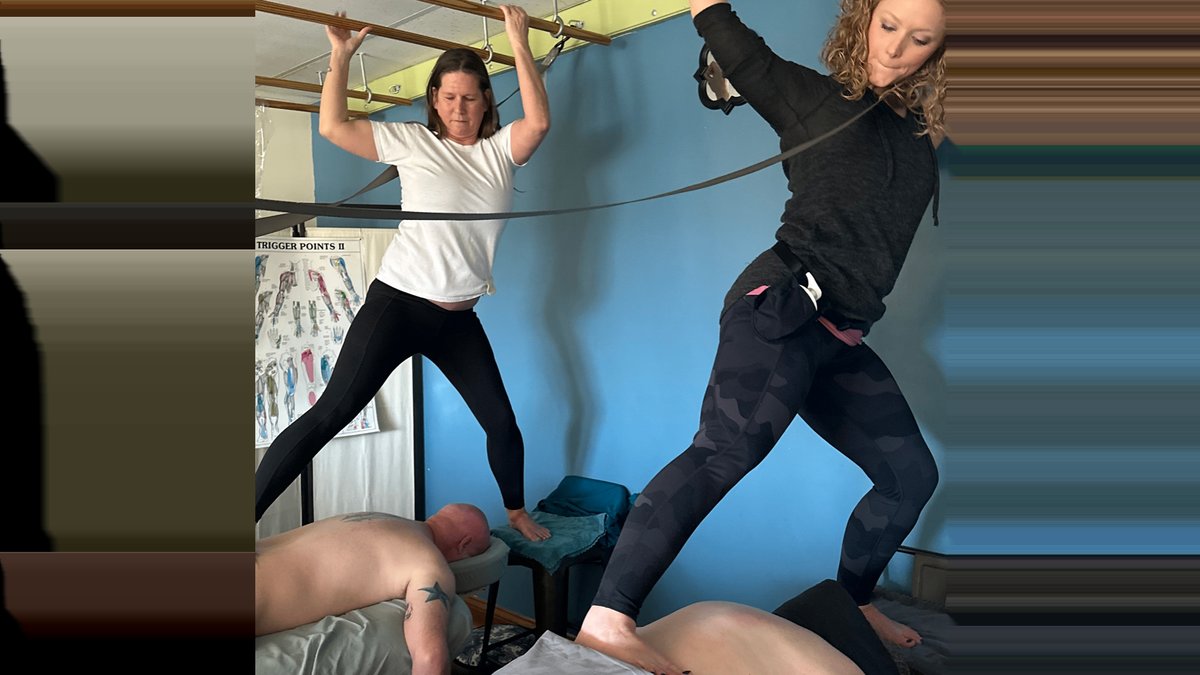
- Ashiatsu barefoot massage techniques use gravity and the broader surface area of your feet to deliver deeper pressure with significantly less strain on your body.
- Learn Barefoot Massage offers specialized training that can transform your practice and potentially add decades to your career.
- Proper overhead bar setup and specialized training are essential for safely implementing barefoot massage techniques.
- Clients often prefer the comfortable pressure from foot techniques compared to sharp elbow work, creating a win-win for both therapist and client.
The Alarming Truth: Why 83% of Massage Therapists Experience Career-Threatening Pain
If you're a massage therapist battling constant wrist or thumb pain, you're not alone. Research shows a shocking 83% of massage therapists report work-related pain in their wrists or thumbs during their careers. Even more concerning, 57% experience this pain within just a 30-day period. These aren't just uncomfortable statistics - they represent careers cut short and livelihoods threatened.
The sobering reality is that many skilled practitioners are leaving the profession altogether due to these work-related injuries. After investing years in training and building a client base, their bodies simply can't sustain the physical demands of traditional massage techniques. Learn Barefoot Massage understands this crisis and offers a solution through Ashiatsu barefoot techniques that can literally save your massage career.
Traditional Deep Tissue Techniques That Damage Your Body
The Thumb and Wrist Crisis: Statistics and Consequences
Every time you dig your thumbs into a tight muscle or use your wrist for deeper pressure, you're accumulating micro-trauma to these delicate structures.
Your thumbs and wrists weren't designed to withstand the repetitive strain that comes with performing multiple deep tissue massages day after day, year after year. These smaller joints simply can't compete with the larger, stronger structures in your lower body. When you rely exclusively on manual techniques, you're essentially asking your smallest joints to do your biggest work - a recipe for career-limiting injuries and chronic pain that follows you home long after your last client.
How Standard Techniques Create Cumulative Trauma
The techniques you've mastered over the years may be silently destroying your body. Each time you apply pressure with your thumbs or lean heavily into your wrists, you're contributing to cumulative trauma disorder. Repeatedly using these small muscles and joints beyond their natural capacity doesn't just cause temporary discomfort—it leads to chronic conditions like carpal tunnel syndrome, tendonitis, and nerve compression syndromes.
Unlike acute injuries that heal with rest, these repetitive strain injuries worsen over time, even with periods of recovery between sessions. What starts as mild discomfort at the end of a busy day eventually becomes persistent pain that interferes with your ability to work effectively.
When Pain Forces Reduced Hours and Income
The financial implications of work-related injuries are devastating. As pain increases, many therapists find themselves cutting back on clients—first dropping one or two sessions per week, then gradually reducing their schedule further. Each reduced hour represents lost income and potentially disappointed clients who may seek care elsewhere.
Some therapists attempt to push through the pain, using braces, pain relievers, or simply enduring discomfort to maintain their client load. This approach ultimately accelerates tissue damage and shortens career longevity even further. Others invest in expensive treatments like physical therapy, acupuncture, or even surgery—all while losing income from reduced working capacity.
Physical Benefits of Ashiatsu for Therapists
1. Gravity Does the Work: Effortless Depth
Ashiatsu barefoot massage techniques change how you deliver pressure. Instead of pushing and straining, you're simply positioning your body weight above your client and letting gravity do the work. The overhead bars provide stability and control while allowing you to modulate pressure precisely by shifting your body position.
This gravity-assisted approach eliminates the need to force pressure through your small hand joints. You'll deliver deeper, more effective pressure while feeling significantly less fatigue. Many therapists report being able to work longer hours with more clients when using barefoot techniques—all while feeling more energized at the end of their day.
2. Feet vs. Hands: Surface Area Advantage
The broad surface area of your foot distributes pressure more evenly than fingers, thumbs, or even elbows. This wider contact area means clients experience comfortable, broad compression rather than sharp, pointed pressure.
The heel of your foot is substantially wider than your thumb, allowing you to apply deep pressure to large muscle groups like the gluteals, quadriceps, and paraspinals without creating the discomfort that often comes with elbow work. This means you can deliver truly deep work that clients enjoy rather than merely tolerate.
3. Posture Improvement and Ergonomic Alignment
Traditional massage techniques often force therapists into awkward positions—hunched shoulders, extended arms, and twisted wrists. Ashiatsu, by contrast, encourages proper postural alignment. With the support of overhead bars, you maintain an upright position with neutral spine alignment, distributing effort through your core and lower body rather than straining your upper extremities.
This improved biomechanical position reduces strain on your back, shoulders, and neck. Many therapists report that existing posture-related pain diminishes after adding barefoot techniques into their practice. The overhead bar system serves both as a support mechanism and as a constant reminder to maintain proper body mechanics.
4. Career Longevity Through Body Preservation
Perhaps the most significant benefit of Ashiatsu is career preservation. By transferring the workload from your hands to your lower body, you're effectively extending your professional lifespan. Many therapists who use barefoot techniques report being able to continue their practice well into their 60s and beyond without the limitations imposed by hand and wrist injuries.
Think of Ashiatsu as an investment in your future. Learning these techniques now may mean the difference between a shortened career punctuated by pain and limitations or decades of fulfilling work with satisfied clients.
Mastering Barefoot Techniques: Core Skills
Setting Up Your Overhead Bar System
The foundation of safe and effective Ashiatsu practice is a properly installed overhead bar system. These bars provide the stability and support necessary to control your movements and pressure application. While simple in concept, the bars must be securely anchored to structural components of your ceiling to ensure safety.
Most systems consist of two parallel bars positioned over your massage table, allowing you to grip them while performing various techniques. The height and spacing of these bars are critical factors in your comfort and efficiency. During professional training, you'll learn not only how to install these systems but also how to position them optimally for your height and working style.
Posterior Body Foundations
Most Ashiatsu practitioners begin by mastering techniques for the posterior side of the body. Starting with the client prone allows you to develop balance, pressure control, and movement patterns in a more stable and intuitive manner.
You'll learn to use different parts of your foot for different purposes—the broad heel for large muscle groups, the arch for contouring around the spine, and the ball of the foot for more focused work. Core techniques include effleurage-like strokes using one or both feet, compression techniques that utilize your body weight effectively, and specialized movements that address specific problem areas.
Working the Anterior Side Safely
As your skills advance, you'll learn to work effectively on the anterior side of the body. This requires additional precision and awareness, as you'll be working on more sensitive areas with less muscular padding.
Special draping techniques ensure client comfort while allowing access to key muscle groups like the quadriceps, pectorals, and anterior deltoids. The overhead bars become even more critical for these techniques, providing the control necessary to work safely on these more vulnerable areas.
Integrating With Your Existing Modalities
Ashiatsu doesn't require abandoning your current massage skills. Many therapists develop a hybrid approach, using barefoot techniques for broad, deep work on large muscle groups, then transitioning to hands-on work for more detailed areas like the neck, face, and hands.
This integration allows you to create truly customized sessions that use the strengths of both approaches. You might begin a session with Ashiatsu to warm and soften tissues, then switch to manual techniques for trigger point work or more nuanced manipulation.
Essential Training and Certification Path
Learning Ashiatsu requires proper training from qualified instructors. Unlike some modalities that can be effectively self-taught, barefoot massage techniques demand hands-on guidance to ensure both effectiveness and safety.
In-person classes provide the essential feedback needed to develop proper body mechanics, pressure control, and movement patterns. Instructors can make real-time adjustments to your technique, helping you avoid developing habits that might compromise your results or safety.
Look for NCBTMB-approved courses that offer continuing education credits. These programs typically combine theoretical knowledge with extensive practical application, allowing you to leave with immediately usable skills.