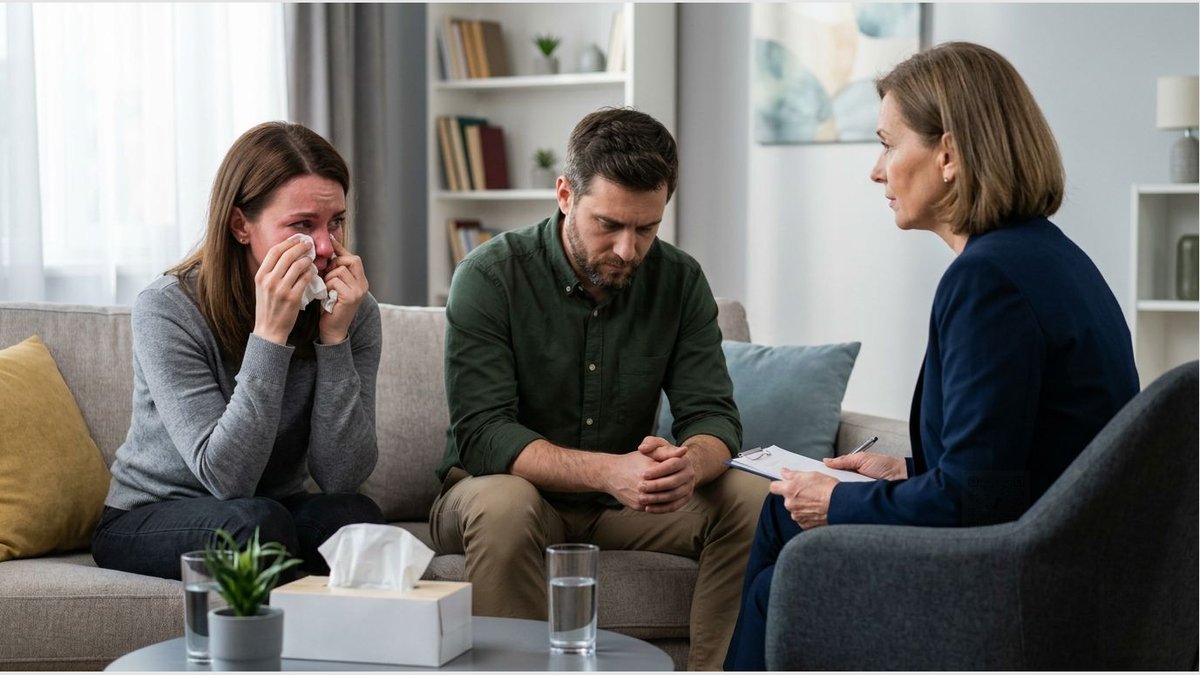
The Hove Counselling Practice has launched a specialist infidelity recovery service for couples across Brighton & Hove, responding to a clinical gap in local provision. Led by BACP-accredited therapist Claire Sainsbury, the practice delivers trauma-informed, evidence-based therapy designed specifically for the attachment injuries that betrayal causes.
"Couples in acute crisis after an affair need something quite different from standard relationship counselling," said Claire Sainsbury, founder of The Hove Counselling Practice. "Betrayal produces a genuine attachment injury, and until that trauma is stabilised, teaching communication skills simply does not work. Locally, that specialist provision has been missing."
Unlike general couples counselling, which focuses on communication skills and conflict resolution, infidelity recovery calls for a structured approach that stabilises acute emotional crisis, manages trauma-like symptoms including intrusive thoughts and hypervigilance, and guides couples through a phased therapeutic pathway. The NHS does not provide specialist infidelity recovery therapy in the region, and while the Brighton & Hove Wellbeing Service offers a range of interventions including general CBT and counselling, it does not explicitly provide specialist infidelity recovery therapy — leaving couples in crisis without the targeted clinical support that research identifies as necessary for meaningful recovery.
The launch responds to mounting relationship strain across Brighton & Hove. Mental health burdens and cost-of-living pressures are creating conditions that increase vulnerability to infidelity and relational breakdown. The Health Counts 2024 survey, which gathered responses from more than 16,700 Brighton & Hove residents, found that 38 per cent report high anxiety and 24 per cent report low happiness, with mental health challenges rising over the past decade. These pressures do not affect individuals alone; they accumulate within relationships, producing the emotional disconnection and chronic stress that research identifies as primary drivers of vulnerability to affairs.
Claire Sainsbury integrates three core therapeutic modalities that target different dimensions of betrayal recovery. She is certified in Emotional Focused Therapy, which has been shown to be particularly effective for couples affected by infidelity, and holds specialist training in CBT, which addresses the relentless intrusive thoughts and hypervigilance that prevent stabilisation. Sainsbury also serves as a DBT tutor, indicating instructional-level expertise in emotional regulation techniques for moments when volatile reactions disrupt productive sessions. Her BACP accreditation confirms adherence to UK professional standards, while her further specialism in addiction allows the practice to work with the intersecting presentations common in infidelity recovery, such as substance misuse or co-dependency.
The practice works through a structured, phased approach to recovery. The first stage prioritises accountability and transparency, with the partner who had the affair taking full responsibility. The focus then shifts to relational rebuilding, examining unmet needs and the communication failures that preceded the crisis. The final stage addresses the restoration of intimacy and commitment. Research shows that disclosure within a therapeutically supervised environment improves long-term outcomes.
"My role is not to save every marriage at any cost," Sainsbury said. "It is to help both partners reach a clear, emotionally grounded decision about their future — whether that means rebuilding the relationship or parting with dignity. Either outcome can be a good one when it is reached honestly."
Infidelity creates a specific attachment injury with trauma-like symptoms that general couples counselling is not equipped to address. Research now recognises Post-Infidelity Stress Disorder (PISD), a clinical syndrome that mirrors PTSD in its symptom profile, including re-experiencing, hyperarousal, and avoidance behaviours. Teaching communication skills to a couple in acute betrayal crisis is clinically inadequate; therapy must first establish psychological safety and settle the intense distress that both partners bring into the room.
"What many people experience after infidelity closely resembles post-traumatic stress — intrusive thoughts, hypervigilance, the sense of being unable to settle," Sainsbury explained. "Our first task is always to establish safety and calm that distress. Structured relational work can only begin once both partners feel steady enough to take it on."
The practice applies a trauma-informed framework that prioritises emotional regulation and containment before structured relational work begins, setting specialist infidelity practitioners apart from generalist counsellors in the most clinically meaningful way.
The Hove Counselling Practice is located in Hove, Brighton & Hove, with sessions available Monday to Friday, 10am to 9.30pm. Both in-person and secure online sessions are offered, removing barriers for working couples who cannot attend daytime appointments.
"Couples in this kind of pain should not have to wait months for help," Sainsbury added. "Evening and online appointments mean support is there when people actually need it, without the delays of an NHS waiting list."