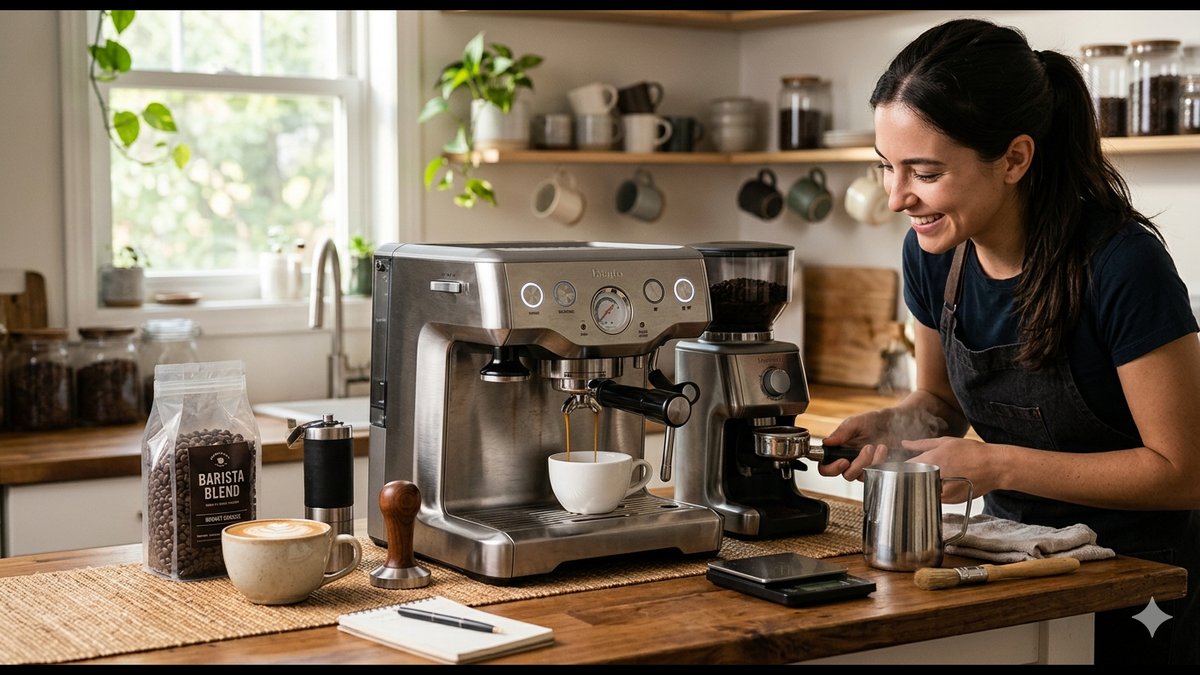
BrewPrecision has published a detailed guide analyzing four budget espresso machines priced under $500, evaluating models that feature advanced capabilities such as PID temperature control and commercial 58mm portafilters—a significant shift in what home baristas can now access at this price point. The guide examines the Breville Bambino Plus, Gaggia Classic Pro E24, Turin Legato V2, and DeLonghi Dedica Arte, focusing on thermal stability, internal componentry, and thermodynamic workflows. These machines represent a departure from the appliance-grade equipment that previously dominated the category, offering features once reserved for prosumer models costing twice as much.
More information is available at https://brewprecision.com/
The sub-$500 espresso machine segment has undergone an architectural transformation over the past decade. Manufacturers have moved from pressurized portafilters and primitive thermoblock heaters to machine-grade systems with hybrid heating configurations and digital temperature regulation. Home baristas now have access to commercial-standard components without the premium price tag, enabling cafe-quality extractions in domestic kitchens. BrewPrecision's guide documents this market shift by testing how each machine handles the technical demands of consistent espresso production.
Thermal stability — the ability to maintain consistent water temperature during extraction — emerges as the primary performance differentiator among the tested machines. In CoffeeGeek's hands-on testing, the Gaggia Classic Pro E24's upgraded brass boiler maintains extraction temperatures between 199.6°F and 202°F throughout a 30-second shot — a variance of just 2.4°F that approaches the consistency of dual-boiler prosumer machines costing significantly more. The Breville Bambino Plus's proprietary ThermoJet heating system achieves optimal extraction temperature in just 3 seconds, demonstrating how heating technology directly impacts shot consistency and daily workflow efficiency.
PID temperature control, now available in several budget machines, keeps brew temperature stable within 1-2°F versus the 10-15°F swings of basic thermostats that can produce inconsistent, bitter, or sour shots. Commercial-standard 58mm portafilters, found on the Gaggia and Turin models, allow for wider, thinner coffee pucks that generally promote more even water distribution and reduce channeling while unlocking compatibility with professional-grade accessories, though some experts note that shallower 58mm pucks can be less forgiving of imperfect puck preparation compared to smaller diameter portafilters. BrewPrecision's guide details how these features differentiate machines and align with different user priorities, from espresso purists to milk-based drink specialists.
The guide segments recommendations based on user workflow and beverage preferences. For pure espresso aficionados, the Gaggia Classic Evo Pro (E24) and Turin Legato stand out due to their thermal mass, commercial portafilter standards, and ability to produce complex, syrupy-bodied shots. For milk-based drink specialists who prioritize lattes, cappuccinos, and flat whites, the Breville Bambino Plus leads due to its 3-second heat-up and automatic milk texturing sensor that delivers consistent microfoam. This segmentation helps home baristas choose machines based on actual workflow and preferences rather than spec sheets alone.
BrewPrecision's editorial guide covers internal componentry including pump pressure, boiler materials, and portafilter standards, as well as thermodynamic workflows such as start-to-steam times, recovery periods, and back-to-back performance. The guide also examines steam wand capabilities for milk texturing, maintenance considerations for descaling protocols across thermoblock versus boiler systems, and the grinder synergy factor — how pressurized versus non-pressurized baskets affect required burr grinder investment. This technical resource provides informed decision-making tools for home baristas evaluating long-term value and performance trade-offs in the budget espresso category.
For detailed comparisons, specifications, and long-term value analysis, visit https://brewprecision.com/