Key Takeaways
- Chronic neck stiffness often returns because treatment only calms symptoms instead of correcting the spinal misalignment causing them
- Structural correction chiropractic care uses detailed spinal analysis, precise adjustments, and rehabilitation exercises to address the root cause of neck stiffness rather than masking it
- Cervical misalignment has been linked to conditions beyond neck pain, including cervicogenic dizziness, tinnitus, and disc herniation - find out how these connections work
- Restoring proper neck structure may support benefits well beyond pain relief, including posture, mobility, and nervous system function
Waking up with a stiff neck once in a while is one thing. Living with it week after week, no matter how many stretches or heating pads get tried, points to something deeper going on in the cervical spine.
Why Your Neck Stiffness Keeps Coming Back
Neck stiffness that never fully goes away usually has a pattern: a few good days, a flare-up, some relief, then the same tightness creeps back in. This cycle happens because many common approaches calm the symptoms of the moment without touching what started the problem in the first place. Massage, heat, and over-the-counter pain relievers can loosen tight muscles for a short while, but if the underlying bones of the neck are sitting out of their natural position, those muscles will simply tense right back up to protect the area.
This is where structural correction chiropractic care enters the conversation. Rather than treating the neck as a collection of sore muscles, this approach looks at the actual position of the cervical vertebrae and works to correct what has shifted. Dr Will Kalla at Dr Neck Pain has built his clinical philosophy and R3NEW X™ approach around this distinction, choosing to correct the structure instead of managing the pain indefinitely. He says understanding why stiffness keeps returning is the first step toward finally breaking the cycle.
What Causes Chronic Neck Stiffness
Several everyday habits and physical events can push the cervical spine out of its ideal alignment, and most people experience more than one of these causes at the same time. Pinpointing which factor, or combination of factors, applies to a specific case is part of what makes lasting relief possible.
Poor Posture and Repetitive Strain
Hours spent hunched over a laptop or tilting the head down to check a phone place steady, repetitive strain on the cervical spine. Over time, this strain creates muscle imbalances, with some muscles growing tight and overworked while others weaken from disuse. The result is a stiff, achy neck that often comes bundled with tension headaches, since the same strained muscles connect up into the base of the skull.
Injury and Whiplash
Sudden jerking motions, whether from a car accident, a sports collision, or a hard fall, can damage the soft tissue around the cervical spine and knock vertebrae out of their normal position. Whiplash injuries are known for causing inflammation that lingers well after the initial impact, along with stiffness, headaches, and a noticeably reduced range of motion. Getting an early assessment after this kind of injury matters, since untreated misalignment from an accident can quietly turn into chronic pain months or years down the road.
Degenerative Conditions
Osteoarthritis, degenerative disc disease, and herniated discs all place added pressure on the nerves running through the cervical spine. That pressure can show up as chronic stiffness, numbness, or a shrinking range of motion that gets more noticeable over time. These conditions tend to develop gradually, which is part of why many people dismiss the early stiffness as "just getting older" instead of recognizing it as a structural issue worth addressing.
Stress-Related Tension
Emotional and mental stress has a very physical home in the neck and shoulders. Many people instinctively raise and tighten these muscles when under pressure, almost like bracing for impact, and holding that posture for hours or days at a time leaves the area chronically tense. Stress-related stiffness often overlaps with postural strain, since a tense body also tends to collapse into poor sitting and standing habits.
Structural vs. Traditional Chiropractic Care
Not all chiropractic care is built around the same goal, and understanding the difference helps explain why some people get short bursts of relief while others see lasting change.
Symptom Management vs. Root-Cause Correction
Traditional chiropractic care typically centers on spinal manipulations aimed at immediate relief, which can genuinely ease pain and stiffness in the moment. The tradeoff is that this relief often requires frequent, ongoing visits just to keep symptoms from creeping back, since the underlying structural shift causing the problem was never fully corrected. Structural chiropractic care takes a different starting point, asking what has shifted out of alignment and building a plan to correct that shift directly. This distinction matters most for people dealing with chronic, recurring stiffness rather than a single acute flare-up.
X-Ray Verified Progress
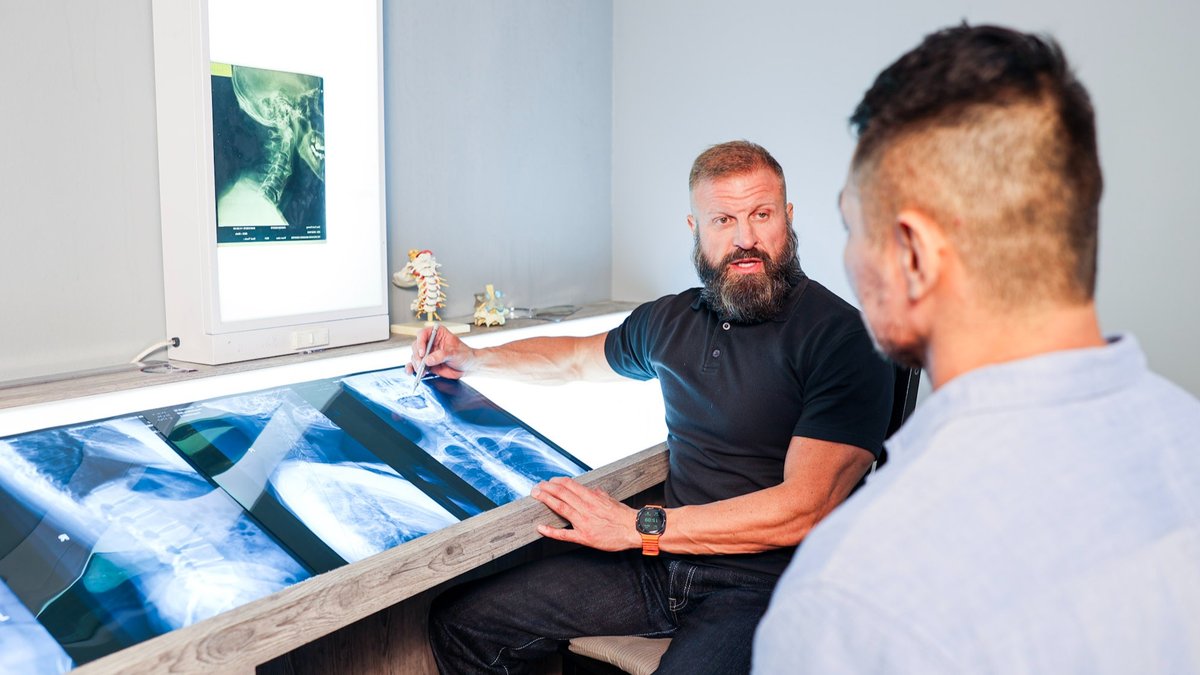
Structural correction relies on objective measurement rather than guesswork or how a patient happens to feel on a given day. Digital structural radiographs, along with assessments like postural and symmetry analysis, give a clear before-and-after picture of what is actually changing inside the spine. The R3NEW X™ Protocol applies this principle directly, verifying every stage of its three-phase process, Release, Reset, and Recalibrate, through X-ray imaging so progress is visible rather than assumed. Seeing an actual image of vertebral position shifting over time provides a different kind of reassurance than simply reporting that the pain feels a little better.
Inside a Structural Correction Approach
A structural correction plan generally moves through a few distinct stages, each building on the last to create a lasting result instead of a temporary fix.
Detailed Spinal Analysis
Everything starts with a thorough assessment of the spine to identify exactly where structural shifts have occurred and how severe they are. This typically involves imaging and posture evaluation rather than a quick hands-on check, since misalignments are not always obvious from the outside. A clear picture at this stage shapes every adjustment that follows, which is part of why skipping straight to treatment without proper analysis tends to produce inconsistent results.
Precise, Targeted Adjustments
Rather than broad, generalized manipulation, structural correction relies on specific, targeted adjustments aimed at the exact vertebrae that have shifted out of place. This precision separates a structural approach from more general spinal manipulation: each adjustment works toward a measurable, pre-identified goal rather than simply easing tension wherever it happens to be felt that day. Over a series of visits, these targeted corrections aim to physically guide the spine back toward its proper structural position.
Rehabilitation to Prevent Relapse
Correcting the bones alone is not the whole picture, since the muscles and ligaments surrounding the spine need to adapt and support the new alignment. Rehabilitation exercises play a key role here, strengthening the muscles that hold the corrected structure in place and reducing the likelihood of slipping back into old patterns. This stage often determines whether an improvement holds up over the following months and years rather than fading away after a few weeks.
Conditions Linked to Cervical Misalignment
Cervical misalignment rarely stays contained to just neck pain, since the same nerves and structures that run through the neck connect to systems throughout the rest of the body.
Cervicogenic Dizziness and Tinnitus
Cervicogenic dizziness shows up as imbalance, unsteadiness, and disorientation, often alongside neck pain and a limited range of motion, and it has been linked to dysfunction in the cervical spine. Tinnitus can follow a similar pattern when it stems from a neck injury or misalignment, a form sometimes referred to as cervicogenic tinnitus. Both conditions illustrate how closely connected the neck is to systems people rarely think to blame for ringing ears or a spinning head.
Disc Herniation and Degenerative Disc Disease
Cervical disc herniation and degenerative disc disease both involve pressure or wear affecting the discs that cushion the vertebrae, and this pressure can radiate pain, numbness, or stiffness well beyond the neck itself. A study published in the Journal of Manipulative and Physiological Therapeutics looked at patients with cervical radiculopathy caused by cervical disc herniation and found that 55.3% reported significant improvement within two weeks of chiropractic treatment, with 85.7% significantly improved by three months. Addressing joint mechanics and reducing inflammation around the affected discs appears especially useful in earlier stages of degenerative disc disease, before wear has progressed too far.
Benefits Beyond Pain Relief
Correcting the structure of the cervical spine tends to produce ripple effects that reach well past the original complaint of stiffness or discomfort.
Restored Mobility and Posture
As vertebrae move back toward their proper alignment, the body's natural posture tends to follow suit, since a straighter spine removes the slouching and compensating patterns that misalignment forces onto the shoulders and upper back. Range of motion in the neck typically improves alongside this postural shift, making everyday movements like checking a blind spot while driving or looking up at a shelf feel noticeably easier. These changes also tend to reduce the physical strain that leads to future injury, since a properly aligned spine distributes everyday movement more evenly.
Nervous System and Overall Health
The spine houses and protects the nervous system, so structural shifts in the cervical region can influence far more than local pain. Correcting misalignment aims to restore the nervous system's ability to function properly, which has been associated with broader wellness benefits like improved sleep and energy levels. This is part of why structural correction gets framed as a whole-health approach rather than a narrow fix for one sore spot.
Correcting the Cause Delivers Lasting Relief
Chronic neck stiffness rarely resolves on its own, and temporary relief methods, while helpful in the moment, tend to leave the underlying structural issue untouched. Looking at the spine through the lens of structural correction, with detailed analysis, precise adjustments, and supportive rehabilitation, provides a path toward addressing the cause rather than chasing the symptoms indefinitely. For anyone tired of the same stiffness returning again and again, learning more about structural correction chiropractic care is a reasonable next step toward lasting mobility.