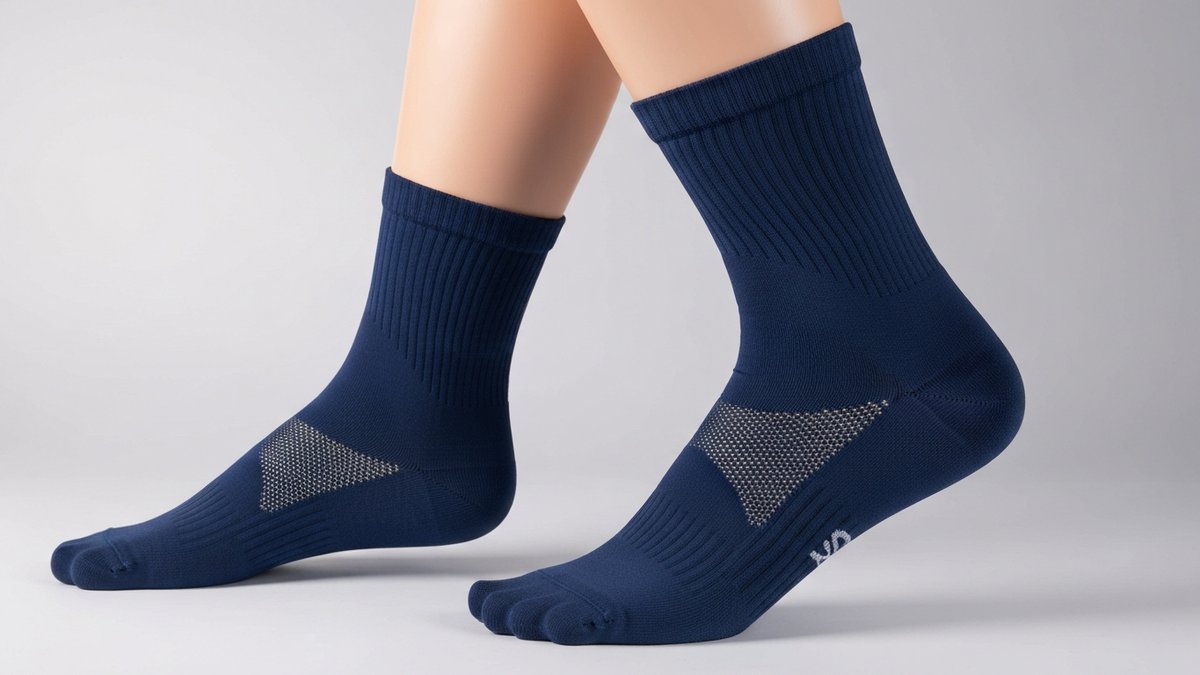
Key Takeaways
- Graduated compression socks are tightest at the ankle and gradually loosen up the leg - this design actively pushes blood back toward the heart, fighting the effects of gravity.
- For most people who stand or sit all day, a compression level of 15-20 mmHg offers meaningful relief without being overly restrictive; 20-30 mmHg is better suited for more demanding needs.
- Travelers on long flights face a genuine risk of Deep Vein Thrombosis (DVT), and graduated compression socks are medically recognized as a practical preventive measure.
- Proper sizing and moisture-wicking materials are just as important as compression level - the wrong fit can cancel out the benefits entirely.
- Read on to find out which compression level is right for your lifestyle, and what to look for in terms of fit and fabric.
By the end of a long shift or a transatlantic flight, legs can feel heavy, swollen, and exhausted. That discomfort has a physiological cause: blood pooling in the lower limbs when the body stays in one position too long. Graduated compression socks address this directly, using calibrated pressure to keep circulation moving. Here is what the science says, and how to choose the right pair.
Your Legs Are Fighting Gravity All Day
The human circulatory system is remarkably efficient - except when it comes to moving blood uphill. Every minute spent standing still or sitting in a cramped seat forces the veins in the lower legs to work harder against gravity. Without movement to help pump blood upward, fluid starts to collect in the feet and ankles, causing that familiar end-of-day puffiness and ache.
This is especially true for healthcare workers, retail employees, office workers, and frequent flyers - anyone whose job or travel routine keeps them stationary for hours. The solution requires the right gear. Mason Workwear's bamboo work sock collection is one example of how workwear brands are responding to this everyday physiological challenge with purpose-built designs that prioritize long-wear comfort and circulation support.
How Graduated Compression Works
Tightest at the Ankle, by Design
Graduated compression socks apply the most pressure at the ankle, then gradually ease up toward the calf and knee. This gradient is intentional: it creates a pumping effect that encourages venous blood to travel upward rather than stagnate.
The mechanical pressure also works on a structural level. Reducing the diameter of the superficial veins increases blood flow velocity and supports proper venous valve function. In plain terms, blood moves faster and in the right direction.
Faster Blood Flow, Better Oxygen Delivery
Better circulation means more oxygenated blood reaching working muscles throughout the day. Studies have found that this improved oxygen delivery directly reduces the tired, heavy sensation that sets in during long shifts. Muscles perform better - and recover faster - when circulation is properly supported.
The Real Benefits for Standing and Sitting Jobs
Less Swelling by End of Shift
Swelling in the feet and ankles - clinically called edema - is one of the most common complaints among people who work on their feet. Fluid pools in the lower extremities during prolonged standing or sitting, and graduated compression prevents this by continuously encouraging venous return throughout the day.
Healthcare workers, who often spend 10-12 hours on their feet with limited breaks, frequently report noticeably less swelling when wearing compression socks consistently. The relief tends to be felt by the end of the first shift.
Lighter Legs, Less Fatigue
Beyond swelling, compression socks produce a very real feeling of lighter legs. The heaviness and aching that builds through a long workday is significantly reduced when blood stops pooling in the lower limbs. Research supports this: compression socks have been shown to alleviate muscle soreness and fatigue in occupations requiring extended standing, a benefit directly tied to improved oxygen delivery to the muscles.
For nurses, teachers, warehouse workers, and anyone whose job keeps them upright for hours, this is a practical recovery tool worn during the workday itself.
Why Travelers Need Compression Socks
Reduced Swelling and Discomfort on Long Flights
Air travel combines three factors that are particularly hard on leg health: prolonged immobility, low cabin humidity, and reduced atmospheric pressure. The result is that blood has an even harder time circulating efficiently. Swollen ankles after a long flight are so common they are almost accepted as inevitable - but they do not have to be.
Wearing graduated compression socks before boarding keeps circulation active throughout the flight. Most travel health guidelines suggest putting them on one to two hours before departure and keeping them on for a couple of hours after landing for maximum benefit.
A Medically Backed Defense Against DVT
Deep Vein Thrombosis (DVT) - the formation of a blood clot in the deep veins of the leg - is a recognized risk during long-haul travel. A review published in the British Journal of Surgery highlighted the effectiveness of graduated compression stockings in reducing DVT incidence in both surgical patients and travelers. Compression socks are now widely recommended by medical professionals as a first-line preventive measure for anyone facing extended periods of immobility, whether in a hospital bed or a window seat.
15-20 vs. 20-30 mmHg: Which Level Is Right for You
Compression socks are measured in millimeters of mercury (mmHg) - the higher the number, the firmer the pressure. Choosing the right level matters.
- 15-20 mmHg: The standard starting point for most people. Suited for daily wear, office work, long shifts on your feet, and travel. Provides meaningful circulatory support without feeling restrictive. Most healthy adults will find this range effective and comfortable for all-day use.
- 20-30 mmHg: A firmer level suited to people with more significant swelling, chronic venous insufficiency, varicose veins, or those seeking enhanced recovery support. This level is also used therapeutically for medical conditions. Consulting a healthcare provider before moving to this range is advisable.
For general daily wear and travel - the core use cases for most professionals - 15-20 mmHg hits the sweet spot between effective and wearable. Those with specific medical concerns should always check with a doctor before increasing pressure level.
Fit and Material: What Makes or Breaks Them
Sizing Determines Effectiveness
A compression sock that does not fit correctly is ineffective. Too loose, and the graduated pressure gradient is lost entirely. Too tight in the wrong places, and it can restrict circulation rather than support it. Proper sizing is based on calf circumference and foot size, not just shoe size, and most quality brands provide detailed sizing charts for this reason.
Before buying, measure the widest part of the calf and the circumference of the ankle. Match those measurements to the brand's size guide rather than a generic small/medium/large estimate. Getting this right is arguably more important than which brand or style is chosen.
Moisture-Wicking Fabrics for All-Day Wear
Compression socks are only useful if they are actually worn - and people will not wear uncomfortable socks for 10 hours. Material matters as much as construction. Quality compression socks use moisture-wicking, breathable fibers that pull sweat away from the skin, preventing the clammy, overheated feeling that makes lesser socks unbearable by midday.
Quality natural fibers offer additional benefits: temperature regulation, softness against sensitive skin, and odor resistance. Some brands also incorporate antimicrobial silver ion technology for extended freshness - a practical feature for back-to-back shifts or multi-day travel.
Graduated Compression Socks Are One of the Simplest Health Upgrades You Can Make
There is no complicated routine here, no expensive equipment, and no learning curve. Put them on in the morning - before swelling has a chance to start - and wear them through the shift or the flight. That is the whole protocol.
For anyone who regularly finishes the day with aching, heavy, or swollen legs, graduated compression socks represent a low-effort, high-return solution backed by decades of medical research and everyday use by healthcare professionals worldwide. The barrier to entry is low; the benefit is real and repeatable.
For professionally designed workwear that takes leg health seriously, Mason Workwear offers a range of thoughtfully constructed work socks built for the demands of long days on your feet.