Key Takeaways
- Small backyards in Central Texas benefit most from a single-zone layout - one clear purpose beats trying to fit everything into a tight footprint.
- Material choice and shade structures are not optional upgrades in the New Braunfels-San Antonio-San Marcos corridor; summer heat and UV exposure will expose every shortcut.
- Permits are required in all three cities under specific triggers - getting this wrong can result in real fines and forced removal of unpermitted work.
- JL Designs, based in New Braunfels, builds decks specifically around Central Texas climate conditions and local code requirements - details on their approach are woven throughout this article.
- Built-in features like benches and vertical planters reclaim floor space without shrinking how the deck feels to use.
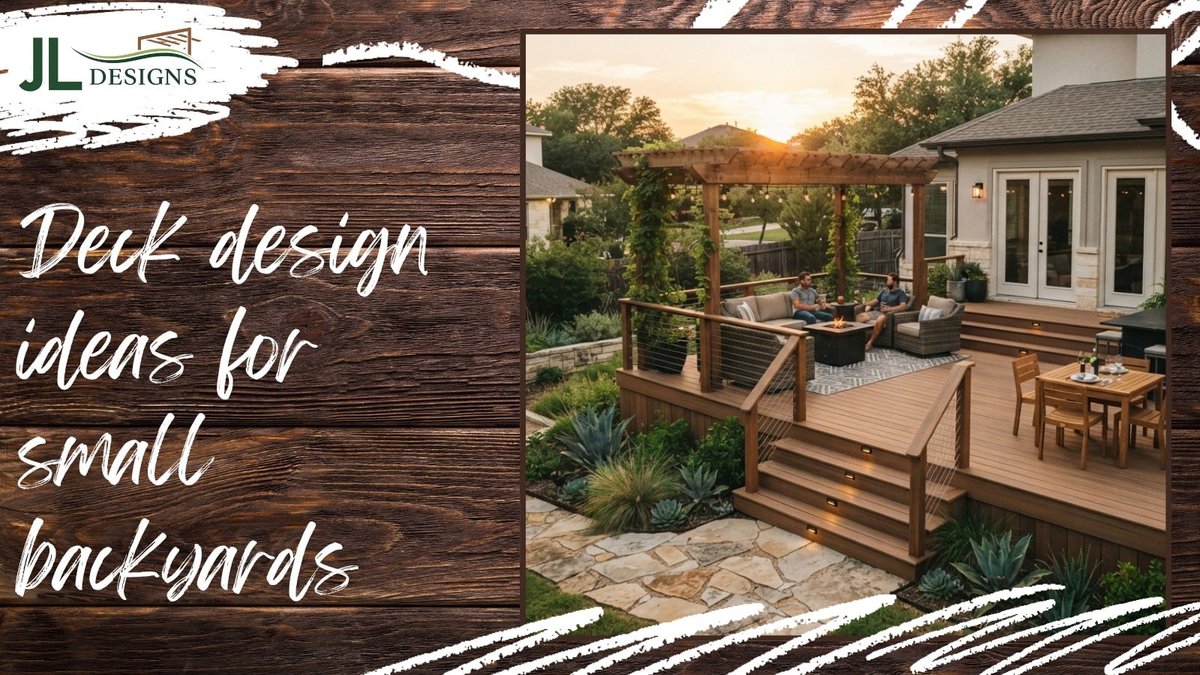
A small backyard does not have to feel like a compromise. The difference between a deck that makes a tight space feel intentional and one that makes it feel cluttered usually comes down to a few key decisions: layout, materials, shade, and whether the build was done right the first time. In Central Texas, those decisions carry extra weight.
Small Texas Backyards Demand More Than Good Taste
Most small-backyard deck projects start with inspiration boards and end with permit headaches or a surface that is too hot to stand on barefoot by June. That gap - between what looks good online and what actually works in a Central Texas backyard - is exactly where most homeowners run into trouble.
The design challenges here are not the same as in other parts of the country. Intense summer heat, UV exposure that fades and warps the wrong materials, clay soil that shifts with rain, and city permit requirements that vary block by block all have to be part of the plan from day one. JL Designs, a New Braunfels-based outdoor designer serving the I-35 corridor, builds every deck around these local realities - their material standards and drainage practices are built into every project, not offered as add-ons.
Layouts That Make Small Feel Intentional
Rectangular vs. L-Shaped Platforms
Two layouts consistently outperform everything else in small backyards: the simple rectangle and the L-shape. A compact rectangular deck is the easiest to furnish, keeps costs down, and preserves usable yard space on the sides. An L-shaped or corner deck works especially well when a yard has an awkward angle or when the goal is to visually separate a dining area from a lounge area without adding square footage.
Ground-level or low-profile decks are worth considering too. When code allows, they eliminate the need for bulky railings and stairs, which frees up both visual space and actual floor area.
One Zone Beats Trying to Fit Everything
The single biggest layout mistake in small backyards is trying to cram in every feature: dining set, lounge chairs, grill station, planter wall, and fire pit. The result always feels crowded, and most of it ends up unused.
Picking one focal zone - a dining corner or a lounging pad - and designing around it produces a deck that actually gets used. Fewer hard edges, fewer furniture pieces, and open circulation make the space read larger than its footprint suggests. Simplicity is the design win here.
Built-In Features That Reclaim Floor Space
Benches That Double as Railings or Storage
Built-in benches are one of the most practical tools in a small-deck design. An L-shaped bench along two edges of a deck can seat six to eight people without a single freestanding chair taking up floor space. On low-profile decks where local code permits it, a well-built bench can be integrated into the railing system - though any such bench must still meet all applicable IRC requirements for guardrail height, load capacity, and opening limitations to qualify as a code-compliant guardrail.
Adding a hinged seat to a built-in bench creates hidden storage for cushions, tools, or outdoor accessories, which keeps the surface clean and clutter-free.
Vertical Space: Planters and Trellises
Floor space is the constraint in a small backyard - vertical space almost never is. Wall-mounted planters, vertical gardens, and trellises add greenery and visual interest without consuming a single square foot of deck surface. A trellis along a fence line or privacy wall also creates a sense of enclosure that makes a small deck feel more like an outdoor room and less like an exposed platform.
Central Texas Climate Changes Everything
Heat and UV: Why Material Choice Is Non-Negotiable
Deck materials that perform well in Seattle or the Midwest routinely fail ahead of schedule in Central Texas. Consistent UV exposure fades colors, breaks down surface coatings, and dries out natural wood faster than seasonal climates allow. Moisture resistance matters too - the region's periodic heavy rains and high humidity create conditions where untreated or poorly sealed materials absorb water, swell, and crack.
Durability and UV resistance are the baseline requirement for any deck that is meant to last more than a few years in this climate, not features to budget for later.
Shade Structures Are a Necessity, Not a Luxury
A deck without overhead shade in Central Texas is often unusable between 10 a.m. and 6 p.m. for five or six months of the year. Pergolas, shade sails, and covered pavilions are what convert a deck from a rarely used surface into an actual outdoor living space. Planning shade into the original design is far more cost-effective than adding it after the fact.
Clay Soil and Drainage Along the I-35 Corridor
The expansive clay soil common throughout the New Braunfels-San Antonio-San Marcos area moves - it swells when wet and contracts when dry. Without proper footing depth and drainage planning, that movement can shift deck posts and compromise structural connections over time.
Drainage matters at the surface level too. Gaps between deck boards, effective flashing where a deck attaches to the house, and clear drainage paths underneath the deck are all standard requirements. JL Designs states that heavy-duty, drainage-friendly matting and rock installed under every deck is a standard practice on their projects, specifically to protect the foundation from erosion caused by this kind of soil behavior.
Composite Decking in Direct Texas Sun
Composite decking is often the right call for a small Central Texas backyard: low maintenance, no re-staining, no splinters, and no rot repairs. Not all composite performs equally in heat retention, though, and that matters when a small deck gets full afternoon sun exposure.
Color and Shade Matter as Much as Material
Modern composite surfaces can still get extremely hot in direct sun. TimberTech's Advanced PVC line is engineered with heat-mitigating technology that the company says can reduce surface heat by up to 30% compared to traditional composites - a meaningful difference when barefoot comfort on the deck is the goal. Lighter color selections add to this benefit; darker boards absorb significantly more heat and stay hotter longer into the evening.
The practical takeaway: material, color, and shade structure work together. Getting one right and ignoring the others still produces a deck that is uncomfortable to use when the Texas summer peaks.
Permits You'll Need in New Braunfels, San Antonio, and San Marcos
Permit requirements in this corridor vary by city, but the pattern is consistent: certain size, height, and attachment thresholds trigger mandatory review. Skipping the permit process does not make these requirements go away - it creates liability that surfaces at resale or during an insurance claim.
New Braunfels: Attached or Over 30 Inches Triggers a Permit
New Braunfels enforces the 2021 International Residential Code (IRC). A permit is required for any deck that is attached to the home or elevated more than 30 inches above grade at any point. Freestanding, ground-level decks below that height threshold may not require a permit, but confirming with the city before breaking ground is the only safe approach.
San Antonio: Four Specific Triggers to Know
San Antonio's deck permit requirements are triggered by any one of the following conditions:
- The deck is attached to the house
- Any point of the deck is more than 30 inches above grade
- The deck exceeds 200 square feet in total area
- The deck serves an exit door from the home
A small, detached, ground-level deck under 200 square feet may fall below the permit threshold - but the moment any one of these four conditions applies, a permit is required.
San Marcos: Standard Texas Thresholds Apply
San Marcos follows standard Texas building thresholds and has its own municipal construction requirements for permitted projects. Permit requirements apply to deck work, and the city enforces its process actively.
Fines for Unpermitted Work Are Real
All three cities assess fines for unpermitted construction that is discovered - whether through neighbor complaints, routine inspections, or home sale transactions. In some cases, unpermitted structures must be removed or rebuilt to code at the homeowner's expense. The cost of a permit is almost always far less than the cost of remediation after the fact.
Local Expertise Protects Your Investment
Addressing clay soil drainage, choosing a composite that performs in direct afternoon sun, designing around a single functional zone, and pulling the right permits for a specific city - none of this is theoretical. This is the practical work that separates a deck that lasts from one that becomes a problem within a few years.
Working with a contractor who builds in this specific corridor regularly means permit requirements, soil conditions, and climate factors are already built into their standard process - not something they are learning on your project.
Ready to plan a deck that is built for a Central Texas backyard? JL Designs designs and builds custom outdoor living spaces in New Braunfels, from San Antonio to San Marcos - reach out to start a conversation about your project.