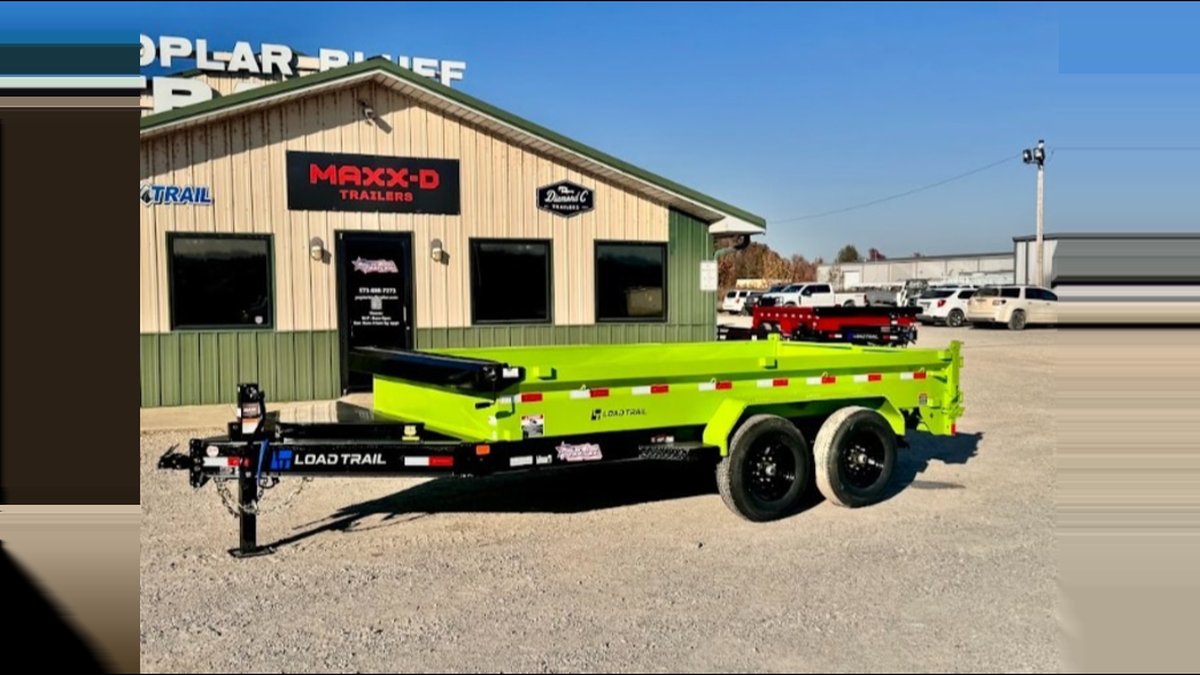
Construction contractors face a recurring challenge: selecting the wrong dump trailer leads to extra trips, wasted fuel, and crew downtime that erode profit margins. Poplar Bluff Trailer has released a comparison guide that helps solve this problem as readers look to match Gross Vehicle Weight Rating, bed dimensions, and payload capacity to specific job requirements.
For more information, visit: https://www.poplarblufftrailer.com/blog/3-best-dump-trailers-for-construction-size-price--brands-compared--107475
The company's latest release comes as Poplar Bluff Trailer acknowledges that mismatched GVWR exposes contractors to regulatory and safety consequences that go beyond operational inefficiency. In fact, federal penalties alone for violating size and weight regulations can reach $16,000 per violation.
Undersizing is also known to accelerate equipment wear while increasing risk to both crew and tow vehicle. Poplar Bluff Trailer’s guide emphasizes that matching GVWR to material weight is a compliance requirement, not an optional consideration - protecting contractors from liability while preserving fleet longevity in turn.
In response, Poplar Bluff Trailer highlights three construction-ready models, each sized and specified for distinct workflows. These include the MAXX-D 6x10 (carrying a 9,990 lb GVWR with approximately 6,800 lbs of payload capacity) - designed for tight-access demolition and small remodel tear-outs where maneuverability is vital.
The Load Trail 7x14 is also featured for its 14,000 lb GVWR and an estimated 9,700 lbs of payload, serving as the mid-range option for residential roofing tear-offs and commercial debris hauling. For high-volume site prep and heavy aggregate transport, meanwhile, the Hillcrest 7x16 Telescopic Gooseneck delivers a 17,600 lb GVWR with approximately 11,000 lbs of payload, built on dual 8,000 lb cambered axles and a 7-gauge steel floor.
Payload capacity is one of the guide’s most prominent themes, with the document explaining how differences can translate directly into job economics. For example, the range from approximately 6,800 lbs on the MAXX-D 6x10 to 11,000 lbs on the Hillcrest 7x16 nearly doubles what a single haul can move when size matches the work - cutting the number of trips required for bulk material transport.
Smaller trailers notably force contractors into additional fuel costs and idle crew time, which is why the guide is written to help calculate which model minimizes cost per ton hauled across typical construction applications. The comparison format presents sizes, prices, GVWR, payload, and key specifications in side-by-side layout for quick reference during planning or purchase.
Interested parties can find additional details at: https://www.poplarblufftrailer.com/