Key Takeaways
- Facebook is not an emergency channel — it's a brand-building one. Unlike search, it reaches homeowners before a problem arises, which is where trust is actually built.
- Authenticity outperforms polish. Real technicians, real jobs, and behind-the-scenes content tend to perform better than stock images or overly produced visuals.
- The strongest ad formats for plumbers include customer testimonials, short educational videos, seasonal promotions, and low-barrier offers like free estimates or inspections.
- Clear, specific copy converts better than vague messaging. Inviting someone to "schedule a free estimate" outperforms a generic "learn more."
- Facebook and search work best together — search captures urgent demand, while Facebook builds the familiarity that influences who gets called when that demand hits.
- AI tools and competitive research have made it significantly easier for smaller plumbing businesses to test more creative variations without increasing production costs.
When homeowners discover a burst pipe, overflowing drain, or failed water heater, the first instinct is usually to search online for immediate help. This behavior has led many plumbing companies to focus almost exclusively on search engine marketing. While search remains essential for capturing emergency demand, it represents only part of the customer acquisition picture.
Facebook serves a different purpose. Rather than reaching consumers at the moment they need a plumber, it allows businesses to establish familiarity long before an emergency arises. When used strategically, Facebook advertising helps plumbing companies remain visible within their local communities, increasing the likelihood that homeowners already recognize the business when they eventually require its services.
As competition for local service customers grows, many plumbing companies are discovering that combining long-term brand awareness with high-intent search marketing produces stronger and more consistent lead generation than relying on either channel alone.
Why Brand Recognition Matters Before an Emergency
Unlike many retail purchases, plumbing services are rarely planned. Most customers contact a contractor only after something has already gone wrong. At that point, there is little time to compare dozens of businesses or thoroughly research every available option. Familiarity often becomes a deciding factor.
Marketing research has consistently shown that consumers are more likely to purchase from businesses they recognize and trust. Even if homeowners cannot immediately recall where they previously encountered a company's name, repeated exposure through social media advertising helps establish credibility before an emergency occurs.
Facebook is particularly well-suited to this type of marketing because advertisements appear naturally within users' daily browsing habits rather than only when someone actively searches for plumbing services.
Facebook Is Built for Relationships, Not Emergencies
Many plumbing companies make the mistake of treating Facebook advertisements like search ads. They focus exclusively on immediate promotions, emergency calls, or technical service descriptions without considering how people actually interact with social media.
Facebook users are typically scrolling for entertainment, local news, or updates from friends and family. Successful advertisements interrupt that routine by feeling relevant rather than overtly promotional. The strongest campaigns often educate, reassure, or demonstrate expertise instead of immediately asking viewers to schedule service. This approach gradually builds trust while keeping the business visible within the local community. By the time a plumbing emergency eventually occurs, that familiarity can influence which company receives the first phone call.
Five Facebook Ad Formats That Consistently Perform Well
Customer testimonials remain among the most persuasive options because they provide social proof from real homeowners. Seeing positive experiences shared by neighbors helps reduce uncertainty about inviting a contractor into the home.
Short-form videos also continue to perform well across Meta platforms. Videos showing technicians explaining common plumbing problems, demonstrating repairs, or introducing team members create authenticity that static advertisements often struggle to achieve.
Educational content provides another effective approach. Brief videos explaining how to identify hidden leaks, prevent frozen pipes, or recognize early signs of water heater failure offer immediate value while positioning the business as a trusted local resource.
Seasonal promotions tied to changing weather conditions or routine maintenance also help generate engagement throughout the year. Water heater inspections before winter or plumbing system checks ahead of holiday gatherings provide timely reasons for homeowners to consider preventative services.
Finally, trust-building offers—such as free estimates or complimentary inspections—can encourage homeowners to engage before major repairs become necessary.
Rather than relying on a single advertising style, successful campaigns often rotate multiple creative formats throughout the year to maintain audience interest.
Authentic Content Usually Outperforms Polished Advertising
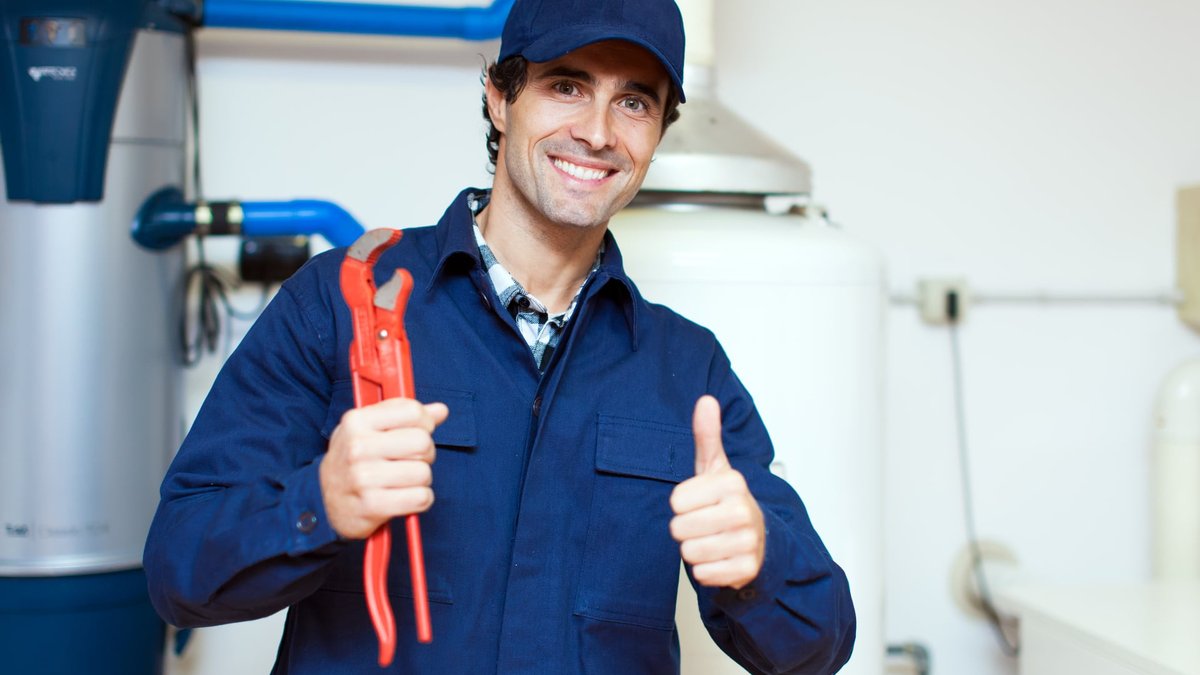
One consistent finding across local service industries is that authenticity frequently delivers stronger results than highly produced marketing materials. Professional photography certainly has its place, but homeowners generally respond more positively to real technicians working on actual jobs than generic stock images of pipes, tools, or smiling models.
Introducing team members, highlighting completed projects, or showcasing behind-the-scenes work allows prospective customers to connect with the people behind the business. This human element matters because plumbing services require a significant level of trust. Customers are inviting someone into their homes, often during stressful situations. Advertisements that communicate professionalism while remaining approachable can help reduce that uncertainty.
Strong Copy Begins with the Customer's Problem
Effective Facebook advertising typically follows a simple structure:
The opening sentence identifies a familiar problem that immediately captures attention.
The advertisement then presents a straightforward solution, reinforces credibility through customer reviews or local experience, and concludes with a clear call to action.
Specific language generally performs better than vague messaging. Rather than encouraging viewers to "Learn More," successful advertisements often invite homeowners to schedule a free estimate, request an inspection, or book an appointment online.
Clear, conversational language also tends to outperform technical terminology. Most homeowners care less about industry jargon than they do about knowing the problem can be resolved quickly and professionally.
Why Competitor Research Has Become Increasingly Valuable
Creating effective advertisements no longer requires starting from a blank page. Competitive intelligence allows businesses to understand which creative approaches, messaging styles, and promotional offers are already succeeding within their market before launching campaigns of their own. This does not mean copying competitors. Instead, it provides valuable context for identifying broader advertising trends and understanding what resonates with local audiences.
For small businesses operating with limited marketing budgets, this insight can significantly reduce unnecessary testing while improving confidence in campaign planning.
How AI Is Changing Local Advertising
Artificial intelligence has become one of the most significant developments in digital marketing over the past several years. Rather than replacing creative decision-making, AI increasingly handles repetitive production tasks that previously consumed considerable time.
Marketing teams can now generate multiple headline variations, alternative calls to action, video scripts, and image concepts within minutes. This allows businesses to test more creative variations without substantially increasing production costs. The ability to rapidly develop and compare different advertisements also supports ongoing optimization, helping businesses identify higher-performing campaigns more efficiently than traditional manual workflows.
For local service providers that lack dedicated marketing departments, these tools make sophisticated advertising strategies considerably more accessible.
Building Long-Term Marketing Success
Facebook advertising should not be viewed as a replacement for search marketing. Instead, the two channels complement one another. Search captures immediate buying intent, while Facebook helps create the recognition and trust that influence future purchasing decisions.
As more plumbing companies invest in digital marketing, businesses that consistently educate, engage, and remain visible within their communities are likely to enjoy stronger long-term customer relationships than those relying solely on emergency search traffic.
Well-designed Facebook campaigns create repeated opportunities for homeowners to become familiar with a company's people, values, and expertise long before an urgent repair comes up. Combined with competitive research, thoughtful creative strategy, and AI-assisted production, social media advertising becomes an important piece of a broader effort to build lasting recognition in an increasingly competitive local market.