Hair loss affects millions of women worldwide, often striking when least expected and leaving many searching for answers. While genetics play a role, understanding the science behind hair loss can empower women to take control of their hair health through targeted, natural solutions.
DHT: The Hidden Hormone Hijacking Hair Follicles
Dihydrotestosterone (DHT) might sound like a concern only for men, but this powerful hormone significantly impacts women's hair health. DHT forms when the enzyme 5-alpha-reductase converts testosterone into this more potent hormone, which then binds to hair follicle receptors with devastating effects.
Once DHT attaches to follicle receptors, it triggers a process called miniaturization. Hair follicles gradually shrink and produce thinner, shorter hairs before eventually stopping production altogether. What makes DHT particularly problematic is its binding strength—it attaches to follicle receptors much more strongly than regular testosterone, making its effects more pronounced and lasting.
The hormone specifically disrupts the natural hair growth cycle by shortening the anagen (growth) phase and extending the telogen (resting) phase. This means fewer active follicles producing hair at any given time, resulting in the characteristic thinning that causes so much distress.
How DHT Formation Affects Female Hair Growth
1. The Complex Role of 5-Alpha-Reductase in Women
The enzyme 5-alpha-reductase exists in two main types, with Type II being most relevant to hair loss. In women, this enzyme converts the relatively small amount of testosterone present into DHT, which is significantly more potent. Even with lower overall testosterone levels than men, women can still experience substantial hair loss when their follicles are genetically sensitive to DHT.
This sensitivity often runs in families, explaining why some women experience dramatic thinning while others maintain thick hair throughout their lives. The enzyme activity can also fluctuate based on hormonal changes, stress levels, and age, making certain life stages particularly vulnerable to hair loss acceleration.
2. Hair Follicle Miniaturization Process
Miniaturization occurs gradually, making it easy to miss in early stages. Initially, DHT binding causes follicles to produce slightly thinner hairs with shorter growth phases. Over time, these follicles continue shrinking until they can only produce fine, colorless vellus hairs—the same type found on a baby's face.
Eventually, affected follicles may become completely inactive, though they remain alive beneath the scalp for years. This dormant state means that with proper intervention, many follicles may potentially be reactivated and encouraged to produce healthy hair again, though the process requires patience and consistent treatment.
3. Female Pattern Hair Loss vs Male Baldness
Women experience DHT-related hair loss differently than men. Instead of receding hairlines or distinct bald patches, female pattern hair loss typically manifests as gradual thinning around the center part, widening of the part line, and overall volume loss at the crown. The frontal hairline usually remains intact, though some women notice slight recession at the temples.
This diffuse thinning pattern occurs because women have different distributions of DHT-sensitive follicles and varying hormone levels throughout their scalp. The result is often described as seeing more scalp through the hair, particularly when styling or under certain lighting conditions.
DHT Blockers: Interrupting Hair Loss at the Source
Natural vs Pharmaceutical Options
Pharmaceutical DHT blockers like finasteride show impressive results, blocking approximately 70% of DHT production by inhibiting Type II 5α-reductase enzyme. However, finasteride isn't FDA-approved for women and can cause significant hormonal disruption, including birth defects if pregnancy occurs during treatment.
Natural DHT blockers offer a gentler approach with potentially fewer systemic effects. While they may not achieve the same percentage of DHT reduction as pharmaceuticals, they may provide meaningful improvement without the risk of serious side effects. Natural options work through multiple mechanisms—enzyme inhibition, antioxidant protection, and improved circulation—creating a thorough approach to hair restoration.
Topical Applications vs Internal Supplements
Topical DHT blockers deliver active ingredients directly to the scalp, allowing for higher concentrations at the site where they're needed most. This localized approach minimizes systemic absorption while maximizing effectiveness at the hair follicle level. Topical applications also allow for combining multiple active ingredients in one formula for synergistic effects.
Internal supplements work systemically, affecting DHT levels throughout the body. While this broader approach can be beneficial for overall hormonal balance, it may also impact other DHT-dependent functions and take longer to show visible results. Many women find the best results come from combining both approaches—using topical treatments for direct follicle support while taking internal supplements for overall hormonal health.
5 Research-Supported Natural DHT Blockers for Women
1. Saw Palmetto - Leading Natural Option
Saw palmetto (Serenoa repens) stands as the most researched natural DHT blocker, working by inhibiting 5-alpha-reductase activity. A 6-month randomized, double-blind, placebo-controlled study found that saw palmetto extract may significantly increase total terminal hair count, vellus hair count, and total hair density in both men and women with self-perceived thinning hair.
For women specifically, saw palmetto offers balanced hormonal effects without the dramatic suppression seen with pharmaceutical alternatives. This makes it particularly suitable for women experiencing hormonal fluctuations during perimenopause and menopause, when gentle regulation is preferable to aggressive suppression.
2. Pumpkin Seed Oil - Nutritional DHT Support
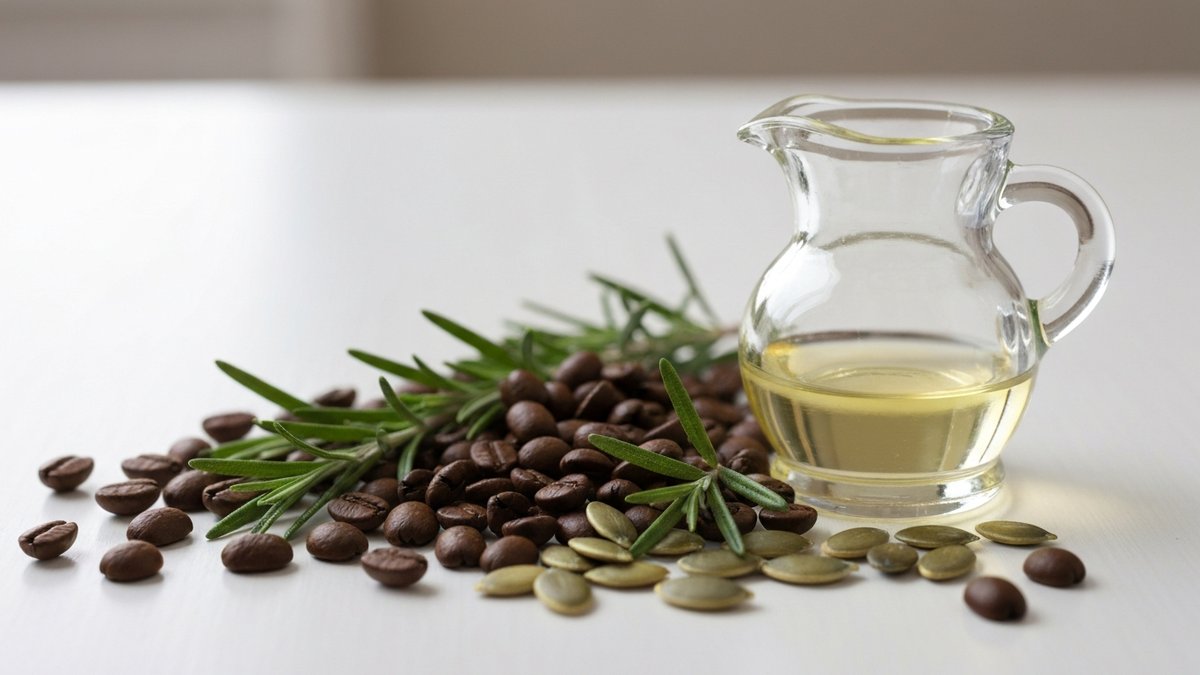
Pumpkin seed oil provides a unique combination of DHT blocking and nutritional support. Rich in phytosterols, zinc, and essential fatty acids, it inhibits 5-alpha-reductase while supplying nutrients essential for healthy hair growth. The zinc content is particularly valuable for women, as deficiency commonly contributes to hair thinning and slow growth.
This dual-action approach makes pumpkin seed oil especially effective for women experiencing thinning related to both hormonal and nutritional factors. It can be used topically, taken as a supplement, or incorporated into the diet through cold-pressed oil or pumpkin seeds.
3. Rosemary Oil - Hair Growth Stimulation
Rosemary oil has shown remarkable clinical results, with a 2015 study demonstrating comparable effectiveness to minoxidil 2% for hair density improvement over six months in participants with androgenetic alopecia. The active compound carnosic acid in rosemary is believed to inhibit DHT production locally at the scalp while improving circulation to deliver vital nutrients to follicles.
Unlike many other natural remedies, rosemary oil penetrates deeply into the scalp, reaching hair follicles where DHT binding occurs. It simultaneously may reduce inflammation and provides a soothing sensation that many women find comforting during treatment.
4. Green Tea Extract - Antioxidant Protection
Green tea extract contains powerful catechins, particularly epigallocatechin gallate (EGCG), that inhibit 5-alpha-reductase activity and reduce DHT production. Beyond DHT blocking, green tea's antioxidant properties combat oxidative stress that damages hair follicles and accelerates shedding.
This dual approach proves particularly valuable for women experiencing age-related thinning, where both hormonal changes and increasing oxidative damage contribute to hair loss. The anti-inflammatory benefits also help address scalp conditions that can worsen hair loss, creating a healthier environment for growth.
5. Caffeine - Clinically Proven As Effective As Minoxidil
Caffeine works at the cellular level to stimulate hair follicles and extend the growth phase that DHT typically shortens. Research suggests topical caffeine may be as effective as minoxidil for promoting hair growth, making it a promising natural alternative for women concerned about pharmaceutical side effects.
Caffeine also improves blood circulation to the scalp, ensuring nutrients reach follicles effectively while removing waste products that can inhibit growth. This circulation boost provides immediate benefits that women often notice as improved scalp health and reduced shedding within weeks of starting treatment.
When Hormones Trigger DHT Sensitivity
Menopause and Hair Loss Acceleration
Menopause and perimenopause create a perfect storm for DHT-related hair loss. As estrogen levels decline, the protective effects against DHT diminish, while remaining testosterone becomes more influential. This shift may trigger sudden acceleration of hair loss in women who previously had stable hair density.
PCOS and Elevated DHT Levels
Polycystic ovary syndrome (PCOS) directly elevates DHT levels through increased testosterone production and insulin resistance. Women with PCOS often experience more aggressive hair loss patterns, which may include some recession at the temples typically seen only in men.
Post-Pregnancy Hormonal Shifts and Hair Changes
Pregnancy temporarily elevates estrogen levels, often resulting in thick, lustrous hair. However, the dramatic hormonal drop after delivery can trigger significant shedding as estrogen's protective effects diminish and DHT sensitivity returns. This postpartum hair loss typically peaks around three to six months after delivery.
Natural DHT Blockers Offer Hope for Female Hair Loss
Natural DHT blockers represent a powerful, science-backed approach to addressing female hair loss without the side effects associated with pharmaceutical interventions. By targeting the root cause of follicle miniaturization while supporting overall hair health through improved circulation and nutrition, these natural solutions offer genuine hope for women experiencing thinning hair.
The key to success lies in understanding that hair restoration is a gradual process requiring consistent application and realistic expectations. While complete reversal to pre-loss thickness may not always be guaranteed, significant improvement in density, reduced shedding, and restored confidence are achievable goals for most women willing to commit to a natural approach.