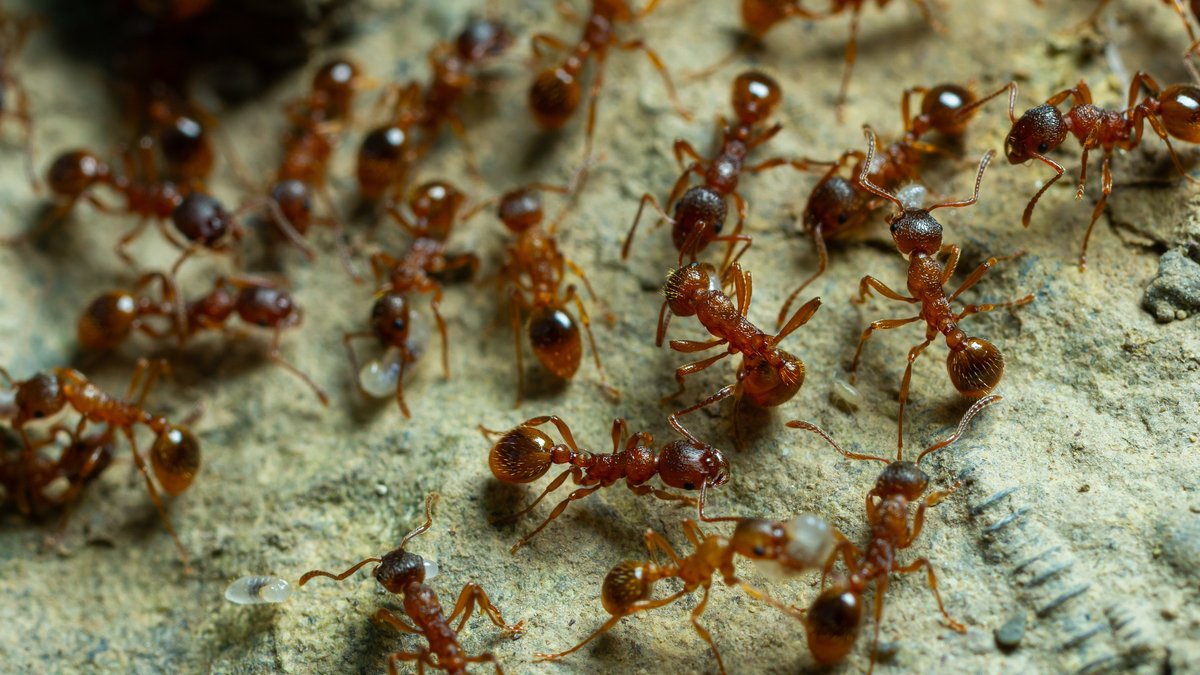
Houston pest control has a late-summer flashpoint, and for a lot of families, it's the fire ant mound that appears in the yard overnight. Houston's heat and humidity keep ant colonies active and aggressive well into the fall, and fire ants in particular are more than a backyard nuisance — they're a genuine hazard for kids and pets. But fire ants are only one of the ant problems the region faces, and knowing what you're dealing with is the first step to handling it. This guide covers the Houston area's most troublesome ant species, why they matter for your health and your home, what you can do to keep them out, and when it's time to bring in a professional.
Key Takeaways
- Fire ants are one of Houston's most aggressive ant species and a real health risk, especially to children and pets.
- Texas is home to nearly 300 ant species; Houston sees fire, carpenter, tawny crazy, rover, acrobat, pharaoh, and leaf-cutting ants.
- Tawny crazy ants don't sting but damage electronics and resist most consumer insecticides.
- Professional Houston pest control targets the colony at its source, not just the ants you see.
- Prevention comes down to sealing entry points, removing food and moisture, and consistent maintenance.
- Some ant problems consistently defeat DIY products and call for a professional.
Know your Houston ants
"Ant problem" covers a lot of ground in Houston, where nearly 300 species live across Texas, and several are common around homes. Telling them apart matters, because the right treatment depends on the species.
Fire ants are the ones most people worry about, and for good reason. They're highly aggressive, and their sting delivers a burning sensation that can escalate to an allergic reaction in sensitive people. For families with small children or pets, a fire ant mound in the yard is a safety issue, not just an inconvenience. Houston's warm climate lets their colonies thrive year-round, so they rarely go away on their own.
Tawny crazy ants are a newer and stranger problem. They showed up in Harris County in the early 2000s and have spread aggressively along the Gulf Coast since. They don't sting, but they do something arguably worse for a homeowner: they're drawn to electrical equipment — HVAC systems, junction boxes, circuit breakers — and because their bodies conduct electricity, a nest inside a wall panel can cause short circuits and thousands of dollars in appliance and wiring damage. They're also nearly immune to most over-the-counter insecticides, which makes them one of the toughest pest problems in the area right now.
Carpenter ants are a structural concern. They don't eat wood the way termites do, but they excavate it to build their nests, which means an established colony can quietly compromise the wood in and around a home. Beyond those three, Houston homeowners also run into rover ants, acrobat ants, pharaoh ants, and leaf-cutting ants, and in some cases ants and termites are mistaken for one another — another reason accurate identification is worth getting right.
Why late summer brings them out
Houston's climate is the driving factor. Sustained heat and humidity keep ant colonies active and foraging, and the warm conditions that make the region a year-round pest environment are at their most intense in late summer. Colonies that have been building through the spring and summer are now large and actively expanding their territory, which is when they tend to push into yards, patios, and eventually homes in search of food and water. That timing is exactly why late summer is the moment to get ahead of them rather than wait for the problem to move indoors.
Steps Houston homeowners can take now
Making a property less attractive to ants goes a long way toward keeping them out, and most of the work is straightforward:
- Seal the entry points. Close gaps around doors, windows, pipes, and the foundation, which are the routes ants use to get inside.
- Cut off the food supply. Store food in airtight containers and clean up crumbs and spills promptly; ants forage relentlessly once they find a reliable source.
- Fix moisture problems. Repair leaks and address damp areas, since ants are drawn to water as much as food.
- Pull mulch back from the exterior. Mulch against the foundation gives ants a sheltered bridge into the home; leaving a gap helps.
- Stay consistent. Quarterly pest control maintains a protective barrier that discourages new colonies from establishing near the home.
These measures reduce the risk, but certain ant problems consistently defeat consumer products — and knowing when you've hit that point saves a lot of frustration.
When to call the professionals
Some ant situations reliably produce poor results with store-bought products, and they're worth recognizing. Call a professional when tawny crazy ants are present, when pharaoh ants have established indoors, when fire ant mounds keep coming back after repeated treatment, when carpenter ants show up alongside visible wood damage, or when ant activity is inside walls or other inaccessible voids. In each of these cases, the colony is either too resilient, too hidden, or too damaging to handle piecemeal.
ABC's ant control service is built around the principle that matters most with ants: eliminate the colony at its source rather than the foragers you happen to see. That starts with identifying the species, since a fire ant, a crazy ant, and a carpenter ant each call for a different approach. For ant problems, ABC offers same-day service Monday through Friday when you book online before 1 p.m., and every plan begins with a free inspection followed by a treatment strategy customized to the property and the specific ant involved.
What to expect from service
ABC's approach reflects a family-owned company's priorities. Technicians use products formulated for residential use, applied at the lowest effective concentration while still resolving the problem, with the safety of families and pets kept front of mind. Every technician is background-checked and completes in-house training before service calls, and because ABC employs licensed entomologists, treatment plans are grounded in real knowledge of how each local species behaves and where it nests. Follow-up visits focus on outdoor hiding spots, entry points, and perimeter prevention to stop ants from returning.
Fire ants and their many Houston relatives don't have to define your late summer. A combination of sealing your home, removing what draws them in, and professional treatment keeps colonies out of your yard and away from your family. If mounds keep reappearing or you're seeing ants indoors, that's the season making its move. Ready to reclaim the yard? Book a free inspection with ABC Home & Commercial Services today.