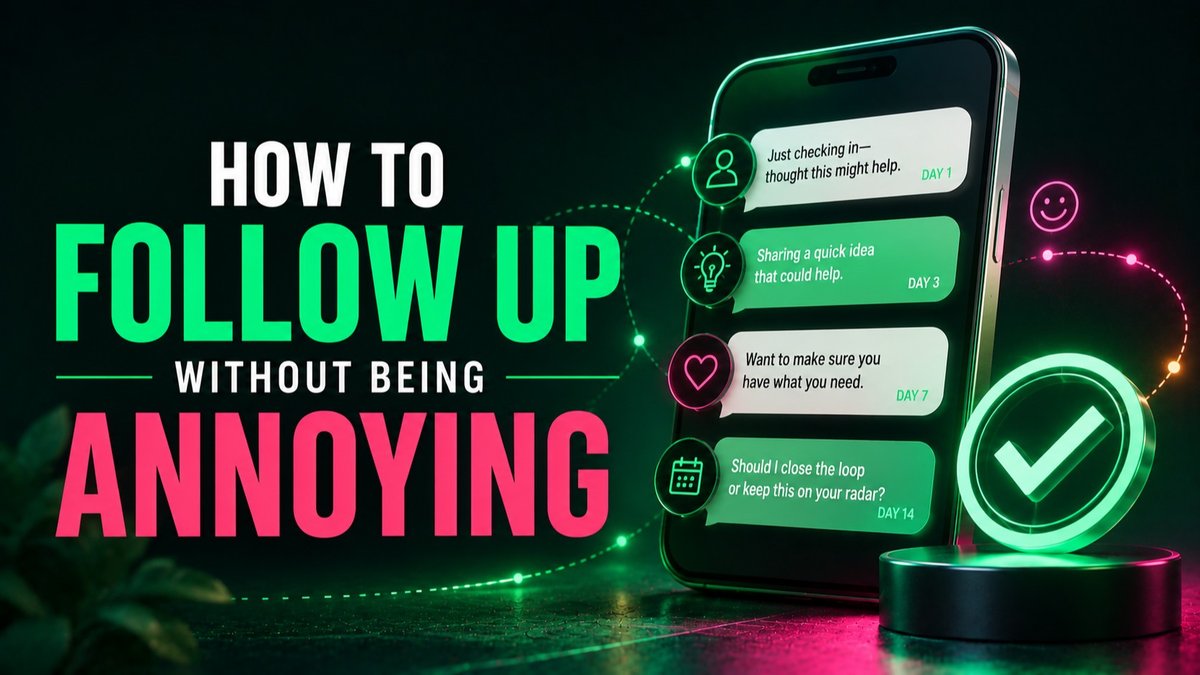
Key Takeaways
- 80% of sales require five or more follow-ups, yet 92% of reps quit before the fifth attempt - meaning most pipelines are leaking revenue silently.
- The real difference between persistence and pressure is not how often you follow up - it's why and how. Persistence is buyer-centric; pressure is seller-centric.
- "Just checking in" is one of the most damaging phrases in sales - it adds noise without reducing a buyer's decision friction.
- AI-powered follow-up systems can maintain structured, value-driven cadences at scale without crossing into pressure territory - something teams at MAXED AI have built entire products around.
- Asking for permission to follow up at the close of an initial conversation is one of the most underused and highest-converting tactics in sales.
80% of Sales Need 5+ Follow-Ups - Yet Nearly Half of Reps Quit After One, and 92% Give Up Before the Fifth Attempt
Here's a number that should make any sales professional uncomfortable: roughly 80% of sales require at least five follow-up touches to close. Yet approximately 44% of reps stop after just one attempt, with 92% giving up before that fifth critical touchpoint.
That gap - between what the data demands and what most reps actually do - is where enormous amounts of revenue quietly disappear. Deals aren't lost to competitors with better products or lower prices. They're lost to inaction, anxiety, and a deeply held fear of being perceived as pushy.
That fear isn't unfounded. Pushy follow-up is real, it's damaging, and buyers genuinely hate it. But the critical insight most sales training glosses over is this: the problem is almost never the number of follow-ups. It's the quality. The distinction between persistence and pressure is not a gray area - and once understood, it changes everything about how follow-up gets executed.
Persistence vs. Pressure: What Actually Separates Them
These two words get used interchangeably in sales conversations, but they describe fundamentally different approaches. Understanding where one ends and the other begins is the foundation of an effective follow-up strategy.
Persistence: Buyer-Centric, Value-Driven
Persistent follow-up is organized around the buyer's timeline, stated goals, and decision-making process. Each touchpoint either delivers useful information, removes a friction point, or honors a next step that was mutually agreed upon. The buyer is the protagonist. The seller's role is to guide - not chase.
When a follow-up references something the buyer actually said, shares a case study relevant to their specific challenge, or offers a clear option to reschedule or close out the conversation, it reduces cognitive load and makes the decision easier. That's persistence.
Pressure: Seller-Agenda, Context-Free
Pressure-based follow-up is organized around the seller's quota, timeline, and anxiety. It ignores what the buyer has already communicated. It repeats the same pitch with a slightly different subject line. It manufactures urgency - "This offer expires Friday!" - that has nothing to do with the buyer's reality.
Psychologically, this triggers what's known as reactance - a defensive response buyers experience when they feel their autonomy is being overridden. Once that kicks in, it doesn't just end the deal. It ends the relationship.
Why "Just Checking In" Is the Real Problem
The phrase "just checking in" has become shorthand for everything wrong with pressure-style follow-up. It asks for a buyer's attention without offering anything in return. It signals that the rep's need for an update outweighs the buyer's need for useful information.
Attention Overload and Reactance
Buyers operate in a state of near-constant attention overload. Their inboxes are full, their calendars are packed, and every message competes for cognitive bandwidth. A generic check-in doesn't just get ignored - it actively signals that the sender doesn't understand or respect that reality. That signal compounds with every repeated nudge.
How Irrelevant Outreach Triggers Avoidance
When buyers feel followed up on rather than supported, avoidance becomes the path of least resistance. They don't reply, don't pick up, and eventually mentally file the rep under "persistent annoyance." The deal doesn't die with a "no" - it dies with silence. From a pipeline management standpoint, silent death is worse than a clean rejection because it wastes time, distorts forecasting, and delays the rep from moving on.
The Hidden Cost of Under-Following Up
Silent Revenue Loss and Rising CAC
Customer acquisition costs (CAC) have risen steadily across B2B and service categories. Every lead that enters a pipeline represents real spend - on ads, content, outbound effort, or sales time. When a lead doesn't get properly worked, that spend produces zero return. The lead isn't just "not closed" - it's an active loss on the marketing investment.
This is what's sometimes called silent revenue loss: deals that never get a "no," they just never get a fifth touchpoint. Research suggests that 35-50% of sales go to the vendor that responds first and maintains consistent follow-up - meaning the reps who stay present, respectfully, are capturing a disproportionate share of available revenue. Personalized, structured outreach has been shown to drive meaningful gains in sales results; HubSpot's research points to a 20% increase in sales from personalized email marketing campaigns, while broader automation and AI adoption - per McKinsey - can boost overall sales productivity by a similar margin when follow-up moves from ad hoc to systematic.
What Persistent Follow-Up Actually Looks Like
Persistent follow-up is an operational design, not just a mindset shift. Here's what it looks like in practice.
Set Agreed Next Steps Upfront
The single most effective thing a rep can do to make follow-up feel expected rather than intrusive is to define the next step before the conversation ends. Not a vague "I'll follow up in a couple of weeks" - a specific date, channel, and purpose. "Let's reconnect Thursday at 2 PM to go over the revised proposal." That transforms every subsequent touch from a chase into the execution of a mutual plan.
Add Real Value in Every Touch
Every follow-up message should earn the reader's attention rather than demand it. That means bringing something new: a relevant case study, a useful industry insight, a reframe of the options, or a clear summary of where things stand. Varying the format - short email, a brief video message, a LinkedIn note - also fights attention decay without feeling like repetition. The goal is to be the person who makes the decision easier, not the person reminding the buyer they haven't made one yet.
Use Permission Language to Reduce Friction
One of the most underused follow-up techniques is simply asking for permission. At the close of an initial call: "I don't want to be a pest - is it okay if I follow up in[timeframe]?" That one question reframes everything. It signals respect for the buyer's autonomy, sets a clear expectation, and dramatically reduces the feeling of intrusion when the follow-up arrives. Equally powerful in later-stage touches: "Should I circle back in a few weeks, or would you prefer I close this out?" - giving buyers a clean, guilt-free exit actually increases reply rates by removing the fear of being trapped in a conversation they don't want.
How AI Enables Persistence Without Pressure
For reps managing 50+ active opportunities, executing a structured, value-rich cadence across every lead is operationally very difficult without support. Technology - used correctly - becomes a genuine advantage rather than a shortcut to spam.
Structured Cadences at Scale
Sales engagement platforms allow teams to build multi-channel, pre-approved follow-up sequences with deliberate spacing between touches. Not daily blasts, but thoughtfully timed outreach that respects the buyer's decision cycle. When sequences are built around value-adding content rather than rep-need messaging, automation enhances the buyer experience rather than degrading it.
Behavior-Triggered Follow-Up
Modern engagement platforms can trigger follow-ups based on actual buyer behavior - reopening a proposal, revisiting a pricing page, clicking a link in a previous email. This kind of predictive engagement feels fundamentally different to a buyer because it is different. The outreach is anchored in demonstrated interest, not the rep's calendar. A follow-up that arrives shortly after a buyer has re-engaged with a proposal is precise timing - the digital equivalent of returning a call right after someone has left a voicemail.
Persistent Follow-Up Isn't Rude - Ghosting Your Pipeline Is
Failing to follow up isn't polite. It's negligent. Buyers are busy. They forget. They get pulled into other priorities. A rep who disappears after one unanswered email isn't respecting the buyer's time - they're abandoning a conversation the buyer may have genuinely intended to continue.
Sales professionals who treat follow-up as a service - rather than a burden or an imposition - close more deals and build stronger relationships. The goal is to make sure that the people who do want to move forward don't lose the thread because nobody stayed present long enough to help them get there. Structured, value-driven persistence is professional. The reps and businesses that internalize that distinction don't just convert more leads - they build reputations as exactly the kind of partner buyers want to work with.
To find out more about AI-powered follow-up systems built around the persistence-not-pressure model, visit MAXED AI - a team specializing in AI-driven sales engagement that keeps pipelines active without the pressure tactics that burn relationships.