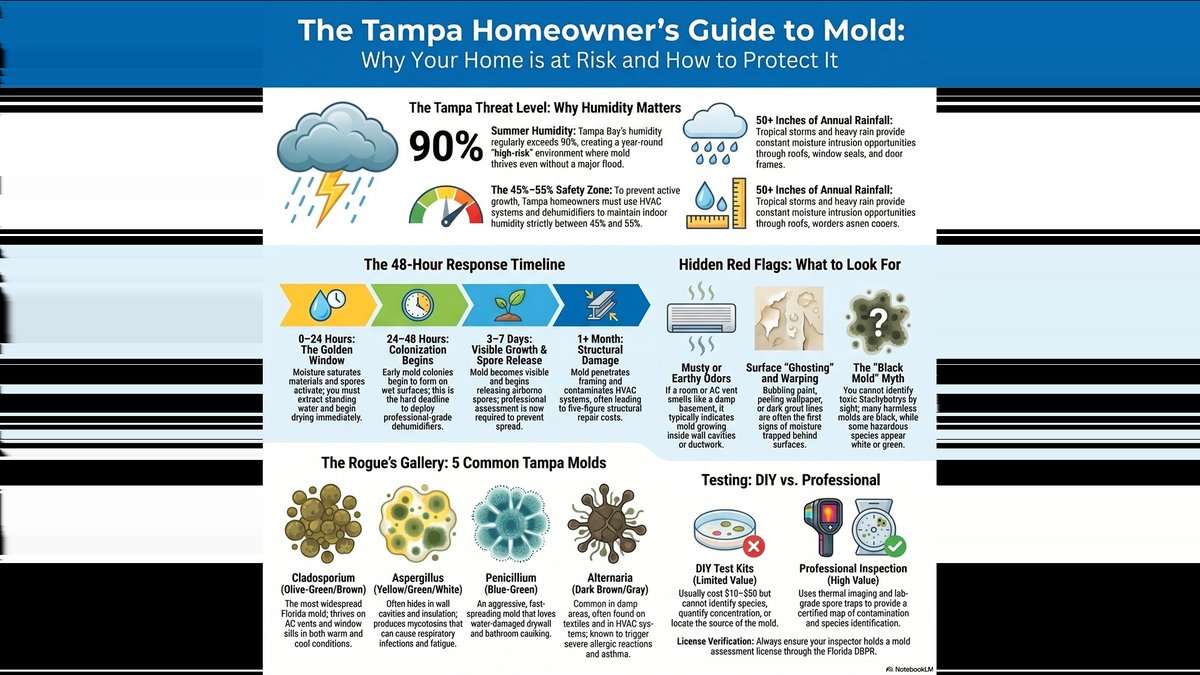
TampaBayMold.net has published a guide addressing black mold identification for Tampa Bay homeowners, focusing on challenges posed by the region's climate and the gap between visual observation and reliable species confirmation. The guide notes that visual identification alone cannot confirm the presence of Stachybotrys chartarum—commonly called toxic black mold—and directs homeowners toward professional testing as the only accurate method for determining species identity, toxicity levels, and appropriate remediation strategies.
More information is available at https://tampabaymold.net/services/mold-inspection/
Florida is among the most mold-prone states in the United States due to its climate. Tampa Bay faces high susceptibility because average annual humidity reaches approximately 70-75%. Tampa's humidity creates year-round conditions that support mold colonization in ways that drier regions do not experience, making prevention and early detection necessary for local homeowners.
The guide highlights the rapid timeline of mold colonization in Tampa Bay conditions. Mold can begin growing within 24 to 48 hours after water damage occurs, with visible patches often appearing between 48 and 72 hours. By the time most homeowners notice a musty odor or visible discoloration, the colony has already established itself and likely been growing for days, underscoring the need for immediate drying and professional assessment following any water intrusion event.
Many homeowners assume they can identify toxic black mold by appearance, but the guide clarifies that Stachybotrys chartarum cannot be reliably distinguished from benign species without laboratory testing. Numerous non-toxic mold species appear black, while hazardous species may present as white, gray, or green. Only professional surface swab testing or air sampling conducted by certified inspectors can confirm species identity and toxicity, which determines both health risk and the correct remediation approach.
Professional mold inspections in Tampa typically range from $200 to $1,000 depending on property size and complexity, representing an upfront investment that can prevent remediation costs ranging from several hundred to tens of thousands of dollars according to general industry estimates. An internal case study from TampaBayMold.net revealed that thermal imaging identified water migration 15 feet beyond visible damage, and professional mold testing led to an $18,000 remediation cost initially excluded by the insurance company, ultimately increasing the settlement by 264%. Early detection through professional inspection proves financially prudent in addition to protecting occupant health.
The new guide covers identification methods, hidden mold locations including crawl spaces and HVAC systems, species-specific health risks, testing methodologies, and prevention strategies tailored to Tampa Bay's climate. It notes the importance of crawl space inspection, HVAC system maintenance, and compliance with Florida DBPR licensing requirements for mold assessment and remediation services on areas exceeding 10 square feet. Homeowners who suspect mold growth or want to schedule a professional inspection can access the full guide and contact certified specialists through TampaBayMold.net.
For more details, visit https://www.tampabaymold.net