Key Takeaways
- In-home care is often more practical than families expect - for many seniors, the real need is daily support, not full-time facility care.
- Nursing homes are best reserved for true medical necessity - a facility may be the right choice when a senior needs daily skilled nursing, intensive rehabilitation, frequent physician involvement, or cannot remain safe at home.
- RN supervision helps close the clinical gap - when caregivers are supervised by registered nurses, care plans can be better managed, and warning signs are more likely to be caught early.
- The decision should start with current needs - before choosing care, families should ask how many hours of help are actually needed, whether skilled nursing is required, whether the home can remain safe, and what the senior wants.
Most families do not start researching care costs until something forces the conversation - a fall, a diagnosis, a moment where it is clear that things cannot stay the way they are. At that point, the pressure to decide quickly can make it easy to assume a nursing home is the default answer. It often is not. For a large share of Houston seniors, in-home care is not just a quality-of-life preference - it is the more practical and affordable choice. Understanding the options is the fastest way to see why.
In-Home Care vs. Nursing Home: Key Differences
One-on-One Care at Home vs. Shared Staff in a Facility
The staffing model is one of the starkest differences between the two options - and it rarely gets enough attention in cost comparisons. In a nursing home, a single aide may be responsible for multiple residents during a shift, with ratios varying by facility type, time of day, and resident needs. Attention is divided by necessity. That is not a criticism of facility staff; it is simply how residential care is structured at scale.
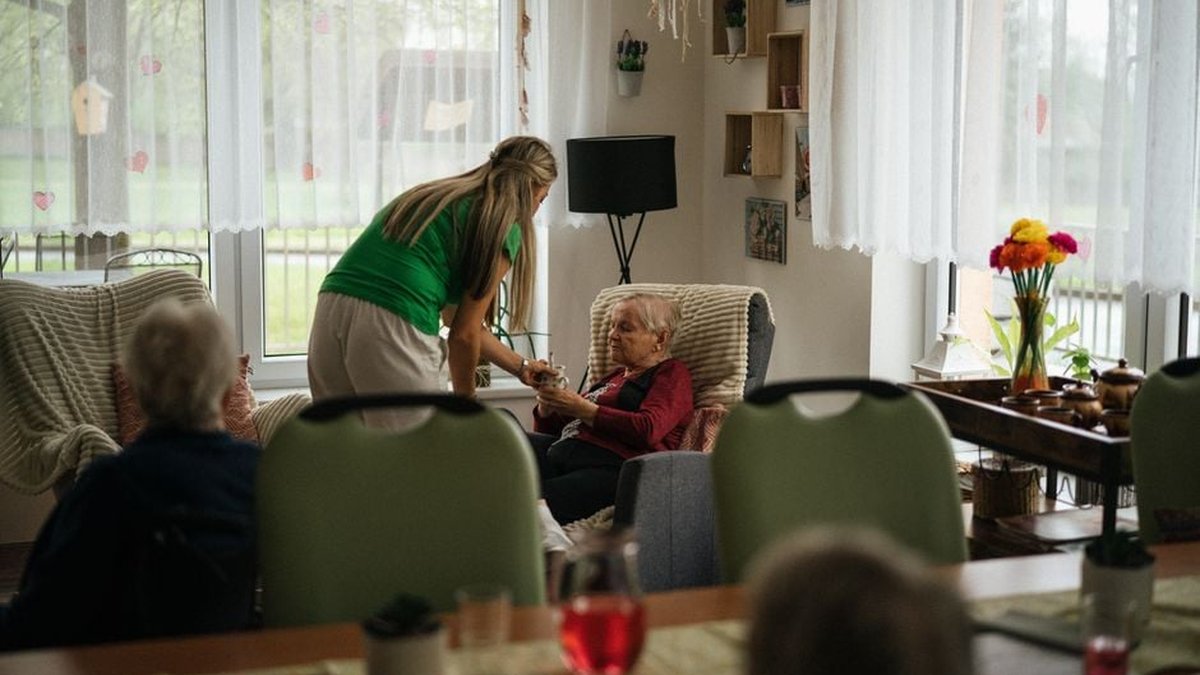
In-home care works on a fundamentally different model. The caregiver's entire focus during their shift belongs to one person. Meals, medication reminders, personal hygiene, mobility support, companionship - all of it is undivided. For seniors with dementia, anxiety, or conditions that require close behavioral observation, that one-on-one dynamic is not just a comfort preference. It is clinically meaningful. Subtle changes in mood, appetite, or movement patterns are far more likely to be caught when one caregiver is paying attention to one person.
Research consistently links aging in place with improved quality of life, reduced healthcare costs, and stronger social connectedness. Approximately 77% of adults over 50 say they want to remain in their homes as they age. In-home care makes that possible for far longer than many families expect.
RN-Supervised Caregivers Close the Clinical Gap
The most common hesitation families voice about in-home care is a clinical one: what happens if something goes wrong and there is no nurse present? It is a fair concern, and it deserves a direct answer.
Not all home care agencies operate at the same clinical standard. The differentiating factor is whether caregivers operate under registered nurse (RN) supervision. When RN oversight is built into the care model - not just available on paper - it changes what in-home care can actually deliver. For example, Houston-based Encore Caregivers has RN supervision embedded into its care model as standard practice, which means care plans are clinically informed, warning signs are more likely to be caught early, and hospital re-admissions are actively worked against.
For families weighing the clinical gap between home and facility care, the right question is not just whether there is a nurse on-site - it is how clinical oversight is structured into the care being provided day to day.
When In-Home Care Is the Smarter Choice
1. Recovery, Chronic Conditions, and Dementia at Home
Post-surgical recovery is one of the most common entry points for in-home care - and one of the clearest cases where it outperforms a nursing facility for most patients. After a hip replacement, cardiac procedure, or hospitalization, the goal is recovery in the least disruptive environment possible. For the majority of patients, that is home. Familiar surroundings reduce confusion and anxiety, which matters especially for seniors who also have early-stage dementia.
Dementia care at home is often more viable than families initially assume. Many seniors living with Alzheimer's or another form of dementia can remain safely at home with properly trained, RN-supervised caregivers - often for years. For those in mild to moderate stages, home care with appropriate supervision frequently produces better outcomes than a facility transition, which can itself accelerate cognitive decline due to the disruption of relocation.
Chronic condition management - heart failure, COPD, diabetes - also fits the in-home model well when daily skilled nursing is not required. Medication reminders, dietary support, and close daily observation by a consistent caregiver can reduce the frequency of emergency interventions and keep a senior stable at home longer.
2. Seniors Who Can Safely Remain With Assisted Daily Living
A large portion of seniors who end up in nursing homes do not actually require the level of medical care those facilities provide. What they need is reliable help with activities of daily living - bathing, dressing, grooming, meal preparation, medication reminders, light housekeeping, and safe transportation to appointments. These are the services in-home care is specifically built to provide, at a fraction of the cost of residential placement.
If a parent is mentally engaged, ambulatory with some assistance, and not managing conditions that require daily clinical intervention, in-home care is almost certainly the more appropriate - and more affordable - fit. Paying for nursing home infrastructure when it is not medically necessary is a significant and avoidable expense.
3. Families Where an Adult Child Is Nearby or in the Home
In-home care works especially well when it supplements - rather than replaces - family involvement. When an adult child lives in the same home or nearby, professional caregivers can cover the hours that family members cannot, while family continues to provide the relational connection that professional care cannot replicate.
This model also helps prevent caregiver burnout, which is a real and underacknowledged risk for adult children who try to manage a parent's full care needs alone. Structured respite - scheduled hours where a professional caregiver takes over - allows family members to sustain their involvement long-term without reaching a breaking point. That continuity often matters more for a senior's wellbeing than the specific care setting.
When a Nursing Home Is the Right Answer
In-home care is not the right answer for every situation. There are medical circumstances where a nursing facility is not just appropriate - it is the only genuinely safe option. Choosing a nursing home under those circumstances is a sound decision made on the right terms.
A nursing home is typically the better choice when:
- Daily skilled nursing care is required - wound care, IV medications, catheter management, or other interventions that need licensed nursing staff on-site around the clock.
- A physician needs to be involved frequently in monitoring or adjusting a treatment plan.
- Safety can no longer be maintained at home even with full-time caregiver coverage - due to severe behavioral symptoms, fall risk, or the physical layout of the home.
- Intensive daily rehabilitation services are needed - physical, occupational, or speech therapy that a facility provides more efficiently than in-home visits.
- The complexity of medical needs genuinely exceeds what even a highly supervised home care model can safely support.
The goal is not to avoid nursing homes at all costs. The goal is to make sure the decision is based on actual medical need - not on the assumption that a facility is the only option available.
4 Questions to Ask Before You Decide
Before committing to any care arrangement, it is worth slowing down enough to ask the right questions. Decisions made under pressure and without full information tend to be more expensive and harder to reverse. These four questions will not answer everything - but they will clarify the decision significantly.
- How many hours of care does your parent actually need right now? Not a worst-case estimate - today's genuine need. That number determines whether in-home care is financially competitive with a nursing home before any other factor is considered.
- Does the medical situation require daily skilled nursing? If yes, a nursing home or skilled nursing facility may be medically necessary. If no, in-home care with RN supervision may provide clinically appropriate oversight at meaningfully lower cost.
- Can your parent safely remain at home with professional caregiver support? Safety is the non-negotiable variable. Fall risk, wandering, behavioral symptoms, and home layout all factor in. An honest assessment often requires a professional evaluation - not just a family gut check.
- What does your parent want? This question is asked less often than it should be. When a senior is cognitively capable of participating in the decision, their preference carries real weight. Research consistently shows that staying in a familiar home environment improves psychological wellbeing and quality of life - and that preference, when it can be safely honored, is worth honoring.
Final Thoughts
Choosing between in-home care and a nursing home is not just a financial decision. It is a decision about safety, dignity, medical need, family capacity, and quality of life.
For many seniors, especially those who need help with daily living rather than round-the-clock medical care, staying at home with professional caregiver support can be the better fit. It allows them to remain in familiar surroundings, keep more of their normal routine, and receive focused one-on-one attention.
The key is not to wait until a crisis forces the choice. By assessing care needs early, comparing options honestly, and asking whether facility-level care is truly necessary, families can make a calmer, more informed decision. In many cases, the most supportive and affordable path may already be at home.