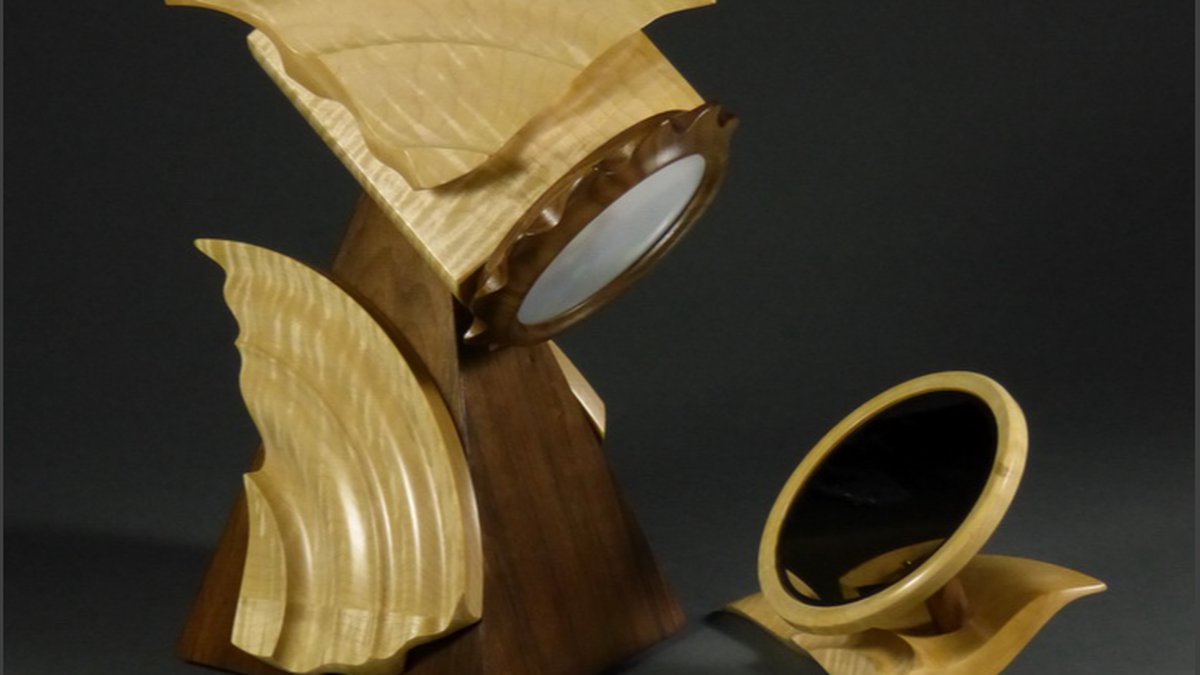
The launch responds to increasing demand in the art world for tactile, hand-crafted pieces that diverge from the largely digital, intangible world. The piece from Steve Gray Kaleidoscopes combines intricate, ornate work with innovative design elements that offer viewers a fresh take on the 200-year-old medium.
Interested parties can learn more at SGWoodStudios.com
As the modern world becomes more abstract and disembodied, many find themselves drawn to experiences that are grounded and sensory-rich. This desire is reaching the art world, where many experts are seeing a popular resurgence of highly tactile pieces competing with digital artwork, according to a survey of museum curators by the global online art marketplace Artsy. High-touch, labor-intensive pieces like ceramics and textiles wage a silent protest against too-perfect digital images and ethereal abstract paintings filling galleries and homes.
The Phantom kaleidoscope, a limited-edition design from Steve Gray, combines the smooth, rich feel of walnut and curly maple wood with innovations bringing old-world techniques into the 21st century. While most kaleidoscopes feature three mirrors, Phantom was built on a rare 5-mirror system that creates a hexagonal design resembling a three-dimensional psychedelic honeycomb. Richly-colored lampwork glass is used in the image cell to create an ornate, ever-changing design.
Phantom is also elevated by its dual illumination capability, which offers collectors two distinct viewing experiences: external light directed to the image cell via a detached mirror, or internal LED illumination that transforms the scope's appearance entirely. Standing approximately 15 inches tall, 7 inches wide, and 10 inches deep, each piece receives a hand-rubbed oil finish buffed with carnauba wax to showcase the natural wood characteristics.
Unique magnetic sculptural elements can be repositioned or exchanged, introducing an interactive dimension to the collector experience. This feature bridges artisanal tradition with contemporary expectations, allowing collectors to personalize their engagement with the piece rather than simply viewing it as a static object
Gray's creative philosophy draws from a heritage of woodworking, fascination with mechanisms, and meditative inquiry into reflection and light—elements that converge naturally in kaleidoscope design. The Phantom exemplifies his continued evolution as an artist and the enduring vitality of the kaleidoscope tradition among collectors who regard these pieces as significant art objects.
For more details, visit SGWoodStudios.com