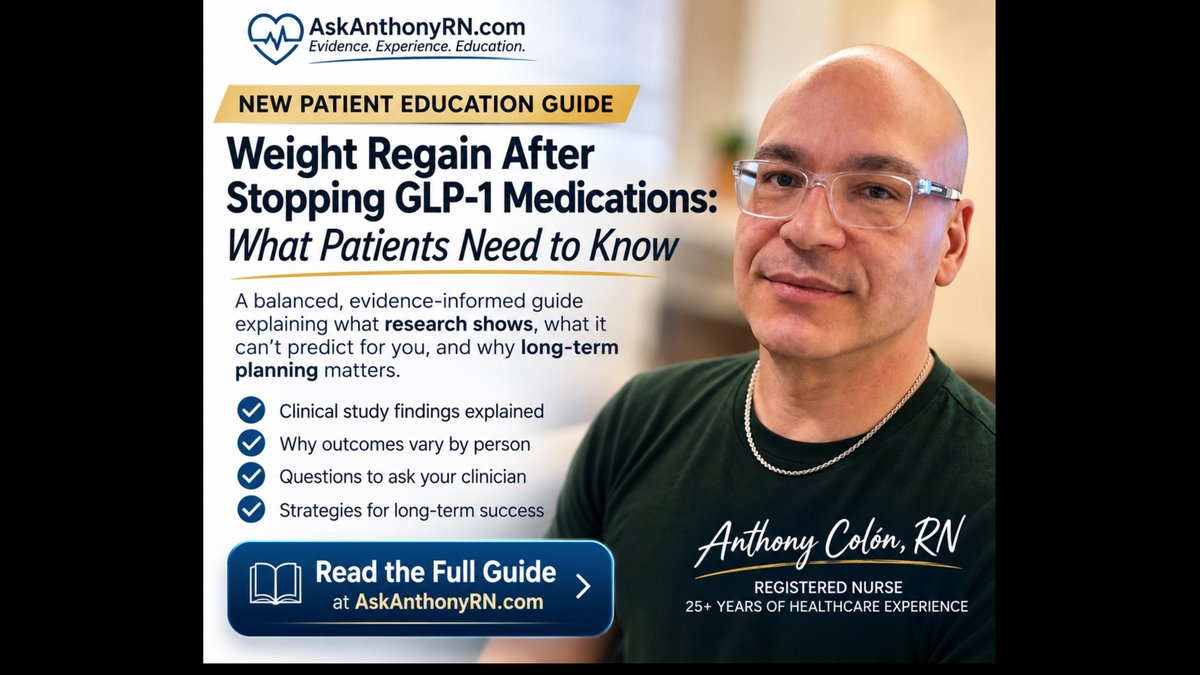
Anthony Colón, RN | Wellness & Weight Loss has released a patient education guide addressing weight regain after discontinuing GLP-1 medications. The resource provides research-backed insights for individuals using or considering semaglutide and tirzepatide for weight management, translating clinical trial data into practical context. While population-level findings document weight regain as a real phenomenon, individual outcomes vary, and long-term planning with a qualified clinician remains necessary before starting, continuing, or stopping treatment.
More information is available at https://askanthonyrn.com/weight-regain-after-stopping-glp-1-medications
Clinical evidence supports the guide's foundation. Randomized trials demonstrate measurable weight changes following medication discontinuation. The STEP 1 extension trial showed that participants who stopped semaglutide 2.4 mg regained approximately two-thirds of their prior weight loss within one year after treatment and lifestyle intervention ended. In the SURMOUNT-4 trial involving tirzepatide, participants who switched to placebo experienced an average 14.0% increase in body weight from randomization through week 88, while those who continued tirzepatide lost an additional 5.5% on average.
A 2026 systematic review and meta-analysis found that weight regain after stopping weight-management medications varied by drug class. For newer incretin-based medicines, including semaglutide and tirzepatide, the analysis estimated an average regain of about 0.8 kg per month, or approximately 9.9 kg during the first year after treatment ended. These are population-level estimates, not predictions for individual patients.
These outcomes reflect how GLP-1 medications function at a physiological level. The medications affect appetite regulation, food intake, and feelings of fullness; these mechanisms cease when treatment stops. Weight regulation depends on multiple interacting factors: underlying biology, coexisting health conditions, sleep quality, stress levels, mobility, food access, concurrent medications, daily routines, and available support systems. Because study averages cannot account for the full complexity of an individual's circumstances, population-level statistics should inform clinical conversations rather than serve as personal predictions or decision-making tools used in isolation.
Anthony Colón, RN designed the guide to move patients beyond headlines and statistics, encouraging informed decision-making through structured clinical dialogue. A dedicated section titled "Questions for your clinician" helps patients initiate conversations about treatment goals, monitoring plans, side effect management, cost or access concerns, and strategies for long-term support. The guide clarifies that stopping medication is a treatment decision rather than a failure, validating the many legitimate reasons individuals may discontinue or adjust therapy, including side effects, insurance changes, pregnancy planning, or evolving health priorities.
The patient education guide integrates with a broader educational framework offered through askanthonyrn.com, including the Free 6-Step Guided Journey that addresses medical weight management, telehealth safety, and informed decision-making before patients compare treatment options. Anthony Colón, RN emphasizes that the resource serves to support conversations with healthcare providers, not replace professional medical care. Responsible medication use includes understanding the possibility of long-term treatment, follow-up requirements, and the role of sustainable nutrition and activity routines alongside pharmacotherapy.
Patients currently using, considering, or having stopped GLP-1 medications for weight management can access the free guide on askanthonyrn.com. Written and reviewed by Anthony Colón, RN, a registered nurse with more than 25 years of healthcare experience, the resource provides evidence-based educational context to help individuals partner with qualified healthcare providers when making decisions about starting, continuing, or discontinuing semaglutide, tirzepatide, or related medications. The guide is designed to help patients understand the research, recognize the limits of population-level findings, and prepare more informed questions for conversations with qualified healthcare professionals.
For more details, visit https://www.askanthonyrn.com