Key Takeaways
- High-Intensity Focused Electromagnetic (HIFEM) energy penetrates all layers of pelvic floor musculature - including depths that voluntary Kegel exercises cannot reach.
- HIFEM-induced contractions pass through tissue without attenuation, producing uniform, supramaximal activation across both surface and deep muscle fibers.
- A standard ReStora EMS protocol delivers the equivalent of up to 15,000 contractions per session across six 30-minute visits - with no patient compliance required.
- HIFEM outperforms traditional electrostimulation for pelvic floor rehabilitation, a distinction that matters when selecting the right device for clinical use.
- Pelvic floor dysfunction affects both men and women, making the candidate population significantly broader than most providers expect - keep reading to see who qualifies.
Kegels Can't Reach Every Layer - Electromagnetic Energy Can
For years, Kegel exercises have been the standard recommendation for pelvic floor weakness. They're free, non-invasive, and widely understood. The problem is that they depend entirely on a patient's ability to isolate, contract, and sustain effort on a muscle group most people have never consciously trained - and studies consistently show that a large portion of patients perform them incorrectly, targeting the wrong muscles altogether.
That gap between intention and activation is exactly where electromagnetic technology steps in. High-Intensity Focused Electromagnetic (HIFEM) therapy doesn't ask the patient to contract anything. Focused electromagnetic pulses drive the contraction directly - reaching muscle fibers at a depth and intensity that voluntary effort cannot replicate.
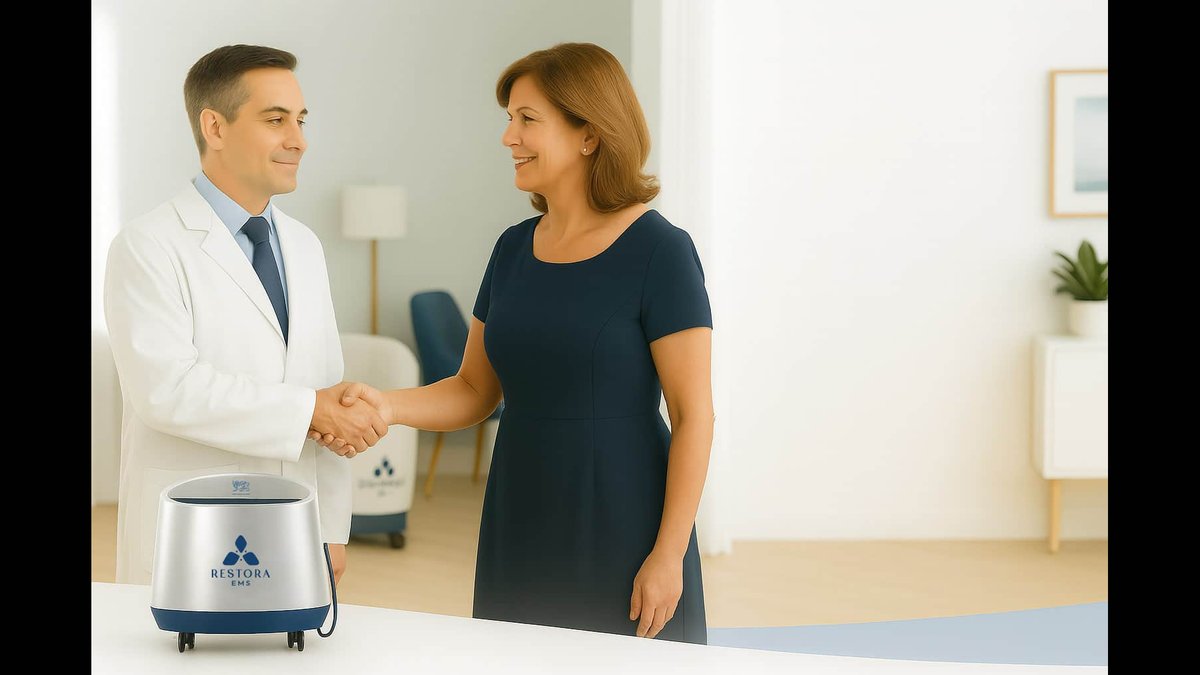
Trinity Medical Solutions Inc. offers the ReStora EMS Chair, an FDA-cleared device that applies this principle to pelvic floor rehabilitation. Understanding why the electromagnetic approach produces deeper results starts with understanding where conventional methods fall short.
Why Muscle Depth Is the Core Challenge
The pelvic floor is a layered network of muscles and connective tissue stretching from the pubic bone to the tailbone and spanning laterally between the sitting bones. These layers serve overlapping functions: organ support, sphincter control, core stabilization, and sexual function.
Weakness Across All Three Layers of the Pelvic Floor
Dysfunction rarely stays confined to one layer. Whether caused by childbirth, aging, surgery, or chronic strain, weakness tends to develop across the full structure. Superficial muscles may compensate for deep fiber weakness, masking the real deficit until symptoms become significant. By the time a patient presents with stress incontinence or pelvic organ prolapse, multiple layers are typically involved.
What Voluntary Effort Cannot Access
Voluntary Kegel contractions recruit only the motor units the brain can consciously activate - and that pool is limited. Deep stabilizing muscle fibers require high neuromuscular effort to engage fully, and most patients never reach the threshold needed to stimulate meaningful adaptation at that depth. Even patients who perform Kegels correctly rarely achieve the contraction intensity required to drive structural improvement in the deeper layers.
How HIFEM Energy Penetrates Deep Tissue
The physics behind HIFEM technology explain why it achieves what exercise cannot. The mechanism produces a fundamentally different mode of muscle activation - not simply more of the same stimulus.
Magnetic Fields Pass Through Tissue Without Attenuation
Electrical stimulation - the kind used in traditional e-stim devices - is impeded by skin, fat, and connective tissue. The signal weakens as it travels deeper, which limits how much activation occurs at lower muscle layers. Electromagnetic fields behave differently. Magnetic fields pass through live tissue without attenuation, meaning the energy reaching deep pelvic floor fibers is essentially as strong as the energy at the surface. This is the foundational reason HIFEM produces deeper contractions than electrostimulation.
Uniform Activation Across All Muscle Layers
Because the electromagnetic field doesn't degrade as it penetrates, it activates muscle fibers throughout the entire depth of the pelvic floor simultaneously. Surface fibers and deep stabilizers respond to the same stimulus in the same session. Clinical findings support this - HIFEM therapy has been shown to deliver uniform activation of pelvic floor muscles through deep penetration, stimulating deep fibers and restoring neuromuscular control in ways that targeted exercise programs struggle to match.
Supramaximal Contractions: What They Are and Why They Matter
The term supramaximal describes a contraction that exceeds what the neuromuscular system can voluntarily produce. During a normal maximum voluntary contraction, the brain recruits as many motor units as it can - but that ceiling is lower than most people assume. HIFEM bypasses the voluntary motor pathway entirely and stimulates motor neurons directly, forcing contractions at an intensity the body would never generate on its own.
This matters because muscle adaptation - hypertrophy, increased fiber recruitment, improved neuromuscular coordination - is driven by mechanical load. Supramaximal contractions place a far greater training stimulus on the muscle than anything achievable through exercise, which accelerates the structural changes needed for functional improvement.
Thousands of Contractions Per Session - Up to 15,000 Per Treatment
A single ReStora EMS session delivers the equivalent of up to 15,000 Kegel contractions in approximately 30 minutes. Each contraction is supramaximal. Each one activates the full depth of the pelvic floor. That volume of high-intensity stimulus, repeated across a structured treatment series, produces measurable increases in muscle tone, strength, and coordination that accumulate session over session.
ReStora EMS: How the Technology Is Applied
The ReStora EMS Chair translates HIFEM technology into a clinical workflow that's practical to operate and easy to schedule alongside existing appointments.
Six Sessions, Three Weeks, No Downtime
The standard protocol is six 30-minute sessions over three weeks - two visits per week. Sessions are device-guided, require minimal staff involvement, and carry no recovery period. Patients remain fully clothed throughout. Most report noticeable improvement within the first two sessions, which supports retention through the complete treatment series and into maintenance visits.
No Patient Compliance Required
One of the most consistent challenges in pelvic floor rehabilitation is patient adherence. Home exercise programs are frequently abandoned, often performed incorrectly, and nearly impossible to verify. The ReStora EMS Chair removes compliance from the equation entirely. Every session delivers the prescribed stimulus automatically, making clinical outcomes predictable regardless of what the patient does between visits. For providers, that consistency translates directly into more reliable results and stronger patient confidence in the treatment.
Clinical Conditions It Addresses
The range of conditions that respond to pelvic floor strengthening is broader than the conversation around incontinence typically suggests.
Incontinence, Pelvic Organ Support, and Sexual Dysfunction
Stress urinary incontinence and urge incontinence are the most commonly treated indications - and the clinical evidence for HIFEM's effectiveness in these areas is well-established. Beyond continence, a stronger, better-coordinated pelvic floor contributes to reduced risk of pelvic organ prolapse and improved sexual function. In women, this includes enhanced sensation and reduced discomfort during intercourse. Postpartum recovery, pre- and post-surgical rehabilitation, chronic pelvic pain, and core instability are additional entry points for introducing the service across a diverse patient population.
Men Are Candidates Too
Pelvic floor dysfunction in men is underdiagnosed and underserved. Men have the same core pelvic musculature, and they experience the same consequences when it weakens - urinary leakage, post-prostatectomy incontinence, pelvic pain, and erectile dysfunction related to poor pelvic muscle function. Non-invasive treatment options for men in this space are limited, which makes HIFEM therapy a meaningful clinical addition for urology and men's health practices. Expanding the candidate population to include male patients also opens a largely untapped revenue opportunity for providers already offering pelvic health services.
HIFEM Outperforms Traditional Electrostimulation
Traditional electrostimulation (e-stim) has been used in pelvic floor therapy for decades, but its depth limitations are well-documented. Because electrical current attenuates as it moves through tissue layers, surface muscles receive a stronger signal than deep stabilizers - leading to uneven activation and inconsistent outcomes. The mechanistic advantages of HIFEM over e-stim are well-supported: deep penetration of the high-intensity electromagnetic field produces uniform activation across all pelvic floor muscle layers in a way that electrical current cannot replicate. For providers evaluating device options, that distinction in mechanism is the reason clinical outcomes differ.
A Significant Advancement in Pelvic Floor Rehabilitation Providers Can Now Offer
The gap between what patients need and what exercise-based programs reliably deliver has always been the central challenge in pelvic floor rehabilitation. HIFEM technology closes that gap by operating at a physiological level that voluntary training cannot reach - penetrating all muscle layers, generating supramaximal contractions at scale, and producing consistent outcomes without depending on patient effort or adherence.
For physical therapists, gynecologists, urologists, and wellness clinics, that means a tool that works the same way for every patient, every session - and that addresses a clinical population far larger than the traditional incontinence conversation implies. The science behind the mechanism is sound, the device workflow is practical, and the conditions it addresses are prevalent across the patient populations these providers already serve.
To learn more about how Trinity Medical Solutions Inc. supports pelvic floor rehabilitation with the ReStora EMS Chair, visit trinitymedsol.com.