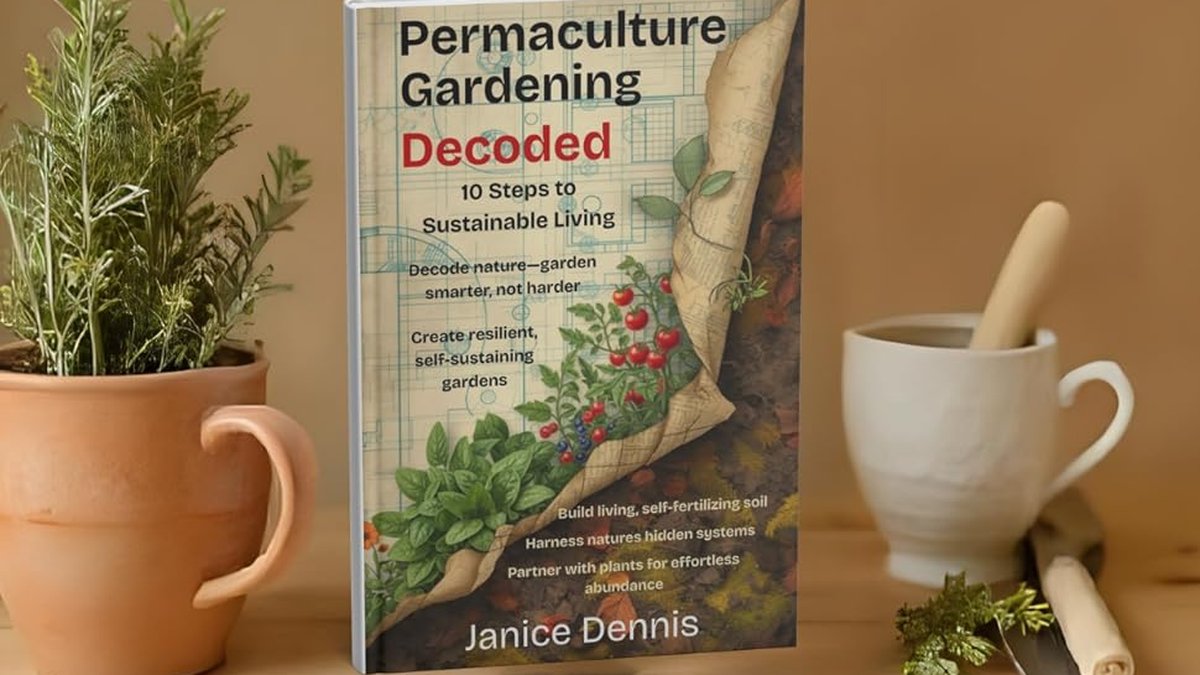
In a newly published book, Janice Dennis explores how beginners can create self-sustaining food forests using simplified permaculture methods. The book, Permaculture Gardening Decoded: 10 Steps to Sustainable Living, simplifies ecological concepts into step-by-step methods, addressing the expertise barrier that often limits wider adoption of permaculture practices.
More information is available at https://www.amazon.com/Permaculture-Gardening-Decoded-Sustainable-Living/dp/B0FPRKMHJX
The release responds to growing mainstream interest in permaculture among homeowners seeking sustainable alternatives to conventional gardening. According to Farm Hacker, there are now 10,000 permaculture farms operating across the United States as of 2021, with steady growth continuing annually. A survey by the National Young Farmers Coalition found that over 70% of respondents intend to incorporate permaculture techniques, reflecting a shift toward sustainable food production at the household level. This momentum shows that permaculture has moved beyond niche agricultural circles into the consciousness of everyday gardeners.
Dennis’s book reflects these trends by presenting accessible techniques for beginners. Practices such as companion planting, composting, and rainwater harvesting are positioned as manageable steps for small residential spaces, allowing a gradual shift toward more sustainable systems.
Once established, food forests offer long-term value that justifies the initial learning curve. By using polyculture design with diverse perennial plants, they can produce year-round yields while supporting biodiversity. The guide also explains how to assess individual properties and adapt designs accordingly, enabling home gardeners to apply these practices across different locations and environmental conditions.
The ten-step framework in the book also explores how food forests—layered systems combining trees, shrubs, and ground crops—can support continuous yields while improving ecosystem balance. Within this structure, methods such as nitrogen-fixing plants and natural pest control are presented as interconnected steps that enhance productivity while maintaining soil health.
Beyond food production, the book highlights the broader environmental value of permaculture. By applying ecological design principles at home, gardeners can contribute to local biodiversity, reduce organic waste, and develop more self-sufficient growing systems.
The guide is available in print and digital formats, offering step-by-step instructions that make permaculture accessible to those without prior experience in sustainable agriculture.
For more information, visit https://www.amazon.com/Permaculture-Gardening-Decoded-Sustainable-Living-ebook/dp/B0FPQ4XHDZ