Key Takeaways
- "Portable sauna" covers several very different products: steam tents, infrared blankets, FIR panel tents, radiant lamp systems, larger insulated sauna tents, and modular cabins.
- Body position matters. Some products allow only reclining or sitting. Larger enclosures allow standing, stretching, exercise, or changing positions.
- Warm-up differs by heat source. Radiant incandescent lamps produce radiant heat the moment they are switched on. Steam generators, heating panels, and full enclosures need preheating.
- Ownership costs are not only the price. Electrical requirements, enclosure materials, moisture management, EMF measurements, replaceable parts, and warranty support shape long-term use.
- Portable does not always mean packed away after every session. Some modular cabins and larger tents are movable but far more practical left assembled.
What Does "Portable Sauna" Actually Mean?
The term covers a surprisingly broad range of equipment. At one extreme is an infrared blanket that rolls up and fits in a closet. At the other is a modular wood cabin that arrives in sections, can in theory be relocated, and will probably stay in the same room for years. Between them sit folding steam tents, seated infrared tents, radiant near-infrared lamp systems, and larger insulated sauna tents.
That is why portability alone cannot tell a buyer whether a portable sauna for home is a good fit. The more useful questions are how it produces heat, how much floor space it needs while operating and while stored, how long setup takes, what positions the user can comfortably take, whether it needs water, what electrical service it requires, how much cleaning and drying follow each session, and whether worn parts can be replaced. Answering those questions eliminates unsuitable formats before price even enters the comparison.
Portable Sauna Types at a Glance
- Steam tent: hot steam, usually seated, small footprint. Main consideration: moisture, drying, and steam-generator maintenance.
- Infrared blanket: electrically heated wrap, reclining only, very small when stored. Main consideration: fixed position and direct contact with the heated material.
- FIR panel tent: carbon or ceramic heaters, usually seated, small footprint. Main consideration: panel placement and usable interior room.
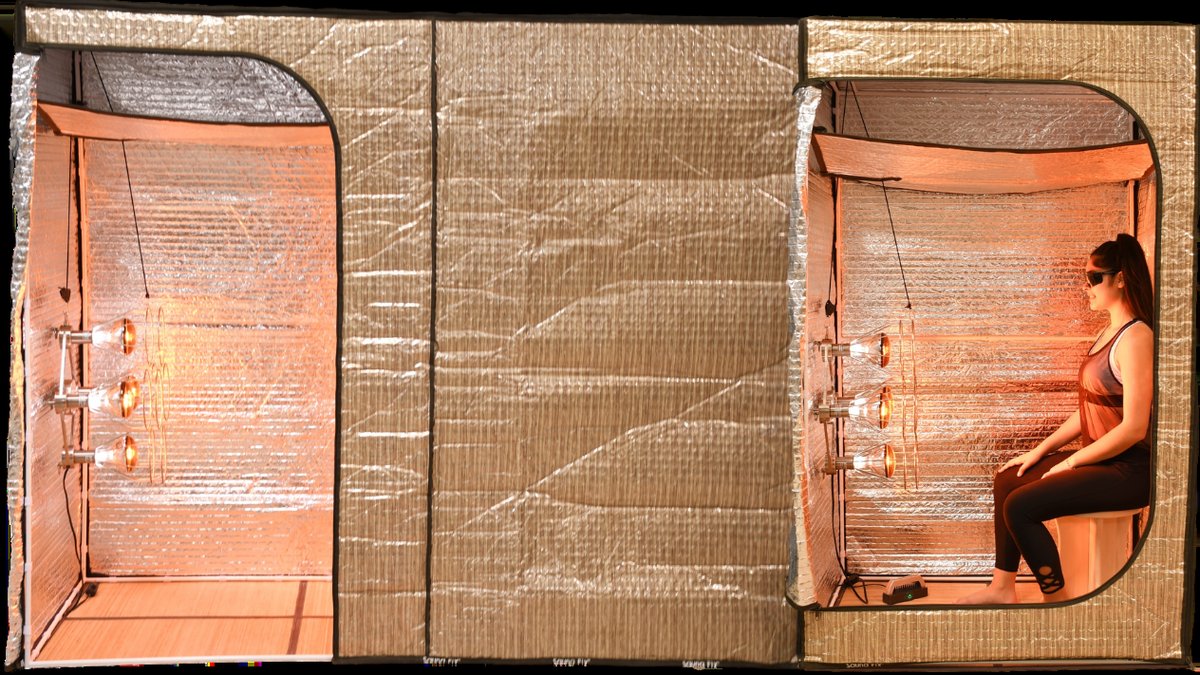
- Radiant NIR lamp sauna: incandescent radiant lamps, position varies by enclosure, small to large. Main consideration: lamp distance, radiant intensity, and positioning.
- Exercise sauna tent: radiant heat in a larger insulated enclosure, standing, sitting, stretching, or moving. Main consideration: interior height and movement space.
- Modular cabin: infrared or traditional heater, usually seated, permanent or semi-permanent. Main consideration: floor space, electrical needs, and installation.
The categories overlap somewhat, but they are a better starting point than assuming every portable sauna offers the same experience.
Steam Sauna Tents: Compact Humid Heat
Portable steam tents use an external electric steam generator. Water is heated in the generator, and steam travels through a hose into the enclosure, which is usually designed around a folding chair, sometimes with the user's head outside. The advantages are compact storage and humid heat. The trade-off is that steam changes ownership: water condenses on the enclosure, so drying and ventilation matter after every session; the generator needs cleaning, and mineral buildup can become an issue depending on the water used. Compare steam-generator capacity, hose and diffuser placement, protection from hot steam, interior materials, drying and cleaning access, and whether a replacement generator is available. A steam tent takes very little room when stored, but it often needs more post-session care than a dry infrared system.
Infrared Sauna Blankets: The Smallest Storage Footprint
Sauna blankets use electric heating elements inside an insulated wrap, and most are sold as far-infrared blankets. The user lies inside rather than entering an enclosure. For someone with very limited storage, this is the simplest format, and the blanket folds or rolls away once it has cooled and been cleaned. The trade-off is movement: the session position is fixed in advance, the user reclines in close contact with the heated material, and perspiration happens inside the wrap, so surface cleaning matters. Before buying, check interior dimensions, maximum operating temperature and controls, cleaning instructions, material specifications, ease of exiting, electrical requirements, controller design, and warranty. It is also worth checking current safety notices and recalls for any electrically heated sauna product under consideration.
Far-Infrared Panel Tents: Dry Heat in a Seated Format
Portable far-infrared tents use carbon or ceramic heating elements positioned around a fabric enclosure. There is no steam generator or water reservoir, so condensation is not an issue and the environment is dry heat. Most FIR tents are designed around a seated user, so interior dimensions deserve close attention: a sauna with a small exterior footprint can feel considerably smaller once the chair and heaters are inside. Panel placement matters too. Look at heater location, distance between panels and the body, interior and chair dimensions, temperature controls, electrical load, enclosure materials, and replacement heater availability. Many portable infrared products run on ordinary household service, but confirm it for the specific model.
Larger Exercise Sauna Tents Add What Most Portable Saunas Lack: Space
The most overlooked difference among portable saunas is what the person can actually do once inside. Many steam and FIR tents are chair-sized. Larger insulated radiant sauna tents offer enough height and floor space to sit, stand, recline, stretch, change positions, perform mobility work, step in place, or do light exercise, which turns interior dimensions into a functional feature rather than a specification. A buyer who wants to combine heat with movement should compare interior height, floor dimensions, heater clearance, available movement area, lamp positioning, equipment clearance, and ventilation. The exercise sauna format exists for exactly this use. A compact seated tent and a full-height exercise tent may both be portable, but they serve different purposes.
Modular and Knock-Down Cabins Are Portable in a Different Sense
Wooden infrared or traditional sauna cabins are sometimes marketed as portable or modular because they arrive as prefabricated sections. That is very different from a folding tent. Once assembled, most owners treat the cabin as a semi-permanent installation. It suits someone who wants a furniture-like appearance, wooden interior surfaces, permanent seating, a conventional sauna experience, and room for more than one user, but it requires considerably more dedicated floor space, and buyers must consider door clearance, ceiling height, circuit requirements, assembly access, flooring, ventilation, total weight, and what disassembly would involve. A cabin that can be taken apart is not necessarily convenient to move.
Warm-Up Time Affects Everyday Convenience
A steam generator needs time to heat water and fill the enclosure. FIR panels need time to warm before they heat the user and the enclosure. Cabins need time for their heaters and interior to reach the desired range. Radiant incandescent lamps produce radiant heat immediately, although the enclosure keeps heating throughout the session. For someone fitting sauna time into a busy routine, the difference between immediate radiant heat and waiting for an enclosure to preheat can decide how often the equipment gets used.
Electrical Requirements Can Change the Real Cost
"Plug-in" does not mean every sauna can safely share any outlet. Check voltage, wattage, amperage, required circuit size, whether a dedicated circuit is specified, plug configuration, the manufacturer's restrictions on extension cords, and whether more than one circuit is needed. Larger systems can need more capacity than a blanket or a seated tent, and electrical upgrades add substantially to the true cost of installation.
Maintenance Varies by Sauna Type
Portable does not mean maintenance-free. A steam tent needs water handling, generator cleaning, drying, and condensation management. A blanket needs perspiration cleanup, surface cleaning, complete cooling before storage, and inspection of heated surfaces and wiring. A FIR tent needs interior cleaning, heater and controller inspection, and fabric and zipper care. A radiant lamp sauna may need lamp replacement, socket inspection, reflector and enclosure cleaning, and a check of lamp positioning and clearance. A modular cabin may need heater maintenance, interior cleaning, wood care, electrical inspection, and stone maintenance where applicable. The easiest sauna to buy is not always the easiest to maintain.
Portable Sauna Safety Still Matters
Every format involves heat and electrical equipment. Follow the manufacturer's instructions on session length, heat settings, heater clearance, lamp distance, water exposure, electrical connections, ventilation, clothing, eye protection where specified, and cooling and storage. Stop a session if dizziness, nausea, faintness, unusual weakness, or other concerning symptoms occur. Anyone pregnant, has significant cardiovascular or other medical conditions, takes medication that affects heat tolerance or blood pressure, or has been told to limit heat exposure should get individual medical guidance before beginning regular sauna use.
Which Portable Sauna Format Fits Your Home?
- Choose a steam tent for humid heat, a seated session, limited space, and a willingness to manage water and drying afterward.
- Choose an infrared blanket when storage space is the top priority and reclining for the whole session is acceptable.
- Choose a FIR panel tent for dry heat in a compact seated format with surrounding panels.
- Choose a radiant NIR lamp sauna for strong direct radiant heat, broad-spectrum incandescent output, and warmth available the moment the lamps come on.
- Choose a larger exercise sauna tent to stand, stretch, change positions, do mobility work, or combine heat with light movement.
- Choose a modular cabin when permanent floor space is available, and a conventional cabin that stays assembled is the goal.
Start With How You Want to Use It
The easiest way to choose a portable sauna is not to begin with the brand, the maximum temperature, or the price. Start with the intended experience: sit, recline, stand, stretch, or exercise. Then determine the operating and storage space available. Next, choose between steam, panel-based infrared, radiant lamp heat, or a more permanent cabin. Finally, compare electrical requirements, materials, maintenance, measured output, replaceable components, warranty, and serviceability. A detailed portable sauna buying guide walks through each of those variables. A sauna that fits the home but not the owner's routine rarely gets used. The better portable sauna is the one whose heat, dimensions, body position, setup, and maintenance match the way the buyer actually plans to use it.