Key Takeaways
- The first two minutes after a contrast reaction are critical, and the onsite technologist’s immediate actions often shape the outcome before the remote radiologist can direct care.
- Remote contrast supervision works best when the technologist, radiologist, and administrator or charge nurse each have clear, non-overlapping roles.
- ACR guidelines require onsite BLS-certified staff and immediate access to emergency medications during remotely supervised contrast procedures.
- Tiered escalation protocols with timestamps are essential for safe, auditable contrast incident response.
Remote contrast supervision has moved from a pandemic-era workaround to a permanent fixture of outpatient imaging operations. As more imaging facilities adopt virtual oversight models, the protocols that govern what happens when something goes wrong have never mattered more. The gap between a well-run escalation response and a poorly coordinated one is not just a compliance issue — it is a patient safety issue measured in seconds.
The Initial 0-2 Minutes: Onsite Team's Immediate Response and Contact with the Remote Radiologist
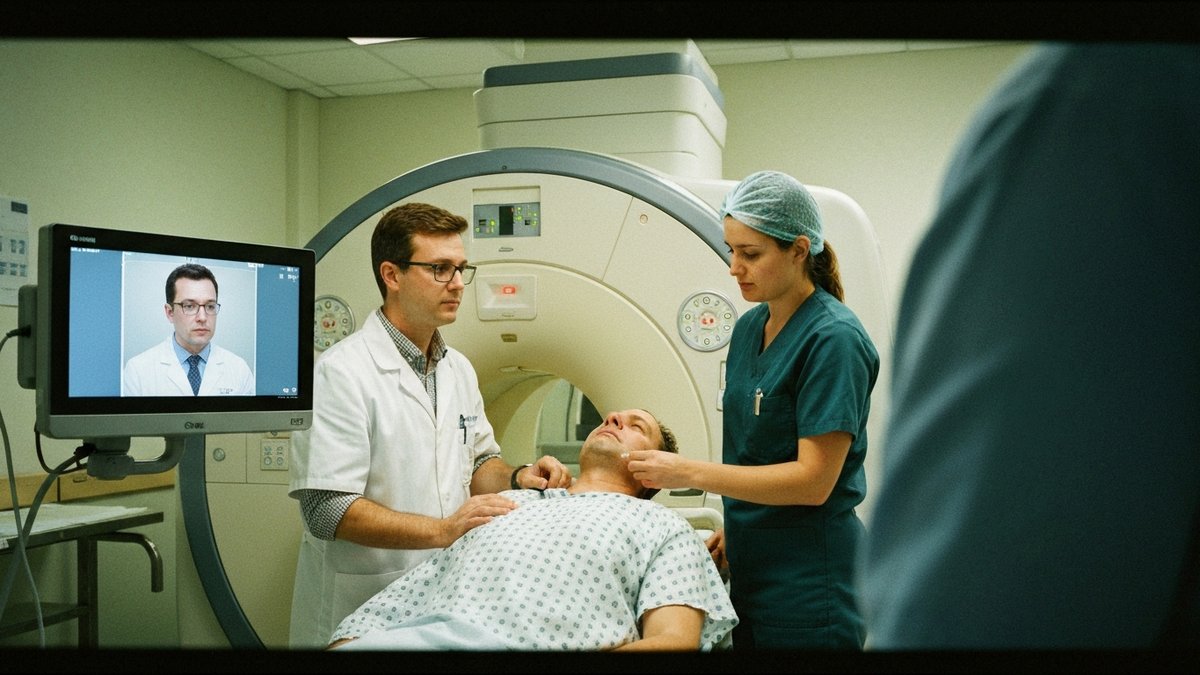
Before the remote radiologist can issue a single directive, the onsite technologist is already working. The first two minutes of a contrast reaction belong entirely to the person in the room — and those minutes set the trajectory for everything that follows.
The moment an adverse reaction is suspected, the injection stops. Immediately. Even if the reaction appears mild or unconfirmed, stopping contrast delivery is non-negotiable. From there, the technologist opens the audio-video communication link to the remote supervising radiologist while simultaneously beginning a rapid patient assessment: identifying symptoms, checking vital signs if the patient's condition allows, and classifying the reaction using ACR criteria — mild, moderate, or severe.
Mild reactions, such as flushing, nausea, or limited urticaria, require close monitoring and immediate physician notification. Moderate reactions — including significant urticaria, bronchospasm, or mild hypotension — require immediate medication administration under standing physician orders. Severe reactions, such as anaphylaxis or cardiovascular compromise, require simultaneous emergency services activation and real-time direction from the supervising radiologist. There is no waiting for authorization when a patient's life is at risk.
Contrast reactions, though infrequent (occurring in roughly 0.2% to 0.6% of iodinated contrast administrations for allergic-like events), tend to escalate quickly — with most severe events presenting within the first 20 minutes post-injection. That statistical rarity does not reduce the urgency; it reinforces the need for practiced, automatic responses rather than improvised ones.
Three Escalation Tiers That Separate Safe Facilities From Risky Ones
A written escalation policy is not the same as a functional one. The difference shows up when an incident actually occurs — and facilities that have rehearsed a tiered, time-anchored response consistently outperform those that have not. The three-tier framework below reflects a recommended escalation protocol that aligns with the principles of rapid response and clear roles emphasized in current ACR guidance and CMS virtual supervision requirements.
Tier 1 (0-2 Min): Onsite Technologist Starts the Immediate Response
Tier 1 belongs to the onsite technologist. The injection stops, the patient is assessed, and the remote radiologist is contacted within the first two minutes. If the reaction appears severe from the start, emergency services are called at the same time. These steps happen in parallel, not one after another.
The technologist also clears the room, confirms access to the crash cart or emergency medication kit, and begins documenting symptom onset. Since all of this happens before the radiologist can give clinical direction, technologist training is critical.
Tier 2 (2-5 Min): Remote Radiologist Takes Clinical Direction
By two minutes, the remote supervising radiologist should be active on the audio-video connection. If contact fails, the backup physician protocol starts immediately.
Once connected, the radiologist quickly gathers key details from the technologist: contrast type and volume, symptoms and onset time, vital signs, allergy history, premedication, consciousness level, and available emergency equipment or medications. Based on this information, the radiologist gives treatment directions and sets a reassessment point within two to three minutes.
Tier 3 (5-10 Min): EMS and Full-Facility Response
If a moderate or severe reaction has not clearly improved by five minutes, emergency services should already be activated. The remote radiologist directs the call, and the onsite team executes it immediately.
At this point, EMS is en route, the facility emergency plan is active, and administration or the on-call medical director is notified. The radiologist stays connected, directing care until EMS takes over or the patient stabilizes. Facilities more than ten minutes from emergency response should escalate earlier, since transport time increases risk. Documentation continues while the incident is still active.
Distinct Roles That Must Not Overlap During an Incident
One of the most common failure points in contrast incident response is not a lack of training — it is role confusion. When the onsite technologist starts waiting for direction before acting, or the remote radiologist attempts to manage logistics they cannot physically control, the response slows down. Defined, non-overlapping roles prevent that breakdown.
Onsite Technologist: First Responder and Environment Manager
The onsite technologist owns the physical space during a contrast incident. They stop the injection, activate the audio-video link to the remote radiologist, assess and document vital signs, and administer emergency medications under standing physician orders. They also clear the room, confirm emergency equipment access, and prepare the patient for transfer if escalation reaches Tier 3.
At the same time, they relay real-time updates to the remote radiologist. This dual role — managing the patient while serving as the radiologist’s onsite eyes and ears — is why remote supervision scenarios require rehearsed communication habits, not just clinical knowledge.
Remote Supervising Radiologist: Clinical Command
The remote radiologist provides clinical direction. Once contacted, they must be fully present on the audio-video link, using visual and verbal updates to assess the patient, issue treatment instructions, and make escalation decisions at defined time points.
The radiologist also documents their own directives during the event. Their role is not to manage the room, coordinate logistics, or communicate with family members. Their focus must stay clinical. Reliable connectivity, medical-grade displays, and RIS/PACS integration help reduce technical interruptions during that response.
Facility Administrator or Charge Nurse: Logistics Coordinator
The administrator or charge nurse coordinates facility logistics. While the technologist manages the patient and the radiologist directs care, this person ensures resources reach the room quickly. That includes confirming medication and equipment access, notifying additional onsite staff, communicating with family or companions, and activating the formal emergency action plan if Tier 3 is reached.
This role prevents the technologist from carrying patient care, radiologist communication, and facility-wide coordination at the same time. By absorbing the logistics burden, the administrator helps keep the clinical response focused and organized.
Compliance Requirements Your Facility Must Meet
Virtual direct supervision creates a clear compliance framework — but it does not reduce the requirements for what must be in place onsite. CMS standards establish a floor of preparation that every remotely supervised imaging facility must meet, regardless of how robust the remote oversight model is.
Mandatory Onsite Certifications and Medication Access
Even with remote physician supervision, trained medical staff must be physically present during contrast procedures. At minimum, one onsite staff member should hold current Basic Life Support (BLS) certification whenever a remotely supervised contrast procedure is performed.
Many facilities also require contrast-administering technologists to hold advanced contrast media certification. Staff must be legally permitted to administer emergency medications under physician orders, and those medications must be immediately accessible during the procedure. An emergency kit locked across the building is not enough; it creates avoidable risk.
Documentation Must Be Timestamped and Audit-Ready
Virtual supervision documentation must be explicit, not implied. CMS requires records to show the supervision method, physician availability, and any interventions with timestamps. A note saying the physician was “available” is not sufficient. The record should identify the technology used, confirm real-time audio-video connection, and document the supervising physician’s involvement.
For contrast incidents, the report should include reaction onset time, escalation steps and timestamps, medications given and by whom, radiologist directives, technologist responses, and the patient’s condition at each interval. The report should be completed before the end of the shift. Within 24 to 72 hours, quality assurance should review whether protocol was followed and identify any gaps. State-level changes, such as California’s AB 460, may also require facilities to update workflows and documentation standards.
Qualified Virtual Supervision Closes the Coverage Gap Without Adding Headcount
Radiologist shortages are a structural challenge in outpatient imaging, forcing facilities to choose between canceling contrast exams, overextending staff, or finding a scalable supervision model. Virtual contrast supervision can help when a remote radiologist uses a compliant, high-speed platform to oversee procedures across multiple sites, but the model only works if communication is reliable, documentation is audit-ready, and escalation protocols are clearly rehearsed. For administrators, the real test is not just the technology, but whether the facility has defined roles, tiered response procedures, and documentation systems strong enough to support safe, compliant care.