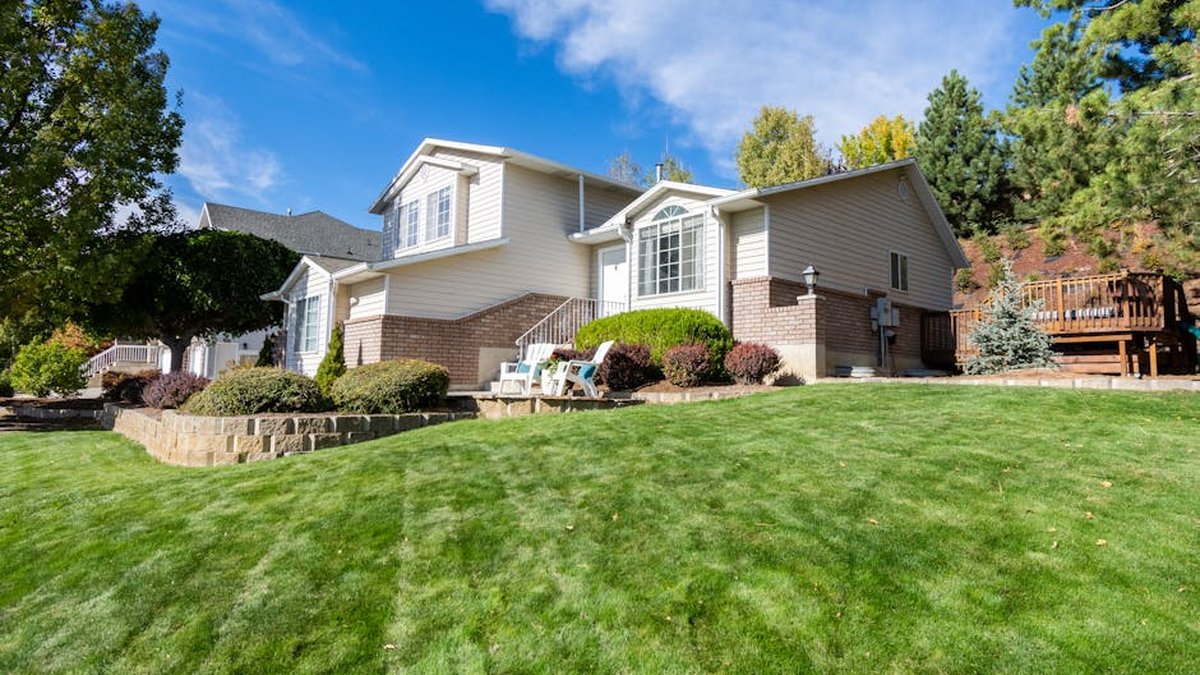
A sloped yard can feel like owning extra square footage that came without instructions. It may look beautiful from the back window, but once rain starts carrying mulch downhill or a mower feels unsafe on the incline, the design problem becomes practical fast.
The best retaining walls are no longer treated as plain barriers at the edge of a yard. They are becoming part of the overall landscape design, helping with erosion control, drainage, outdoor living, planting, and curb appeal.
Terraced Yards That Create Real Outdoor Space
One of the strongest retaining wall ideas for sloped yards is terracing. Instead of fighting the grade, terraced retaining walls divide a steep area into smaller, flatter levels.
This can turn a difficult backyard into a series of usable zones. One level might hold a patio, another can support garden beds, and another may become a small lawn or play area. For homeowners searching for sloped backyard ideas, this approach is popular because it solves more than one problem at once.
Main Street Retaining Walls, a Charlotte-based expert contractor, notes that retaining walls may be built with materials such as brick, concrete, stone, and timber. That range matters because the right material depends on the slope, drainage needs, wall height, and the look of the home.
Built-In Drainage Is No Longer Optional
Many retaining wall failures start with water. When rain collects behind a wall, pressure builds. Over time, that pressure can lead to bulging, cracking, leaning, or washout.
That is why drainage-focused retaining wall installation is one of the most important 2026 trends. Homeowners are paying closer attention to gravel backfill, drainage pipes, weep holes, grading, French drains, and runoff direction before choosing a design.
Low-Maintenance Walls for Busy Homeowners
Another major trend is low-maintenance landscaping. Homeowners want outdoor spaces that look polished without needing constant weekend work.
For retaining walls, that means choosing durable materials, simple planting plans, and designs that reduce erosion instead of creating new maintenance issues. A well-planned wall can help keep mulch in place, prevent soil from washing onto walkways, and make mowing or planting easier.
Low-maintenance does not mean plain. It means the design works with the property instead of demanding constant attention.
Planting Walls With Native and Climate-Aware Landscaping
Retaining walls are also being used as planting opportunities. Terraced walls can hold native plants, ornamental grasses, shrubs, herbs, or pollinator-friendly flowers.
This is especially useful on slopes because plants help soften hardscape and support soil stability. Deep-rooted plants can also help reduce surface erosion when they are chosen carefully for the site.
For 2026, the trend is not just “more plants.” It is smarter planting.
Outdoor Living Zones Built Into the Slope
Sloped yards are often overlooked when homeowners think about patios, fire pits, seating areas, or garden paths. Retaining walls can change that.
A wall can frame a seating area, support a raised patio, border a walkway, or create a level space for outdoor furniture. Instead of seeing a slope as a limitation, homeowners are using retaining wall design to create outdoor rooms.
This is one reason retaining wall installation is closely tied to broader backyard design trends. The wall is not just holding soil. It can define how the outdoor space is used.
Curved and Layered Wall Designs
Straight walls still have their place, but curved and layered designs are becoming more common. Curves can make a retaining wall feel softer and more natural, especially in gardens or yards with organic landscaping.
Layered walls can also reduce the visual weight of a tall slope. Instead of one large wall, several smaller walls may create a more balanced look. This approach can be especially helpful for homeowners who want erosion control without making the backyard feel heavy or closed off.
The Big 2026 Takeaway
The best retaining wall ideas for sloped yards in 2026 combine beauty with function. Homeowners want outdoor spaces that look intentional, handle rain better, reduce erosion, and create more usable room.
For a sloped property, a retaining wall can do far more than hold back soil. With the right design, it can turn a difficult yard into one of the most useful parts of the home.