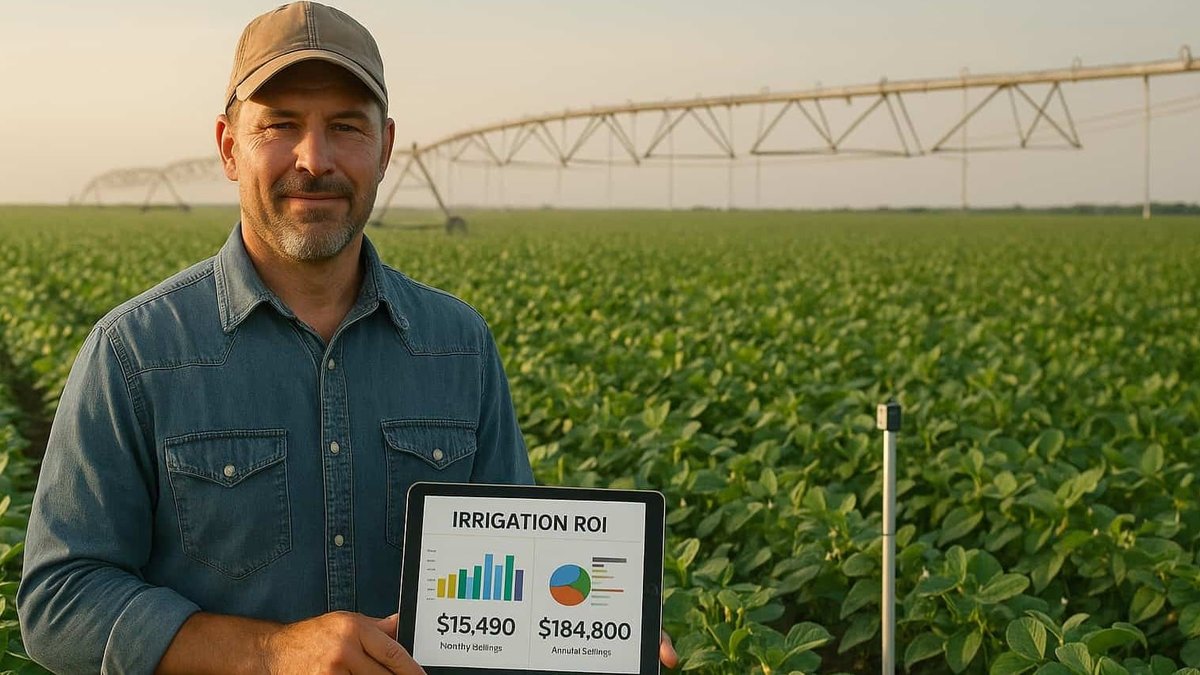
AguaFox has published a new guide alongside an interactive selector tool designed to help soybean growers match irrigation systems to their fields. The tool weighs soil type, water availability, and budget, giving farmers a practical starting point for closing the persistent yield gap between irrigated and dryland production. AguaFox frames the release as a response to slow adoption of smart irrigation across soybean acreage.
For more details, visit https://aguafox.com/irrigation-roi-calculator-soybean-farm/
That gap is substantial. Research cited in the guide indicates that irrigated soybean systems in the United States average more than 48% higher yield than dryland systems, yet only around 8% of soybean acres nationally receive irrigation. The disparity is most pronounced in the Central and Northern Great Plains, where soybeans respond strongly to supplemental water, and cost has long kept many growers on the sidelines despite the clear yield upside.
Financial support narrows that barrier considerably. The USDA's EQIP program allows cost-share to cover up to 75% of eligible irrigation infrastructure costs, a factor that can shorten payback periods from around a decade down to a few years on well-structured projects. Research from the University of Nebraska-Lincoln points to energy as a central factor in irrigation costs, noting that inefficient systems add unnecessary expense and that declining groundwater levels require more energy to bring water to the surface, pushing energy costs higher for producers. Taken together, these financial and operational factors shape how growers weigh the investment case for smart irrigation this season.
Beyond the financial case, the guide offers specific operational guidance. AguaFox recommends irrigating once soil water depletion reaches 50% during reproductive stages R1 through R6, when soybean daily water use typically peaks between 0.25 and 0.32 inches, rising to as much as 0.50 inches during extreme heat or wind. Soil moisture sensors and centre pivot automation make this level of timing precision possible, helping growers avoid both under- and over-watering during the growth stages that matter most.
Precise moisture control carries benefits beyond yield protection alone. Industry findings suggest smart irrigation can reduce soybean disease risk by up to 40% by preventing the damp conditions that favour root rot, white mold, and sudden death syndrome. Systems that combine weather data with soil moisture readings, such as those built around platforms including FieldNET, CropX, AquaSpy, and Arable Mark 3, also let farmers apply water only where crops need it, supporting healthier soil across the field.
AguaFox was founded by Chris Andrews, a systems engineer with more than three decades of experience in complex system design and a family background in agriculture stretching back to the mid-20th century. The company built its guides and reviews to give soybean farmers unbiased, technically grounded advice rather than vendor-driven recommendations. Growers considering their options this season are encouraged to review the guide and selector tool before making equipment decisions.
Further irrigation guidance and equipment comparisons are available at https://aguafox.com