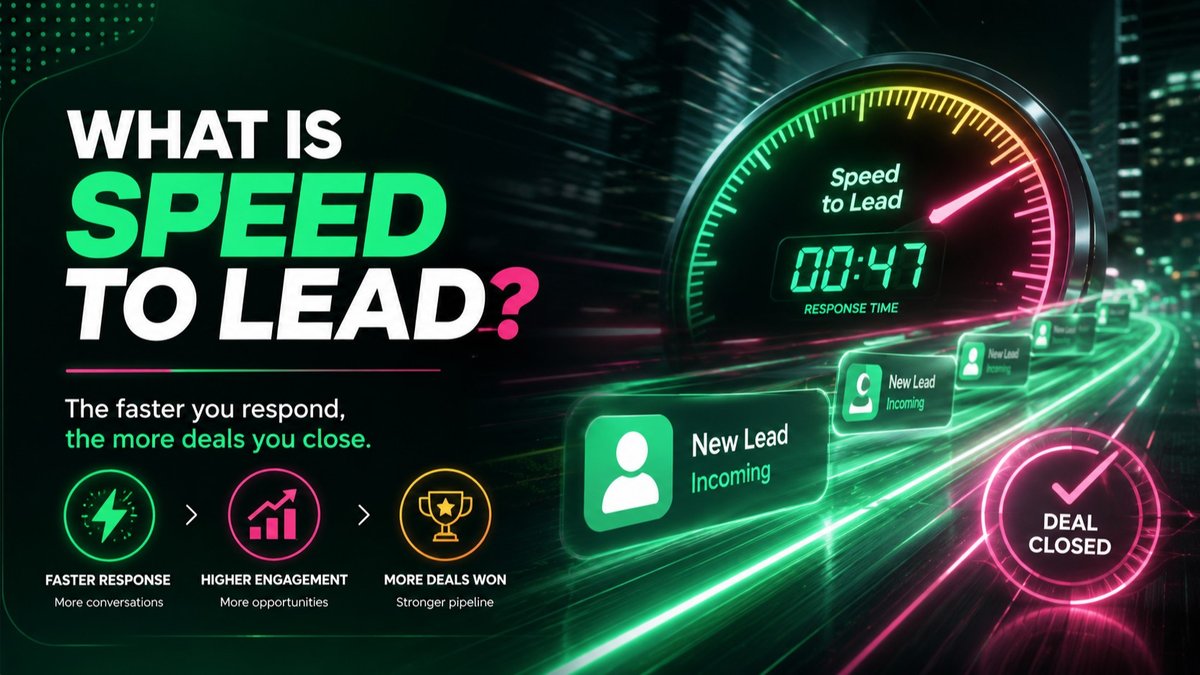
Research from MIT and Harvard Business Review has established that response time to customer inquiries dramatically affects lead conversion outcomes, yet most companies fail to meet competitive thresholds. The MIT Lead Response Management study analyzed more than 15,000 web leads and 100,000 call attempts. Findings showed that the odds of contacting a lead were 100 times lower at 30 minutes compared to five minutes after initial inquiry, while qualification odds dropped 21 times over the same interval. Harvard Business Review research indicated that companies responding within an hour were nearly seven times as likely to qualify a lead as those who waited even one hour longer. For business owners and sales leaders already investing in lead generation, slow response represents wasted marketing spend and lost customers to faster competitors.
More information is available at https://maxed.ai/calc/
The challenge is not awareness but capability. Even high-performing sales teams cannot reliably achieve five-minute response times without significant infrastructure investment. Maintaining 24/7 coverage for a single response seat requires approximately 5.4 full-time employees when accounting for vacation, sick time, breaks, training, and meetings, according to call-center workforce planning guidance. At U.S. median wages with benefits, this translates to roughly $330,000 annually in fully loaded compensation costs for customer service representatives. Harvard Business Review's 2011 audit of 2,241 U.S. companies found that only 37 percent responded within one hour, 16 percent took one to 24 hours, and 23 percent never responded at all. These findings position automation not as optional optimization but as necessary infrastructure for competitive viability in high-intent inbound markets.
MAXED AI has released its Speed to Lead Guide alongside the commercial availability of SwiftX, an AI-powered SMS product designed to collapse the response-time gap between human capability and market demand. SwiftX delivers SMS responses within seconds of lead creation, engages leads in real conversation, qualifies interest, and books appointments before human sales teams are notified. The system automates the critical first response window—the one-to-five-minute period where conversion odds are highest—and operates on a performance-based pricing model in which clients pay only after results are delivered. By automating immediate acknowledgment and qualification, SwiftX allows sales teams to focus on warm, pre-qualified prospects rather than racing to contact cold leads.
The financial case for faster response is straightforward when applied to existing lead-generation budgets. A business generating 500 high-intent monthly leads with a three percent baseline conversion rate and $5,000 average customer value could see $270,000 in annual incremental gross profit from a 1.5 percentage point conversion lift, assuming 60 percent gross margin. This gain comes from existing marketing spend rather than new advertising investment. Speed-to-lead automation serves as insurance against wasted acquisition dollars. For companies already paying to generate leads through search ads, third-party marketplaces, or organic channels, improving conversion at the top of the funnel delivers compounding returns without increasing cost per lead.
Speed-to-lead urgency applies across industries where buyers compare multiple providers before committing. In insurance, a HawkSoft case study reported that only six percent of surveyed agencies met a five-minute response threshold and 34 percent never responded to submissions. In automotive, a 2025 dealership study summarized by Dealership Guy found that 61 percent of dealers responded within 15 minutes but 19 percent took more than an hour. A Velocify case study in mortgage lending demonstrated that companies responding to leads within one minute saw a 391 percent increase in conversions compared to those with slower response times. Across B2B SaaS, real estate, home services, and other high-intent sectors, leaders are already automating first response, creating competitive pressure for businesses still relying on manual follow-up processes.
MAXED AI's newly released Speed to Lead Guide synthesizes research on response-time economics, cross-industry use cases, and implementation best practices for business owners and sales leaders evaluating whether their current response architecture aligns with competitive standards. The guide is designed to help decision-makers understand why response speed matters, how to measure its impact, and what solutions exist to close the gap between buyer expectations and operational reality. SwiftX is available on a performance-based model, lowering adoption risk for companies testing automation for the first time. As buyer intent continues to decay faster and competition intensifies, speed-to-lead automation is becoming table-stakes for any business focused on lead conversion and customer acquisition efficiency.
For more details, visit https://maxed.ai