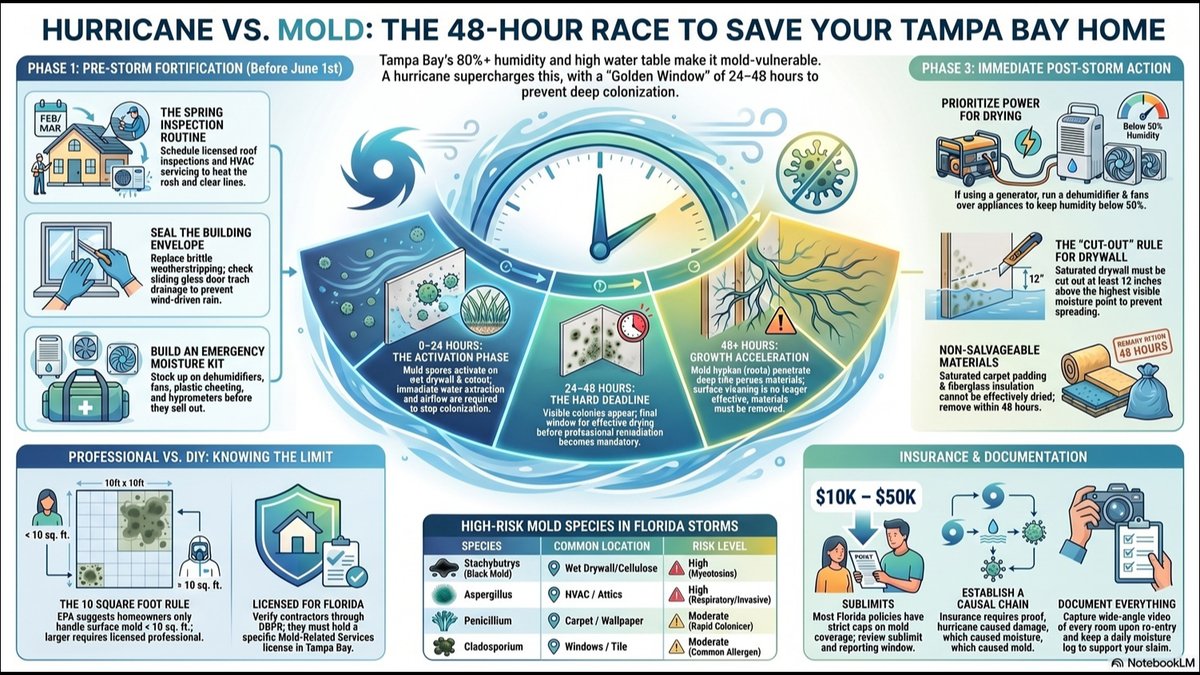
TampaBayMold.net has released a region-specific guide to help Tampa Bay homeowners prepare for and reduce mold risks associated with the 2026 hurricane season. The guide addresses the critical 24 to 48 hour window after a hurricane passes, during which mold colonization begins on wet surfaces in Tampa Bay homes. Unlike generic storm preparation advice, this checklist addresses the unique climate and housing vulnerabilities that make Tampa Bay one of Florida's highest-risk zones for post-hurricane mold, providing actionable protocols for pre-storm prevention, immediate post-storm response, and long-term moisture control.
More information is available at https://tampabaymold.net/guides/the-complete-guide-to-hurricane-mold-preparation-in-tampa-bay/
Tampa Bay faces elevated mold risk compared to other hurricane-prone regions due to the convergence of three compounding factors: year-round high humidity that frequently exceeds 80 percent during summer months, average annual rainfall that typically reaches 46 to 55 inches according to regional climate data, and low elevation that increases flood surge vulnerability. Much of the housing stock—particularly homes built before the 1980s—often presents vulnerabilities such as poor ventilation and materials that readily absorb and retain moisture. When hurricane water intrusion occurs, these pre-existing conditions create an environment where mold can establish itself faster than in drier climates or newer construction.
The newly released checklist covers a three-phase structure that extends well beyond simple cleaning recommendations. Pre-storm preparation includes roof and flashing inspections, window and door seal checks, HVAC servicing with condensate drain line cleaning, crawl space vapor barrier verification, and emergency supply stockpiling such as dehumidifiers, moisture meters, and heavy-duty plastic sheeting. The immediate post-storm response phase provides detailed protocols for water extraction and material removal within the critical 48-hour window, along with deployment of air movers and dehumidifiers to prevent colonization. Long-term maintenance guidance includes year-round humidity monitoring habits, monthly inspection routines for attics and crawl spaces, and HVAC system servicing schedules tailored to Tampa Bay's climate.
Mold colonization within 24 to 48 hours poses documented respiratory and health risks, particularly to children, the elderly, and immunocompromised individuals. Common post-hurricane mold species such as Stachybotrys chartarum and Aspergillus produce mycotoxins that cause systemic illness beyond typical allergic responses. The guide distinguishes between mold removal—temporary surface cleaning—and mold remediation, which involves structural remediation including containment, air quality testing, and moisture source correction. Following the checklist protocols can mean the difference between a manageable mitigation cost and tens of thousands of dollars in full remediation, especially when porous materials like drywall, insulation, and carpet padding are removed within the first 48 hours after water intrusion.
The checklist also provides homeowners with documentation and contractor-vetting protocols needed to successfully file and defend insurance claims. Florida homeowners insurance may cover mold remediation linked to covered hurricane events, though policies often have specific limitations or require separate flood insurance. Coverage always necessitates proof of the causal chain connecting hurricane damage to water intrusion and subsequent mold growth. TampaBayMold.net's guide includes specifics on photo and video documentation, moisture meter readings, and identification of licensed Florida Department of Business and Professional Regulation-certified mold remediation contractors. These protocols help homeowners navigate claims and avoid predatory post-storm contractors who often flood the region after major hurricanes.
The checklist is available immediately. Homeowners are encouraged to access it before June 1, the official start of hurricane season, to allow sufficient time for pre-storm preparation. Early preparation proves far more cost-effective and safer than reactive remediation after a hurricane strikes, particularly given Tampa Bay's extended peak activity period between mid-August and mid-October.
For more information, visit https://www.tampabaymold.net