Key Takeaways
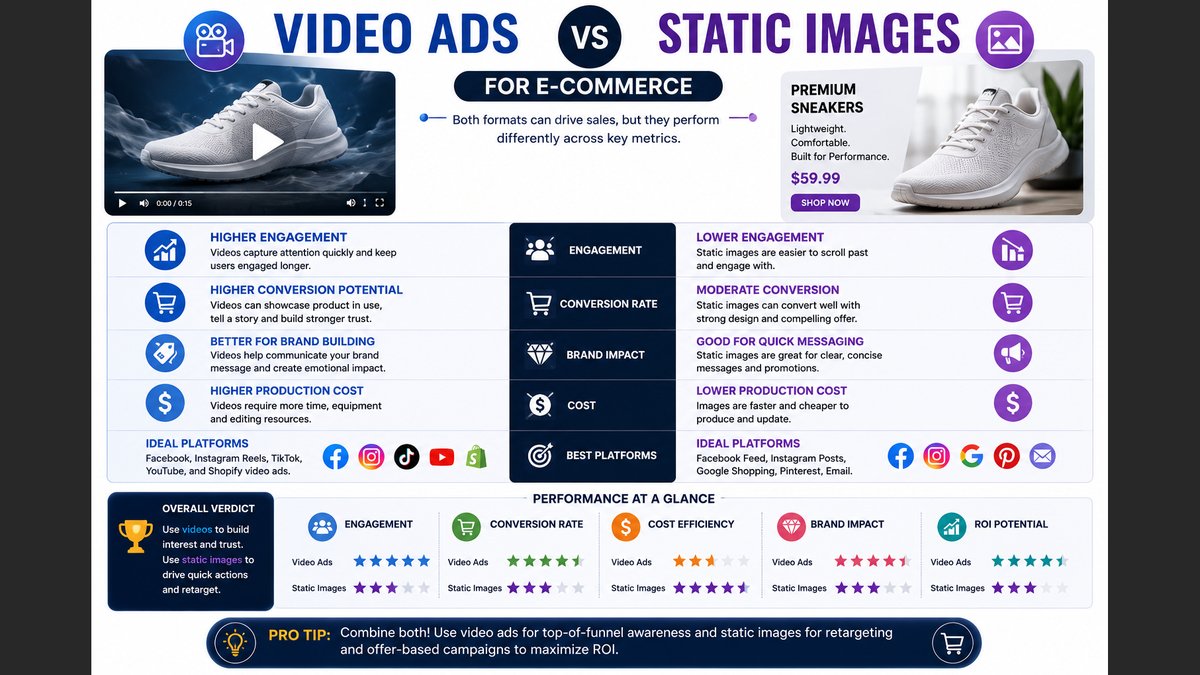
- Video ads can boost e-commerce conversions by up to 30% compared to static images, with landing page improvements reaching 80% in some cases
- Static images still excel in fast-scroll environments and cost-effective retargeting campaigns where immediate message consumption matters
- Short-form video content under 15 seconds delivers the highest completion rates and engagement on social platforms
- AI-powered tools are revolutionizing video ad creation by making professional-quality content accessible without expensive production costs
Video Ads Drive Higher E-commerce Conversions
The competition between video and static image advertising has produced clear winners based on performance data—video content claims victory in most e-commerce scenarios. Recent studies show video ads consistently generate higher click-through rates and purchase intent compared to static images, with click improvements ranging from 20% to 30% across various platforms and industries. This performance gap becomes even more pronounced when examining specific metrics like engagement rates and purchase completion rates.
The most compelling evidence comes from landing page performance data, where video content can increase conversion rates by up to 80% according to case studies by Wistia. This dramatic improvement stems from video's unique ability to demonstrate products in action, tell compelling brand stories, and create emotional connections that static images simply cannot match. For e-commerce brands, this translates directly into higher revenue per visitor and improved return on ad spend.
However, the superior performance of video ads isn't automatic—it requires strategic implementation and understanding of when each format delivers optimal results. Modern AI-powered platforms like AdCreative.ai are making it easier for businesses to create high-converting video content by analyzing performance data patterns from extensive ad spend databases to identify what works best for specific audiences and industries.
Why Video Outperforms Static Images in E-commerce
1. Superior Memory Retention and Brand Recall
The human brain processes visual information significantly faster than text, but video takes this advantage even further by combining multiple sensory inputs. Research consistently shows that consumers retain 95% of a message when watching it in video format compared to only 10% when reading text. This enhanced retention translates directly into improved brand recall and purchase intent, making video ads particularly effective for building long-term customer relationships in competitive e-commerce markets.
2. Higher Engagement Through Motion and Storytelling
Video's inherent motion captures attention in ways that static images cannot replicate, particularly in crowded social media feeds where users scroll rapidly through content. The ability to tell complete stories—showing product benefits, demonstrating use cases, and addressing common objections—creates a more complete sales pitch within seconds. This storytelling capability proves especially valuable for complex products that require explanation or emotional connection to drive purchase decisions.
3. Mobile-First Shopping Behavior Alignment
With mobile commerce accounting for over 50% of all online shopping, video content aligns perfectly with how consumers interact with their devices. Mobile users are already consuming video content at unprecedented rates, making video ads feel native to their browsing experience. The autoplay functionality on most social platforms means video ads can capture attention immediately without requiring additional user action, a critical advantage in mobile-first shopping environments.
The Numbers: Video vs Static Performance Data
Conversion Rate Differences by Platform
Performance data reveals significant variations in video effectiveness across different advertising platforms. Facebook and Instagram show substantial improvements, with video ads achieving higher click-through rates and engagement compared to static images. YouTube and TikTok naturally favor video content, often showing even more substantial performance gaps. LinkedIn shows a 33% increase in click-through rates for video ads over static ads (1.6% vs 1.2%), though professional audiences may respond differently to video content than consumer markets.
The platform-specific data highlights the importance of tailoring video strategy to audience behavior and platform characteristics. Short-form videos under 15 seconds consistently achieve the highest completion rates across all platforms, with engagement dropping significantly for longer content. This finding supports the trend toward bite-sized, impactful video content that delivers key messages quickly and effectively.
Landing Page Performance: Mixed Results Require Testing
While video ads excel in social media environments, landing page performance presents a more nuanced picture. Video backgrounds and product demonstrations can dramatically improve conversion rates, but poor implementation often leads to slower loading times and higher bounce rates. The key lies in strategic placement—hero sections benefit from video content, while product detail pages often perform better with high-quality static images that load instantly.
Successful e-commerce brands increasingly adopt a hybrid approach, using video to capture attention in ads and initial landing page elements, then transitioning to optimized static images for product galleries and detailed information sections. This strategy maximizes the emotional impact of video while maintaining the technical performance that drives conversions.
When Static Images Still Win
Fast-Loading Advantage in Specific Scenarios
Static images maintain significant advantages in specific scenarios, particularly in environments where users need immediate information access. While video content generally outperforms static images on most platforms, static images excel in situations requiring instant loading and clear product visibility. The technical advantage of static images becomes important in markets with slower internet connections or when targeting cost-conscious consumers who may be using older devices.
In these scenarios, the immediate accessibility of static content can outweigh the engagement benefits of video, making static images the more effective choice for certain demographics and geographic markets. Static images also work well for detailed product specifications and comparison charts where users need to study information rather than be entertained.
Cost-Effective Retargeting and Cart Recovery
Static images excel in retargeting campaigns and cart abandonment recovery efforts where the goal is quick recognition rather than initial engagement. Users who have already interacted with a brand need simple, clear reminders rather than complex storytelling. Static product images with clear pricing and promotional offers often outperform video content in these scenarios, delivering higher click-through rates at significantly lower production costs.
The cost advantage of static images becomes particularly important for smaller e-commerce businesses or those with limited marketing budgets. While video production costs have decreased with AI tools and smartphone capabilities, static images remain faster and cheaper to produce, test, and iterate, making them ideal for rapid campaign optimization and seasonal promotions.
Creating High-Converting Video Ads Without Breaking the Budget
1. Optimize Video Length for Maximum Completion
The most successful e-commerce video ads follow the "15-second rule"—delivering complete messages within this timeframe to maximize viewer completion rates. This constraint forces brands to focus on single, powerful messages rather than attempting to communicate multiple benefits. Effective short-form videos typically follow a simple structure: hook within the first 2 seconds, benefit demonstration in the middle 10 seconds, and clear call-to-action in the final 3 seconds.
2. Focus on Clear Calls-to-Action
Video ads require more explicit calls-to-action than static images because viewers are passively consuming content rather than actively seeking information. The most effective video CTAs combine visual and auditory elements—on-screen text overlays paired with verbal instructions create redundancy that improves response rates. Urgency-driven language like "Shop now" or "Limited time" proves particularly effective when combined with countdown timers or limited quantity indicators.
3. Use AI Tools for Cost-Effective Production
Modern AI platforms have democratized video production by automating many traditionally expensive and time-consuming processes. These tools can transform product images into dynamic video content, generate multiple variations for A/B testing, and optimize creative elements based on performance data. The automation of video creation processes allows even small e-commerce businesses to produce professional-quality content at scale.
The integration of AI tools into video production workflows represents a fundamental shift in how e-commerce brands approach creative development. Rather than relying on expensive agencies or in-house video teams, businesses can now create, test, and optimize video content continuously, leading to better performance and lower costs over time.
AI-Powered Video Creation Changes the Game for E-commerce
The emergence of AI-powered video creation tools marks a pivotal moment for e-commerce advertising, democratizing access to high-quality video content that was previously available only to brands with substantial marketing budgets. These platforms analyze vast datasets of successful advertising campaigns to identify patterns and elements that drive conversions, then apply these insights to create optimized video content automatically.
The transformation extends beyond simple cost reduction—AI tools enable continuous optimization and personalization that human-created content cannot match at scale. By analyzing real-time performance data and automatically adjusting elements like pacing, color schemes, and messaging, AI-powered platforms can improve video ad performance continuously throughout campaign lifecycles. This capability represents a fundamental shift from static campaign creation to data-driven optimization.
The competitive advantage of AI-powered video creation becomes most apparent in testing and iteration capabilities. Traditional video production requires significant time and budget for each variation, limiting testing opportunities. AI platforms can generate dozens of video variations instantly, enabling thorough A/B testing that identifies optimal creative elements for specific audiences and platforms. This testing capability leads to continuously improving performance and higher returns on advertising investment.
Ready to harness the power of AI-driven video ads for your e-commerce business? AdCreative.ai provides the tools and insights needed to create high-converting video content that outperforms the competition.