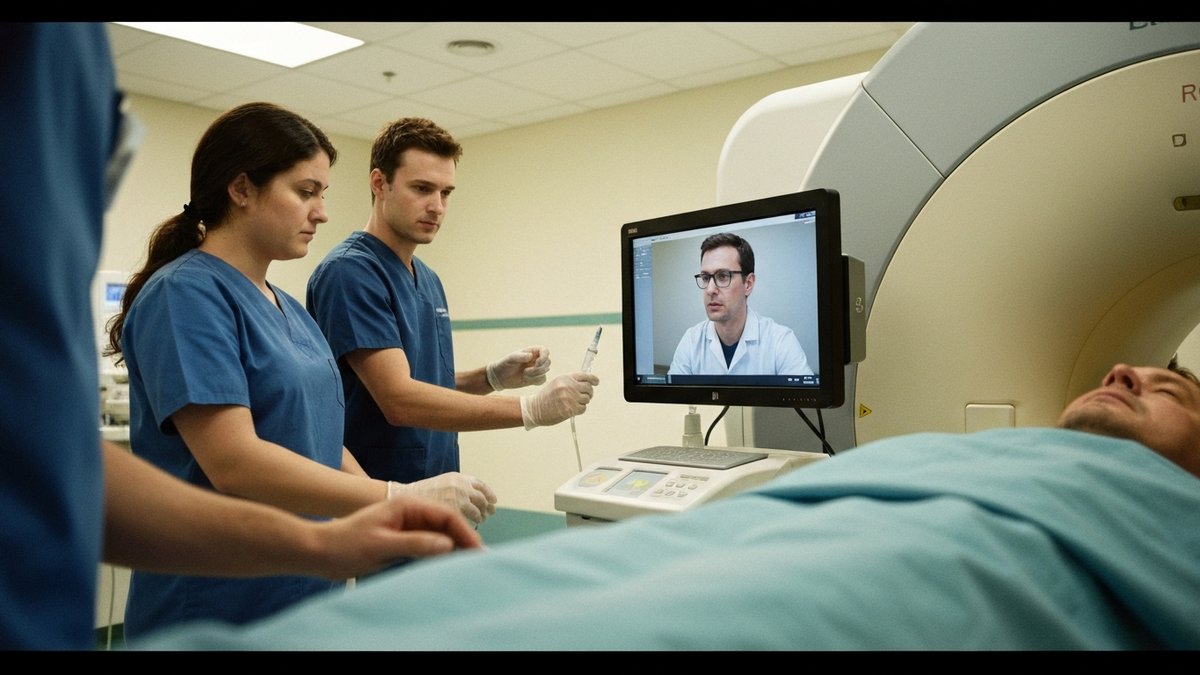
ContrastConnect recently released a guide to virtual contrast supervision legislation in response to policy changes that took effect on January 1, 2026. The resource is intended for imaging groups that are looking to adopt the virtual supervision model and explains amended legal definitions and regulatory requirements under new federal policies.
For more information, please visit https://www.contrast-connect.com/blog-post/virtual-contrast-supervision-state-legislation-2026-updates-practice-impact
Before 2020, the Centers for Medicare & Medicaid Services (CMS) required a qualified physician to be physically present to supervise diagnostic imaging procedures that involved contrast media administration. The physician was to be immediately available to direct staff members in the event of an adverse reaction to contrast materials, ensuring patients would receive timely medical interventions before any escalation into potentially life-threatening reactions.
However, during the pandemic, the CMS updated its definition of “direct supervision” and “immediate availability” to temporarily allow virtual oversight. These amendments have been made permanent as of January 1, 2026; medical facilities can now perform contrast studies without a radiologist on-site, as long as a qualified practitioner is overseeing the procedure through live audiovisual technology.
The removal of on-site availability as a requirement enables imaging centers the flexibility to book contrast studies and other much-needed diagnostic services without needing to work around scheduling constraints. However, ContrastConnect’s guide says that to be truly compliant with the new rules, facilities must use platforms that support real-time, two-way audio and visual communication between the supervising physician and technicians on-site; this connection must remain live and uninterrupted throughout the entire procedure, necessitating a secure, high-speed network and robust redundancy systems.
Additionally, standard tools like Zoom or FaceTime are now inadequate; virtual supervision platforms must comply with HIPAA technical security and video quality requirements to be used.
In spite of federal changes, ContrastConnect’s guide notes that virtual supervision is not yet legal in all states and that the CMS’ amendments do not override state law. Currently, only California legally recognizes the virtual supervision model as a sufficient means of providing direct supervision during contrast media administration, while Ohio, Alabama, and Tennessee are in the process of modernizing their rules.
ContrastConnect advises imaging groups to continue operating in accordance with existing state statutes while preparing their facilities for the virtual supervision model.
More information is available at https://www.contrast-connect.com/