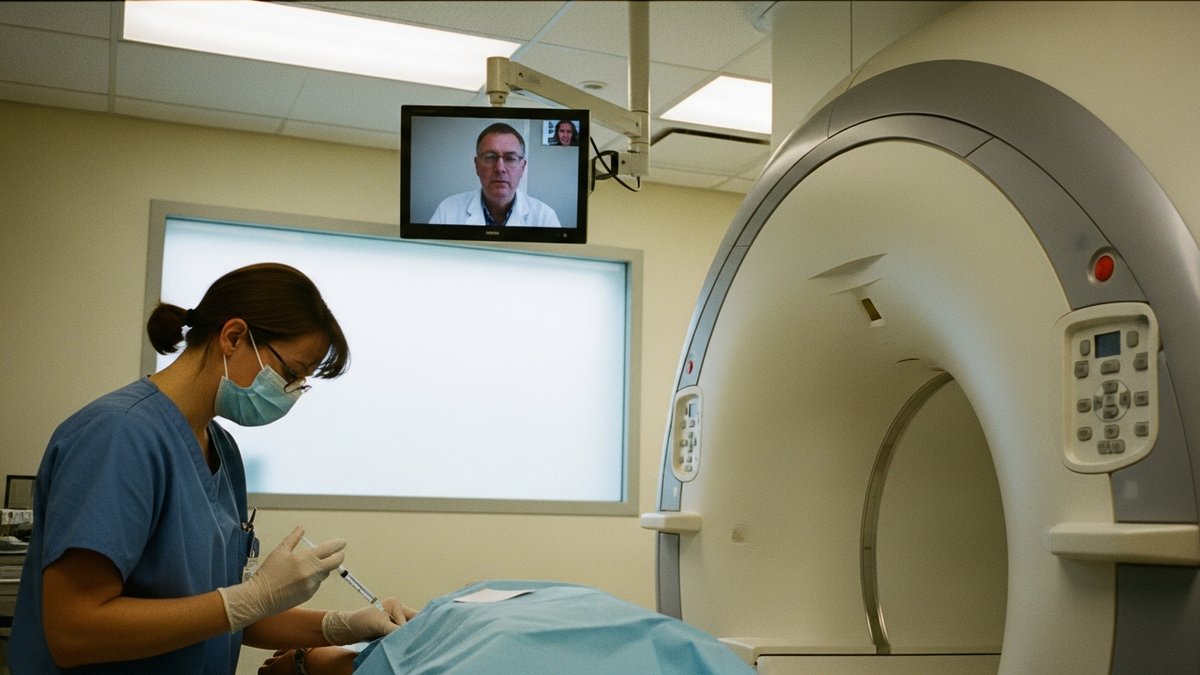
ContrastConnect has released a guide addressing the Centers for Medicare & Medicaid Services (CMS) rule, which authorizes virtual direct supervision for diagnostic tests utilizing real-time, two-way audio and video technology. The guide provides radiology administrators with specific metrics for implementing supervision models that comply with CMS requirements and American College of Radiology (ACR) guidelines.
More information is available at: https://www.contrast-connect.com/blog-post/virtual-contrast-supervision-response-time-reaction-management-metrics-explained
ContrastConnect identifies response time as the primary Key Performance Indicator in a virtual environment, measured in seconds rather than minutes. The guide benchmarks response times within this rapid range and establishes that platform latency exceeding 150 milliseconds is clinically unacceptable for real-time crisis management. Radiology administrators planning to adopt virtual models require these measurable standards to evaluate facility readiness and technical performance.
Five core metrics for evaluating virtual supervision programs are outlined: response time, coverage rate, cancellation rate, CMS compliance rate, and technology uptime percentage. These metrics create a measurable framework for administrators to assess program effectiveness and identify operational gaps. Patient safety remains the central focus of contrast material administration, and these KPIs ensure virtual models meet the same rigorous safety thresholds as traditional on-site supervision.
ContrastConnect’s operational data validates the benchmarks outlined in the guide. The company supervises over 75,000 contrast exams monthly, manages five to ten contrast reactions daily, and maintains a record of zero missed responses across hundreds of imaging partners. This operational volume demonstrates that the metrics provided are derived from large-scale clinical practice, offering administrators achievable targets when designing or optimizing remote supervision programs.
External data supports the efficacy of virtual supervision when managed through these metrics. A pulse survey conducted by the Radiology Business Management Association indicated that approximately 30 percent of imaging centers experienced faster response times with virtual supervision compared to traditional models, with no reported negative impact on patient care. When configured according to the performance standards in the ContrastConnect guide, virtual supervision serves as a practical model for modernizing radiology operations while maintaining patient outcomes.
For more details, visit: https://www.contrast-connect.com/