Key Takeaways
- Roatan is home to several thousand foreign residents, primarily Americans and Canadians, drawn by a lower cost of living, a warm climate, and a tight-knit expat community.
- A retired couple can live comfortably in Roatan for roughly $2,000-$4,500 per month, depending on lifestyle preferences, a significant drop from typical North American living costs.
- Foreigners have legally owned property in Honduras since 1991, with individual ownership capped at 3,000 square meters, though there is a straightforward way to go bigger.
- Roatan's real estate market has been appreciating steadily, with property prices estimated to have risen around 4% in the past 12 months as of early 2026.
- Keep reading to learn how different neighborhoods attract different lifestyles, and why choosing the right area matters as much as choosing the right property.
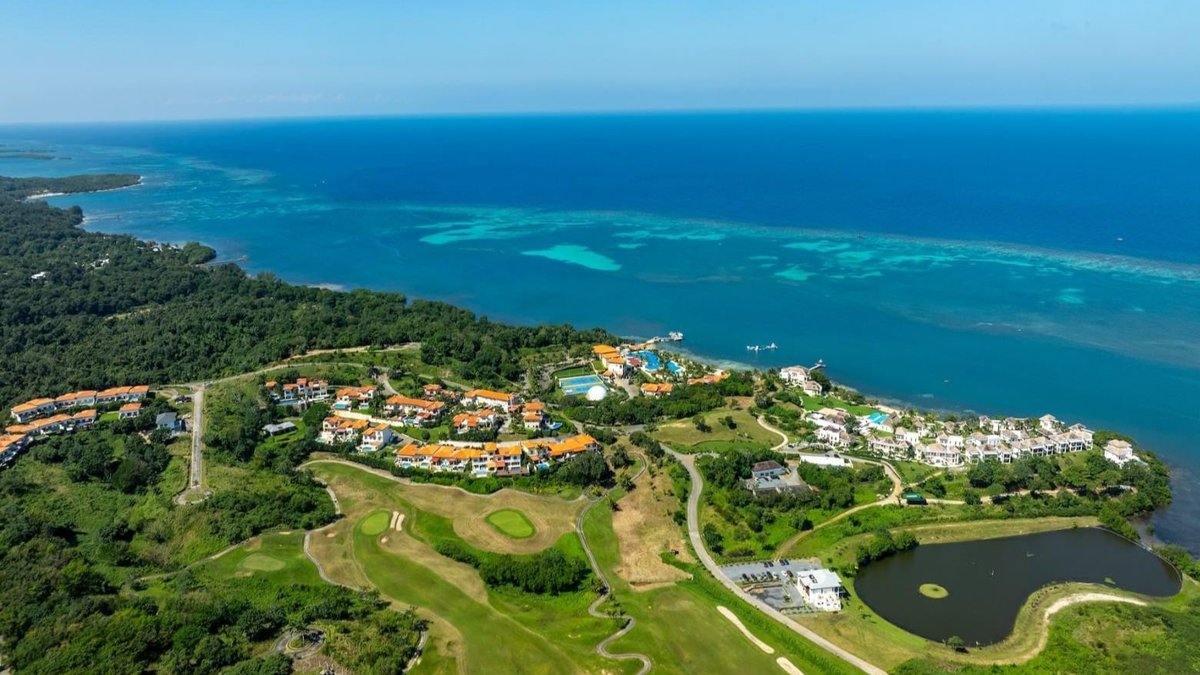
Somewhere between a Caribbean postcard and a practical retirement plan, Roatan has quietly become one of the most talked-about destinations for North Americans looking to stretch their savings, slow down their pace, and actually enjoy their days. It is not just a vacation spot anymore. For thousands of Americans and Canadians, it is home.
But what is it really like to live there? And what does the expat community actually look like on the ground? Roatan Real Estate Tours agent Michelle Breuer, a Canadian who relocated to the island over a decade ago, offers a perspective that is hard to find in any listing: she has lived the transition herself. What follows draws on that firsthand experience, alongside real data on costs, property laws, and community life.
Thousands of North Americans Already Call Roatan Home
Roatan's total population sits somewhere between 80,000 and 120,000 people. Within that number, several thousand are foreign residents, and the majority of those are from the United States and Canada. That may not sound enormous, but on an island of this size, it creates something genuinely rare: a well-established, English-speaking expat community with its own rhythms, social networks, and local institutions.
This is not a fringe movement or a niche trend. The expat presence on Roatan has been building steadily for decades, driven by word of mouth, online communities, and the kind of stories that make people book a one-way ticket. People come for a two-week vacation and start looking at real estate by day three. It happens more often than you would think.
What sustains this community is not just the beaches or the weather, it is the fact that expats have woven themselves into the fabric of island life. They open businesses, hire local staff, pay taxes, and invest in the neighborhoods they call home. That economic participation has helped build infrastructure and services that make island living more accessible for the next wave of arrivals.
Who Makes Up the Roatan Expat Community?
The Roatan expat population is a genuinely mixed group of people at different stages of life, with different goals and different ideas of what the good life looks like. Understanding who is already there helps anyone considering a move get a realistic picture of what community life actually involves.
Retirees, Snowbirds, and Remote Workers
The largest group is retirees - people who have worked hard for decades and are now looking for somewhere that rewards that effort with warmth, affordability, and genuine quality of life. Social Security dollars go meaningfully further on Roatan than in most U.S. or Canadian cities, and that math is hard to argue with.
Snowbirds make up another significant slice. These are people who have not fully cut ties back home but spend several months of the year on the island, often renting or owning a condo in a resort-adjacent area. They tend to cluster in spots like West Bay, where amenities and accessibility are strongest.
Remote workers and digital nomads have grown as a segment in recent years. Reliable internet has improved across the island, and for anyone with a laptop-based income, the lifestyle calculus is straightforward: trade a grey cubicle in February for a beachside desk with a sea breeze. Small business owners - running everything from dive shops to restaurants to boutique rental properties - round out the community and tend to be among the most deeply rooted expats on the island.
Where Expats Tend to Settle: West Bay, West End, and Beyond
Geography shapes community life on Roatan in ways that matter a lot when choosing where to put down roots. The island is roughly 40 miles long and divided into distinct zones, each with its own character.
West Bay is the postcard version of Roatan, calm turquoise water, a white sand beach, upscale condos, and easy access to resort amenities. It attracts buyers who want proximity to beauty and convenience, and it is a strong choice for rental income potential. West End is livelier and more social, serving as the hub of restaurants, dive operators, and bars, with a bohemian energy that appeals to people who want to be where things are happening.
Sandy Bay sits between these two and offers a quieter, more residential feel. Further east, the island becomes progressively less developed - which for some buyers is exactly the appeal. The East End attracts those looking for larger properties, more privacy, and lower prices, often in exchange for a longer drive to amenities. Each of these neighborhoods fosters its own local expat network, and choosing between them is as much a lifestyle decision as a real estate one.
The Real Cost of Living in Roatan
Numbers matter, and the honest conversation about Roatan's cost of living is one of the most important ones for any serious prospect to have. The short version: it is significantly cheaper than most of North America. The longer version has a few nuances worth understanding.
$2,000-$4,500/Month for a Retired Couple
Monthly living costs for a retired couple in Roatan vary considerably based on lifestyle. A comfortable budget generally falls between $2,000 and $2,500 per month, covering a well-appointed rental or mortgage payment, groceries, dining out regularly, transportation, health insurance, and the everyday expenses of a pleasant island life. Couples who prefer a more premium lifestyle - with higher-end accommodation, frequent dining out, and additional leisure spending - typically budget closer to $3,000-$4,500 per month. For those coming from high cost-of-living cities in the U.S. or Canada, either figure often stops them in their tracks - in the best way.
Those on a tighter budget can manage on as little as $1,200-$1,500 per month, though that requires careful spending and fewer extras. The key takeaway is that Roatan offers genuine flexibility across a wide range of budgets, without sacrificing the core quality of island life.
A Fraction of What You Would Spend Back Home
By most estimates, the cost of living in Roatan runs 30-50% lower than in the average U.S. city. Groceries, local dining, and services like housekeeping or landscaping are dramatically cheaper. Healthcare cost, including private clinics and specialist visits are a fraction of American prices, which is a significant factor for retirees thinking long-term.
Imported goods are the main exception. Anything shipped to the island carries a premium wine, electronics, name-brand clothing and that is worth factoring into a realistic budget. But the staples of daily life, and particularly services that involve local labor, are consistently and genuinely affordable. Most expats find they are living better than they were back home, for considerably less money.
One Expense That Surprises New Arrivals: Electricity
Almost everyone who moves to Roatan mentions the same thing: the electricity bill is higher than expected. For moderate usage, monthly electric costs typically run $60-$200, while heavier or consistent air conditioning use can push bills toward $200-$350 or beyond during the hotter months.
This catches people off guard because everything else feels so affordable by comparison. The island's electrical infrastructure has historically relied on diesel generation, which keeps costs elevated relative to mainland norms. The practical response that many long-term residents adopt is solar. Rooftop solar systems are increasingly common in expat-owned homes and condos, and while the upfront investment is real, the long-term savings and the insulation from power outages make it a popular choice. It is one of those pieces of inside knowledge that makes a tangible difference in year-one satisfaction.
Can Foreigners Actually Own Property Here?
One of the first questions anyone asks about buying abroad is whether it is even legally possible. On Roatan, the answer is an unambiguous yes and it has been for more than three decades.
Legal Since 1991, Guaranteed by the Honduran Government
Foreign nationals have been legally permitted to own property in Honduras, including Roatan since 1991. That ownership is guaranteed by the Honduran government, meaning foreign buyers hold the same legal standing as local citizens when it comes to property rights. This is not a gray area or a workaround; it is codified in Honduran law.
For North Americans accustomed to skepticism about international property purchases, this tends to be a genuine relief. The legal framework is established, title insurance is available, and working with a knowledgeable local agent and a reputable attorney makes the process navigable. It is more structured and transparent than most people expect going in.
The 3,000 Square Meter Rule — and How to Go Bigger
There is one important limitation to understand: individual foreign ownership of land on island territories like Roatan is capped at 3,000 square meters, roughly three-quarters of an acre. For most condo buyers or those looking for a standard home lot, this limit is entirely irrelevant. A typical residential property falls well within it.
For buyers with larger ambitions, a multi-acre homestead, a boutique resort property, a development parcel, the workaround is well-established: purchase through a Honduran corporation. Foreign nationals can form a Honduran corporation relatively straightforwardly, and that corporate entity can hold title to properties beyond the individual cap. This is a common and legally sound approach used by investors and larger-scale buyers. Knowing this option exists before starting a property search opens the door to a much wider range of possibilities.
What an Insider Agent Sees That Listings Do Not Show
Real estate listings show square footage, photos, and price. They do not show whether a neighborhood floods in rainy season, which communities have the strongest expat social scene, or which areas are positioned for appreciation versus those that have likely already peaked. That kind of knowledge only comes from actually living somewhere, and it is exactly what separates a transactional agent from a genuinely useful one.
Michelle Breuer: From Canadian Real Estate Pro to Roatan Resident
Michelle Breuer's path to Roatan was not a straight line. Her interest in tropical living started at a real estate seminar in Canada, where she first looked into investing in Costa Rica. She bought land there, fell in love with the idea of a tropical retirement, and spent years working toward it. When her daughter graduated high school and the plan was finally ready to execute, Costa Rica had become too expensive, and Ecuador did not deliver the sunshine she was looking for.
A suggestion from Canadian neighbours who had relocated to Trujillo, Honduras, sent her in a new direction. Flying over the Honduran mountains, something clicked. Within 35 days of finding a drastically reduced beachside property, she and her daughter had relocated from Canada with five suitcases, two cats, and a dog. A birthday trip to Roatan a few years later, originally just to swim with dolphins, became the moment she knew where she truly belonged. She has been a full-time Roatan resident ever since, bringing over 20 years of combined real estate experience and more than a decade of island living to every client conversation as a RE/MAX agent with Roatan Real Estate Tours.
Matching Buyers to a Lifestyle, Not Just a Property
The practical value of working with someone who lives on the island year-round goes well beyond transaction mechanics. The approach centers on matching buyers to a lifestyle, not just a listing. That means asking the right questions upfront: How social do you want to be? Do you need walkability, or are you comfortable relying on a car? Are you here to relax, to invest, or both?
The answers shape where someone should be looking before a single property is toured. A buyer who wants a lively social scene with restaurants and dive shops nearby has very different needs than someone seeking a quiet retreat five minutes from the beach. Getting that alignment right from the start, rather than falling in love with the wrong property in the wrong neighborhood, is the kind of guidance that only comes from someone who has mapped every corner of the island in person. That service extends well past the closing table, from airport pickups to utility connections to being the go-to resource for island life long after the sale is done.
Is Roatan's Market Still Worth Entering in 2026?
The short answer is yes, but the reasons are worth spelling out. Roatan's real estate market has been on a sustained upward trajectory, driven by growing international interest from both North America and Europe. Property prices rose an estimated 4% over the past 12 months as of early 2026, a steady clip that reflects genuine demand rather than speculative hype.
Compared to other Caribbean destinations - the Cayman Islands, Barbados, or even the more developed parts of Costa Rica, Roatan remains meaningfully more affordable. That gap is narrowing, which is precisely why the current window draws attention. Buyers who got in five years ago have already seen solid appreciation; those getting in now are still ahead of the curve relative to comparable island markets.
Condos near West Bay and West End are projected to see the highest appreciation, partly because of their rental income potential. Short-term vacation rentals in these areas perform well, giving buyers the option to offset carrying costs or generate returns while they decide whether to make a permanent move. For investors who are not ready to relocate but want exposure to the market, this dual-use strategy has been one of the more reliable approaches on the island. The fundamentals, limited land supply, growing demand, improving infrastructure, and a well-established expat community, continue to point in the same direction.
Talk to an Agent Who Actually Lives the Life You Are Considering
There is a meaningful difference between an agent who sells properties in Roatan and one who wakes up there every morning, navigates the same roads, shops at the same markets, and participates in the same community. That lived context shapes every recommendation in ways that are hard to quantify but easy to feel in a conversation.
For anyone seriously weighing a move or an investment, the most valuable first step is not browsing listings, it is talking to someone who can answer the questions that do not appear in any listing. What is the rainy season actually like to live through? Which neighborhoods feel most welcoming for someone arriving alone? What does the buying process look like from offer to keys in hand? Those answers exist, and they are worth seeking out before making any decisions.
For an honest, experience driven look at Roatan real estate and expat life, Roatan Real Estate Tours offers the kind of guidance that only comes from an agent who is not just selling island life, she is living it.