Key Takeaways
- Broken springs are among the most common and most dangerous garage door problems homeowners face, and they should never be handled without a trained technician.
- A door that jumps its track often traces back to worn rollers, a snapped cable, or tracks that have loosened over time, and it always calls for professional repair.
- Sensor trouble is common in coastal cities, since salt air and humidity speed up corrosion on electrical contacts.
- Dead remote batteries and dirty sensor lenses are simple checks worth trying before scheduling a repair visit.
- Safety features built into modern garage doors exist specifically to prevent injuries when parts fail unexpectedly.
Garage doors get used more than almost any other moving part of a house, often several times a day, so it makes sense that something eventually wears out or acts up. Those searching for answers about a stuck, noisy, or unresponsive door are not alone. Orange County-based experts from A Quality Garage Door explain that most garage door troubles fall into a short list of familiar categories, and knowing what they are makes it much easier to decide between a quick fix and a call for help.
Dead Batteries: the Most Frequent Culprit
Before assuming the worst, it helps to rule out the simplest explanation first. A remote that suddenly stops working, or a door that ignores every button press, is frequently just a matter of drained batteries or a wall switch that lost power. Swapping in fresh batteries, checking that the opener unit is plugged in, and confirming the wall switch has power solves a surprising number of "broken" garage door complaints without a single tool.
This kind of low-stakes troubleshooting is worth trying first because it costs nothing and takes only a minute or two. If a fresh set of batteries and a quick power check do not bring the door back to life, the problem likely lies somewhere more mechanical, which is where the more serious issues on this list come into play.
Broken Springs: the Most Dangerous Issue
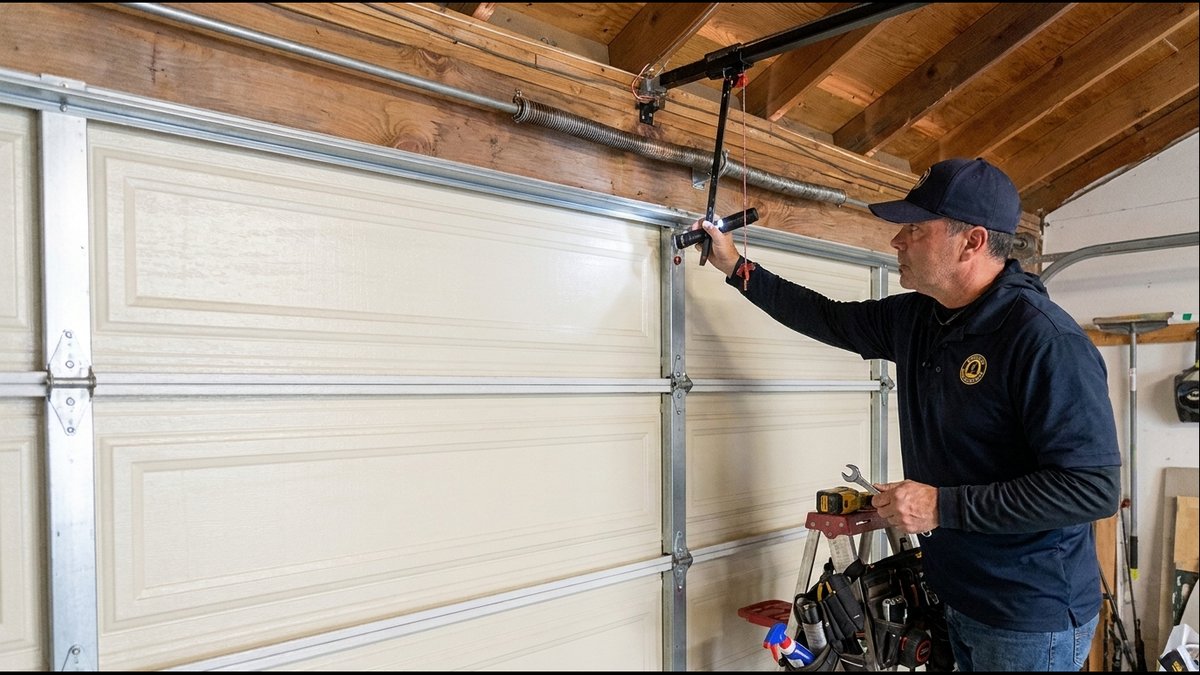
Among all the ways a garage door can fail, a broken spring stands out as both the most frequently reported and the most hazardous. Torsion and extension springs carry the full weight of the door, storing enormous tension so the opener does not have to do all the lifting. When a spring snaps, that stored energy releases suddenly, and the door can slam down with real force.
A telltale sign is a loud bang from the garage followed by a door that will not budge, or one that feels unusually heavy when lifted by hand. Broken springs are widely reported as the single most common reason a garage door won't open at all, which makes this the problem homeowners are most likely to encounter sooner or later.
Never Attempt a DIY Spring Fix
Springs are widely considered the most dangerous component on the entire door system, and for good reason. The tension they hold is strong enough to cause serious injury or worse if the spring shifts unexpectedly during handling. Even experienced do-it-yourself homeowners are cautioned to leave springs alone; the risk of a sudden release, a slipped winding bar, or a door crashing down outweighs any savings from skipping a service call.
What Replacement Typically Involves
Spring replacement is a routine job for trained technicians, even though it looks intimidating to everyone else. Some local companies complete torsion or extension spring swaps the same day, often finishing in under two hours, with warranty coverage on both the parts and the labor. That kind of turnaround means a broken spring rarely keeps a household without a functioning garage door for long.
When a Door Jumps Its Track
A door that looks crooked, jerks as it moves, or hangs at an odd angle has usually slipped off its track, and this ranks among the more urgent emergency calls technicians receive. An off-track door signals that the entire system is fighting against itself, and continuing to force the opener can cause a sudden, complete failure of the door.
Common Causes Behind Off-Track Doors
Several everyday events can knock a garage door off its rails:
- A vehicle bumping the door while pulling in or backing out
- Rollers that have worn down or broken after years of use
- A snapped cable that pulls one side of the door sideways
- Tracks that have gradually loosened from their mounting brackets
Age plays a role too. Builder-grade plastic rollers installed in many Irvine-area homes tend to seize up around the ten-year mark, and that seizing is a frequent trigger for doors leaving their tracks.
Why It's Always a Professional Repair
Once a door is off track, hanging crooked, jammed halfway, or completely stuck are all signs that something structural has given way, whether that is the track itself or a broken cable. Attempting to wrestle the door back into place is risky, since the panels can shift unpredictably and the door may come free entirely. This is squarely a job for a trained technician, not a weekend project.
Sensor Glitches That Stop Your Door
A door that starts closing and then immediately reverses, or refuses to close while the opener's light blinks, is almost always pointing to trouble with the photo-eye sensors. These small sensors sit near the bottom of each track, sending an invisible beam across the doorway. Federal safety law has required this photo-eye reversing system on every residential garage door opener since 1993, precisely because it stops a heavy door from closing on a person, pet, or object.
Salt Air, Humidity, and Corrosion Near the Coast
Homeowners in coastal cities tend to see sensor problems more often than those farther inland. Salt-laden coastal air speeds up corrosion on electrical contacts, which shortens the working life of sensor wiring and connectors. Combined with everyday humidity, this coastal exposure is one reason sensor complaints show up so regularly along shoreline communities.
Quick Checks Before Calling for Help
Many sensor issues trace back to something simple rather than a failed component:
- Look for anything blocking the sensor beam, such as a stored bike, a stack of boxes, or a stray toy.
- Wipe both sensor lenses gently with a clean, soft cloth to remove dust or grime.
- Check that both sensors line up evenly and confirm their LED lights glow solid and steady, not blinking.
If those steps don't resolve it, the sensors might be misaligned internally, wired incorrectly, or simply worn out.
Opener and Remote Failures
Sometimes the door itself is in fine shape, but the opener refuses to cooperate. A motor that hums without moving the door, a remote that stops sending a signal, or an opener that hesitates before responding all point toward the operating system rather than the door panels or springs. Worn gears, a stretched belt or chain, a broken sprocket, or a logic board damaged by a power surge can all produce these symptoms.
Signs the Problem Is the Opener, Not the Door
A few clues help separate an opener problem from a structural one. If the door moves smoothly and evenly when operated by hand but will not respond to the remote or wall switch, the opener or its safety sensors are the more likely suspects. A door that reverses right before finishing its close cycle often means the opener's force settings or safety sensor need adjustment rather than anything wrong with the tracks or springs. Slower-than-usual movement or a delayed response to button presses can also stem from an aging motor rather than a mechanical jam in the door itself.
Other Warning Signs to Watch
Beyond the major categories above, a handful of smaller warning signs deserve attention before they turn into bigger repairs.
Noisy, Slow, or Sagging Doors
Grinding, squeaking, or banging sounds during operation usually mean parts have gone loose, worn, or dry of lubrication, and ignoring these noises can allow small issues to grow into costly ones. A door that sags unevenly on one side often has rusted rollers, a worn spring, or a track that has shifted out of alignment. Slow movement, meanwhile, frequently comes down to dirty or sticky tracks or rollers that need cleaning and fresh lubrication. Locking mechanisms that stick or resist turning are commonly the result of dried-out lubrication rather than a broken lock itself.
Weather's Toll on Moving Parts
Temperature swings and coastal humidity take a toll on metal tracks, hinges, and springs over time. Moisture accelerates corrosion on hardware, while heat can cause certain materials to expand slightly, affecting how smoothly panels glide along the track. Routine lubrication and periodic inspection help offset this gradual wear before it turns into a jammed or off-track door.
Safety Comes First With Every Repair
Every issue covered here, from a snapped spring to a stubborn sensor, points to one theme: garage doors are heavy, tension-loaded systems, and the safety features built into them exist for real reasons. Auto-reverse sensors, secure track systems, and properly balanced springs all work together to keep a 200-plus pound door from becoming a hazard. Recognizing the difference between a quick homeowner fix and a job that calls for a trained technician protects both the household and the equipment.
For anything involving springs, cables, or a door stuck off its track, scheduling professional garage door repair keeps the fix safe and lasting.