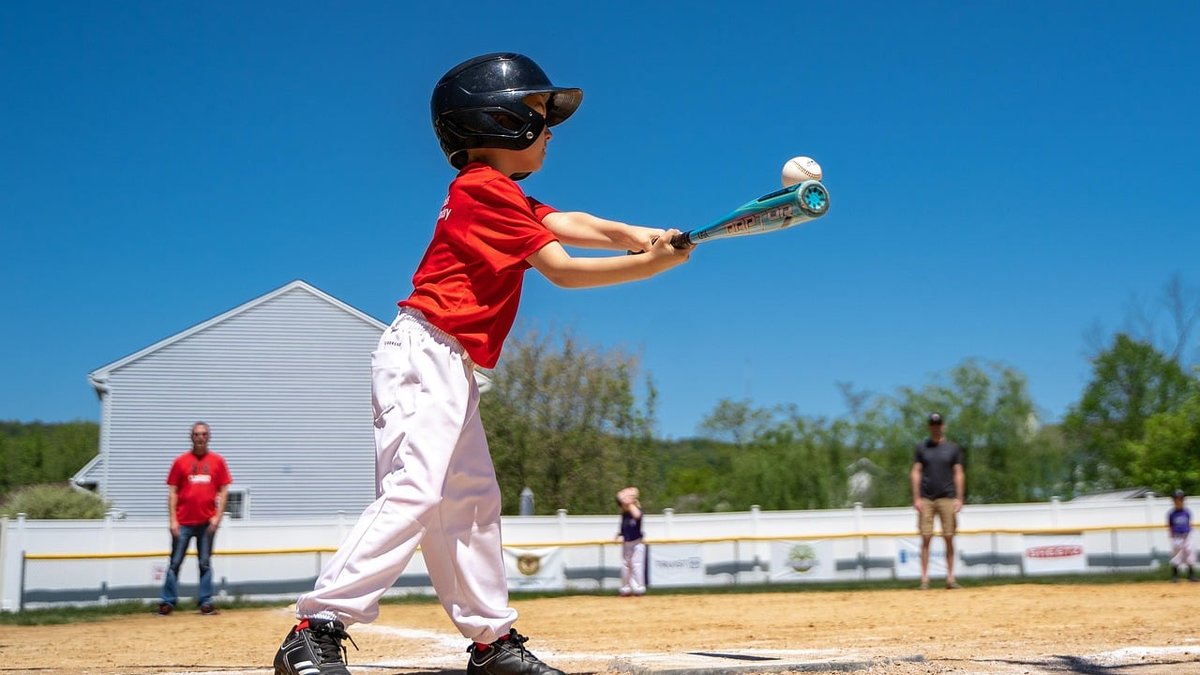
If you asked ten youth baseball coaches what separates players who improve quickly from those who stay the same, most would give a similar answer: consistent, purposeful practice. Talent certainly matters, but steady progress usually comes from understanding what to improve and working on it between games and team practices.
That has become even more important as youth baseball participation continues to grow. According to the Sports & Fitness Industry Association, baseball participation among children aged 6-17 has seen significant growth in recent years, meaning more young athletes are competing for playing time and opportunities than ever before. As a result, families and coaches are increasingly looking for smarter ways to support player development outside organized practices.
The good news is that better coaching doesn't always mean more hours on the field. It often means making every practice count.
Focus on Mechanics Before Results
One of the biggest mistakes in youth baseball is paying too much attention to outcomes instead of mechanics. A hard-hit ball or a strikeout may feel like success, but those results don't always tell the full story.
A player can make solid contact with poor mechanics, just as another can hit into an out despite executing everything correctly. Coaches who emphasize repeatable movements rather than short-term results often build players with stronger long-term fundamentals.
This is why many coaching sessions now prioritize body positioning, timing, balance, and sequencing instead of simply counting hits or strikeouts.
Keep Feedback Specific
General advice such as "keep your eye on the ball" or "follow through" is easy to give but difficult for young players to apply.
Instead, effective coaching focuses on one adjustment at a time. Whether it's improving stride length, maintaining posture through the swing, or refining arm position during a pitch, specific feedback gives athletes a clear objective for their next repetition.
Small improvements repeated consistently often lead to bigger gains than trying to correct several mechanics at once.
Review Performance, Not Just Practice
Many youth players practice regularly but rarely review what actually happened during those sessions.
Video analysis has changed that. Watching a swing or pitching motion allows players to slow movements down and notice details they would never catch in real time. Comparing multiple attempts also makes it easier to recognize patterns that either support or limit performance.
Rather than relying only on memory, athletes can make decisions based on what they actually see.
Use AI to Support Coaching, Not Replace It
Artificial intelligence is becoming a useful addition to player development because it provides another layer of objective feedback.
Instead of replacing coaches, AI can help identify movement patterns, highlight key moments within a swing or pitch, and recommend drills that match the player's mechanics. That gives athletes meaningful guidance between practices while allowing coaches to spend more time refining higher-level skills during team sessions.
Platforms such as Dingerly are examples of this approach. The platform combines four-angle video capture, synchronized review, slow-motion analysis, and personalized coaching cues to help young players better understand their mechanics. Rather than replacing traditional instruction, it extends learning beyond the practice field by giving players another opportunity to review and improve on their own.
Measure Progress Over Time
Improvement rarely happens overnight.
Players often feel as though they aren't getting better simply because changes happen gradually. Recording practice sessions over weeks or months creates a visual history that makes progress much easier to recognize.
Comparing current mechanics with previous sessions can reveal improvements in balance, timing, posture, and movement efficiency that might otherwise go unnoticed. Tracking progress also helps coaches decide which adjustments are working and which need more attention.
Build Better Habits Between Practices
Youth baseball players spend far more time away from organized practices than they do on the field with their team.
That makes independent training incredibly valuable. Whether reviewing video, working through focused drills, or using performance tracking tools, productive practice between games reinforces coaching lessons and helps new mechanics become natural habits.
The goal isn't to practice more—it's to practice with purpose. When players receive clear feedback, focus on one improvement at a time, and consistently measure their progress, every training session becomes an opportunity to build stronger fundamentals for the seasons ahead.